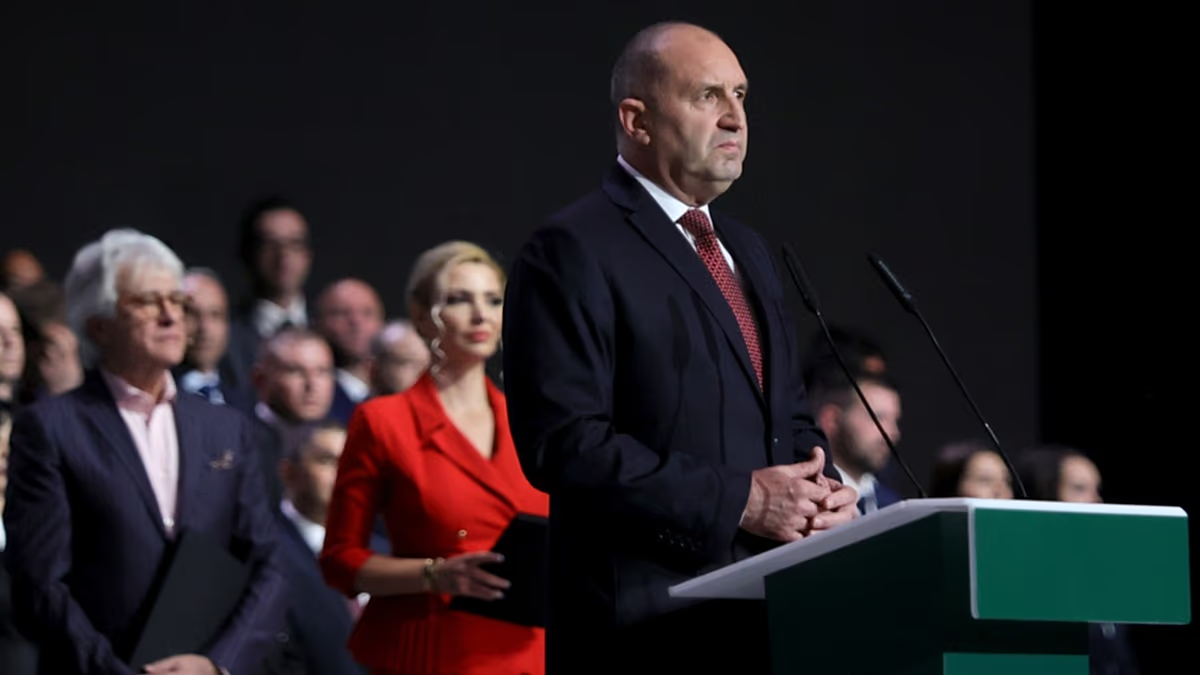





On a Friday in early May of 2026, Bulgaria’s parliament took a decisive step toward ending a prolonged period of political turmoil. By a vote of 124 to 70, with 36 abstentions, lawmakers formally approved Rumen Radev as the nation’s new Prime Minister. This moment marked a significant political transition for the European Union member state, which had been gripped by instability since the collapse of the previous conservative government the prior December. That administration fell under the weight of massive, youth-led anti-corruption protests that saw hundreds of thousands of Bulgarians take to the streets, demanding an end to systemic graft and oligarchic control. Stepping into this charged atmosphere, Radev acknowledged the steep path ahead, telling parliament, “We have no illusions about the crises and trials facing the government,” citing galloping inflation, a strained budget, and the severe global energy crisis as immediate challenges.
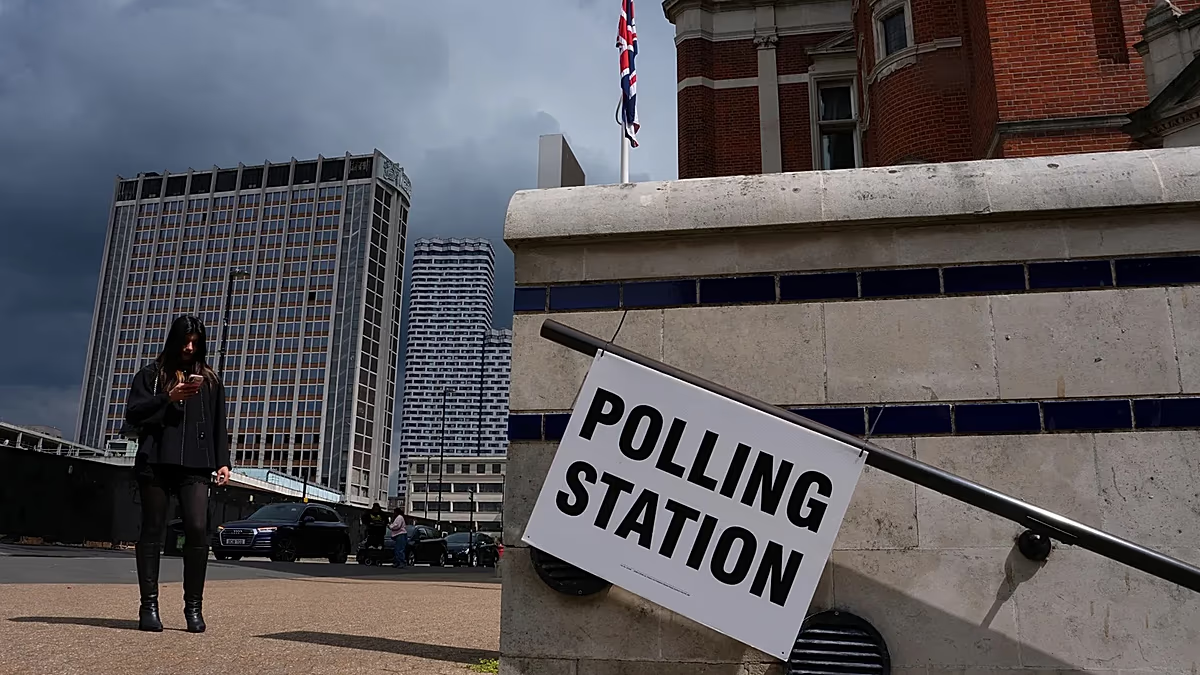
Radev’s ascent to the premiership is a story of deliberate political evolution. Until January of that same year, he had served as Bulgaria’s President, a role that is largely ceremonial. Choosing to resign a few months before the end of his second term, he launched a direct bid for executive power. A 62-year-old former fighter jet pilot and Air Force commander with a strategic studies degree from the U.S. Air War College, Radev successfully recast his public image from head of state to insurgent reformer. On the campaign trail, he positioned himself as a steadfast opponent of what he termed the entrenched “mafia” and their ties to the political elite, vowing to “remove the corrupt, oligarchic model of governance from political power.” This resonant message fueled a landslide victory for his Progressive Bulgaria party in the April parliamentary elections, granting him an outright majority—the first in the country since 1997.
This clear electoral mandate offers a rare opportunity for stable governance, but it also comes with a complex blend of public expectations. Radev’s supporters are not a monolithic bloc; they are divided between two primary hopes. A significant portion of the electorate backs him strictly on his vehement anti-corruption platform, yearning for him to dismantle the networks of oligarchic influence that have long stifled the country’s economic and social development. Another segment, however, is drawn to his more nationalist, Eurosceptic, and notably Russia-friendly foreign policy views. This duality creates a foundational tension within his support base, as these groups often have divergent visions for Bulgaria’s future, both domestically and on the world stage.
Indeed, Radev’s pro-Russian leanings have sparked considerable concern among Bulgaria’s EU and NATO allies, prompting questions about the nation’s future alignment in European policymaking. Some observers draw parallels to the disruptive stance of Hungary’s former Prime Minister, Viktor Orbán. However, many political analysts predict that Prime Minister Radev’s approach will ultimately be more pragmatic and moderate. The primary reason for this expectation is stark economic reality: Bulgaria, one of the EU’s poorest nations with a population of 6.5 million, remains heavily dependent on European Union funds. This financial interdependence is a powerful moderating force, compelling any government in Sofia to maintain functional relationships with Brussels.
Recognizing this, Radev’s administration is immediately tasked with a critical mission: implementing a series of reforms to unlock nearly €400 million in frozen EU funds. This necessity will likely temper any strong ideological impulses and ground his government’s early agenda in technical and economic governance. The need to address “missing reforms,” as he himself noted to parliament, aligns directly with EU conditions for accessing this vital financial support. Thus, his tenure begins under a pressing dual imperative: to deliver on the sweeping anti-corruption promise that brought him to power, while simultaneously navigating complex EU frameworks to secure the resources necessary for national development.
In essence, Rumen Radev assumes leadership at a fragile yet hopeful juncture in Bulgaria’s modern history. He carries the hopes of citizens weary of corruption and the suspicions of partners wary of his geopolitical sympathies. His government’s success will be measured by its ability to bridge these domestic and international spheres—leveraging his strong mandate to cleanse the political system, while his pragmatism guides Bulgaria’s course within the European community. The parliamentary vote was not just an end to instability, but the beginning of a profound test of whether Bulgaria can consolidate its democratic institutions and chart a course toward genuine reform and prosperity.