



In late February, the sudden and startling sounds of missile defense systems echoed across Qatar. For the vibrant, international community of students and faculty within Qatar Foundation’s Education City, the reality of a regional conflict arrived not through news reports, but via urgent alerts on their phones. National emergency warnings and evacuation orders transformed a place dedicated to learning and innovation into a landscape of immediate uncertainty. Students, many far from home, were thrust into a situation where the primary task was no longer their studies, but their safety. This was the jarring beginning of a profound test for an academic ecosystem, turning everyday campus life into an exercise in swift adaptation and personal resilience.
Amidst the disruption, a powerful and collective determination took hold: education would not stop. Led by Qatar Foundation and its eight partner universities, the entire apparatus of learning pivoted with remarkable speed. Campuses moved online almost overnight, ensuring lectures, discussions, and even access to virtual laboratories continued. Beyond digital classrooms, the community mobilized to protect its people. Shelter-in-place advisories were issued, and evacuation flights were organized for international students needing to leave. As Dr. Samah Gamar, Director of Academic Affairs, noted, there was a “collective, almost stubbornness” to maintain continuity. This period was defined not by paralysis, but by a shared commitment to problem-solving, proving that the institution’s mission could endure even at the height of a crisis.
For the students, this period was a deeply personal journey from fear to focus. Talyta Venacio Franca, a journalism student from Brazil, grappled with shielding her distant family from worry while navigating her own evacuation to Italy, where she adjusted to online learning for the first time. Kareem Janous, a medical student, drew on years of community-building and crisis training to help others as a resident advisor, ensuring orderly evacuations from student housing. Graphic design student Khawla Al-Essa recalled sleeping through the initial alerts while pulling an all-nighter for her thesis, only to be buoyed by the immediate check-ins from professors and peers. While anxieties lingered—especially about whether a graduation ceremony would be possible—these experiences were united by a common thread: an unwavering sense of institutional support from both their universities and the Qatari government, which gave them the confidence to persevere.
This resilience was not borne in isolation; it was fueled by a profound network of communal support that defines Education City. The crisis broke down the usual silos between the different universities, fostering a powerful sense of one interconnected community. Deans and faculty reached out to support students from other institutions, and friendships across campus borders became crucial lifelines. Students like Zeina Mahmoud found comfort in dinners and conversations with peers from Northwestern, VCUArts, and Georgetown, not just her own Carnegie Mellon cohort. This shared experience, as Al-Essa reflected, made them all stronger, transforming a time of collective uncertainty into one of deepened connection. The infrastructure and planning provided the backbone for the response, but this organic, mutual care provided its heart and strength.
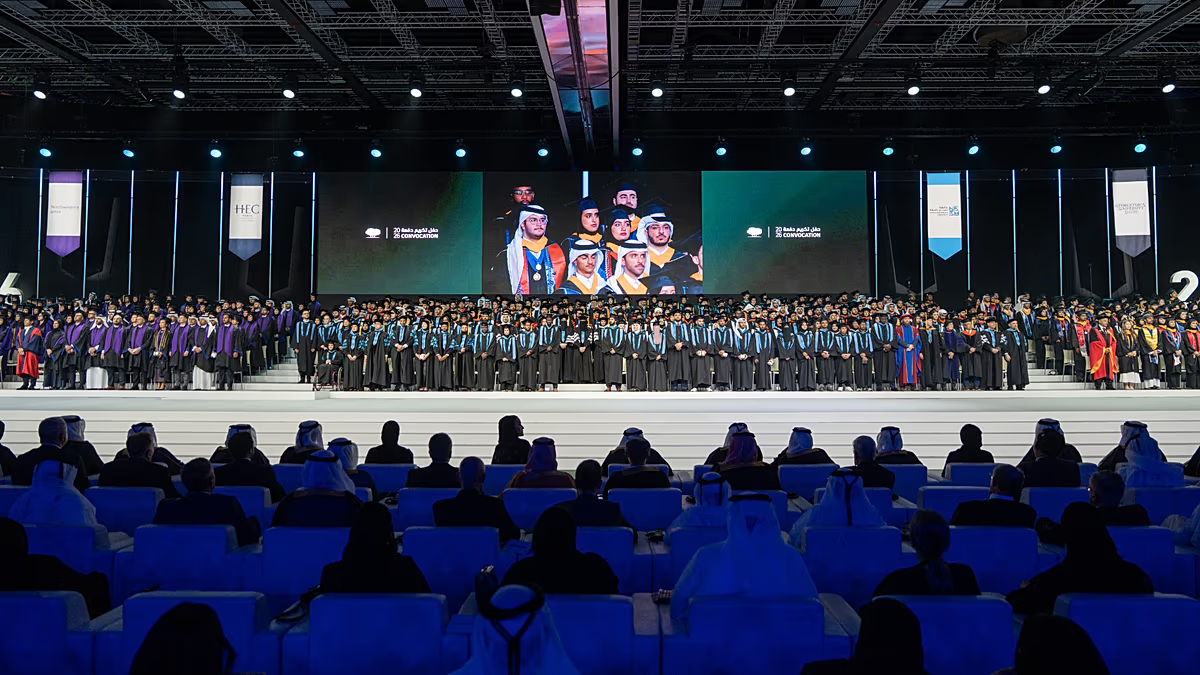
Now, as these same students gather for their long-awaited convocation, the ceremony carries a weight of triumph that extends far beyond academic achievement. It is a celebration of perseverance. For Franca and Al-Essa, who are among the recipients of Qatar Foundation’s prestigious Excellence Award, the moment is particularly poignant. Franca, who grew up in a favela in Rio de Janeiro, sees her graduation as a surreal milestone that makes every struggle worthwhile. Their stories, and those of their classmates, are testaments to overcoming extraordinary disruption. The graduation gowns they now wear symbolize more than four years of study; they represent resilience, adaptability, and the successful defense of their educational journey against a backdrop of global instability.
In her parting message to the graduates, Dr. Gamar expressed a hope that they leave with “so much more than a piece of paper.” Indeed, the class of this convocation week carries with them an unparalleled practical education in crisis management, community solidarity, and personal fortitude. They have learned that education is not a fragile construct confined to peaceful times, but a resilient force that can adapt, persist, and even thrive under pressure. As they step forward, they do so not as novices, but as individuals already seasoned by a real-world trial, equipped not only with their degrees but with the proven conviction that they can navigate profound challenges and emerge stronger, together.