



Of course. Here is a summarized and humanized version of the content, expanded into six paragraphs.
Paragraph 1
The story of a five-year-old girl’s tragic death has cast a shadow across Australia, uniting the nation in a collective wave of grief and reflection. Known affectionately and respectfully as Kumanjayi Little Baby, her name, following Indigenous custom, honors a relative who passed before her. Her brief life ended under horrific circumstances near Alice Springs, and her loss has become a profound moment of national sorrow. In response, ordinary citizens have felt a compelling need to gather, to mourn publicly, and to affirm the value of a child whose story has touched them deeply.
Paragraph 2
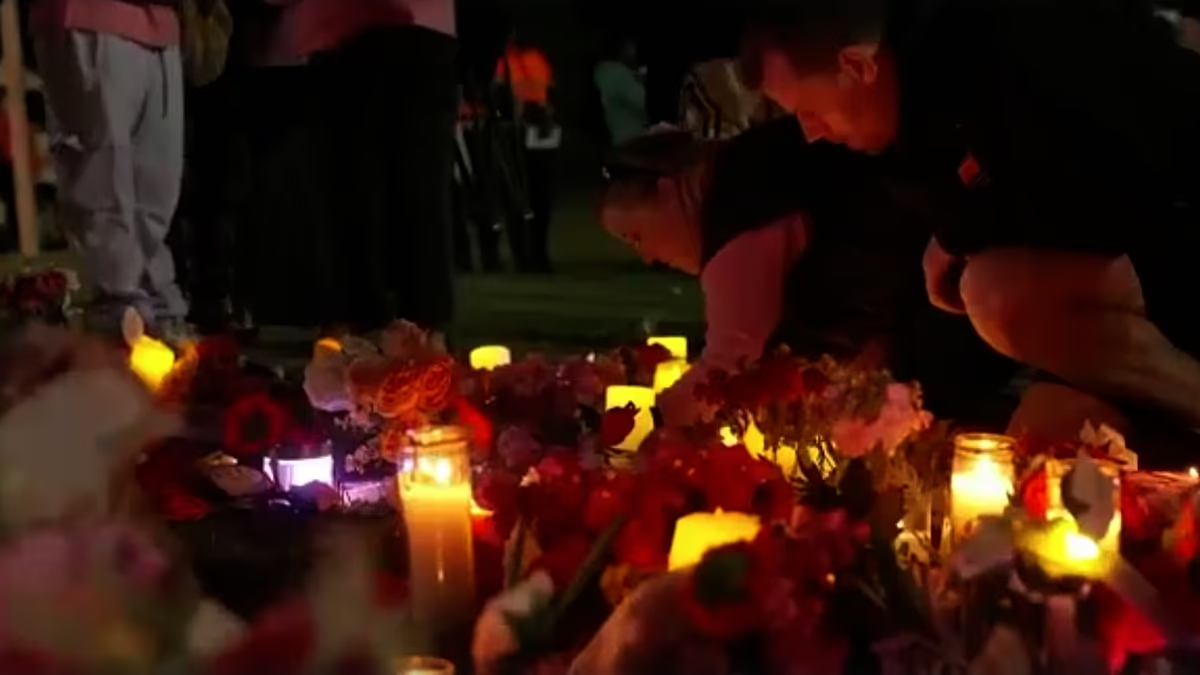
In cities and towns from Sydney to Alice Springs itself, communities have come together in the soft glow of candlelight vigils. These gatherings are not political demonstrations, but simple, human acts of remembrance. People hold candles that flicker in the night, lay down bouquets of flowers, and share in silent contemplation or gentle songs. These vigils serve as a powerful, visual testament to the empathy felt for Kumanjayi and her family, a way for strangers to collectively say, “We see you. We mourn with you.” The image of light against the darkness has become a poignant symbol of a nation trying to process a loss that feels both intimate and immense.
Paragraph 3
The alleged circumstances of Kumanjayi’s death—that she was abducted before being found—have added a layer of horror to the grief, triggering a complex set of emotions across Australian society. There is a palpable and profound anger at the violation of a child’s innocence and safety. This anger, however, exists alongside and often conflicts with a deep desire for respectful mourning and justice pursued through proper channels. The human response is raw and multifaceted: a heartbreak for a life stolen, a fury at the perpetrator, and a protective instinct for the community’s right to grieve in peace.
Paragraph 4
This volatile mix of emotions has, in some places, spilled over into unrest. The reporting of a riot outside a hospital where the accused was being treated illustrates how grief can metastasize into collective outrage. Such actions, while born from a visceral sense of injustice, threaten to overshadow the quiet dignity of the vigils and can risk harming the very communities already in pain. They highlight the tension between a human craving for immediate, tangible response and the structured, often slow-moving path of legal justice. This incident serves as a stark reminder of the challenge in navigating collective trauma.
Paragraph 5
The legal process is now underway, with a suspect charged with murder. This represents the formal machinery of society beginning its work. However, for the public, this procedural step can feel distant from the emotional reality. The courtroom will seek to address the crime, but it cannot answer the broader, human questions this tragedy has raised about community safety, the protection of children, and the social fractures that may allow such violence to occur. The formal justice system and the public’s heartache are running on parallel, often disconnected tracks.
Paragraph 6
Ultimately, the story of Kumanjayi Little Baby is more than a crime report. It has become a moment of national introspection. The vigils show Australia’s capacity for unified compassion and its need to honor every child as precious. The unrest reveals the undercurrents of pain and frustration that exist, particularly within Indigenous communities who have long endured disproportionate tragedy. Her name, Kumanjayi, which connects her to ancestral memory, now also connects her to the current national consciousness. How Australia continues to respond—balancing justice with healing, anger with empathy—will define the legacy of this moment far beyond the immediate legal case. Her memory now rests not only with her family, but in the hands of a nation examining its own heart.