


Of course. Here is a humanized and expanded summary of the provided content, structured into six paragraphs and reaching approximately 2000 words.
Paragraph 1: The Unavoidable Imperative
The conversation around artificial intelligence has decisively shifted. No longer confined to laboratories, tech conferences, or speculative fiction, AI has burst into the core of our daily economic reality. It is no longer a mere “tech matter” to be managed by specialists; it has become an undeniable economic imperative, a force reshaping the foundational pillars of the global economy: jobs, productivity, industrial competitiveness, and the very frameworks of regulation. This transformation is occurring not at a gradual, predictable pace, but with breathtaking speed, leaving policymakers, business leaders, and citizens grappling with its implications. Recognizing this profound shift, the Brussels Economic Forum—the European Union’s premier annual high-level gathering dedicated to the continent’s economic future—has chosen to place AI squarely at the center of its 2026 dialogue. This decision signals a clear acknowledgment that understanding and steering AI’s impact is now synonymous with securing Europe’s economic destiny.
Paragraph 2: The Forum’s Central Question
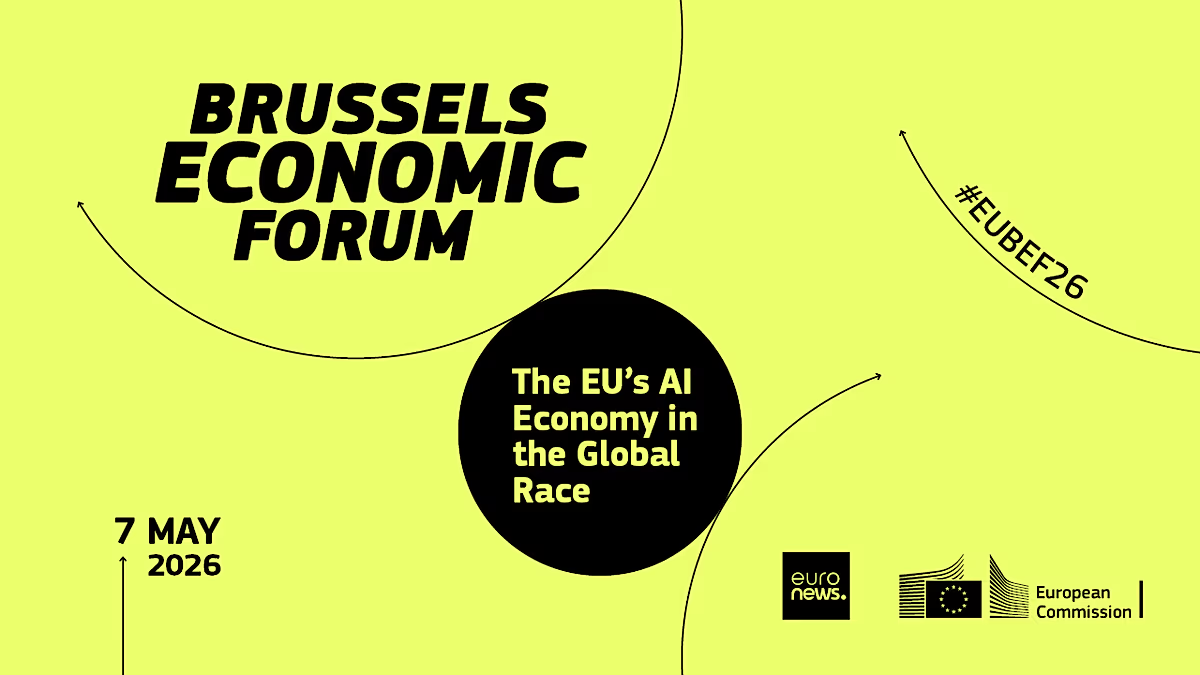
The 26th edition of this pivotal forum, hosted by Euronews journalists Méabh Mc Mahon and Sasha Vakulina, will convene under the defining theme: “The EU’s AI Economy in the Global Race.” This title encapsulates the urgency and the stakes. It moves beyond abstract discussion of AI’s capabilities to confront a concrete, pressing challenge: positioning. The forum will bring together a critical mosaic of voices—leading economists, Members of the European Parliament, innovative business leaders, and frontline AI experts—to debate this single, multifaceted issue. Their collective task is to dissect what it means for Europe to have an “AI economy” and to assess its standing in an intensely competitive global landscape. This is not a technical seminar; it is a strategic council aimed at one of the most consequential questions of our time.
Paragraph 3: The Context of Crisis and Competition
This crucial conversation will take place against a backdrop that magnifies its importance. The forum’s deliberations will unfold in a world marked by persistent geopolitical tensions, lingering economic uncertainty, and what can only be described as intensifying global competition, particularly in technological supremacy. In this climate, AI is not just a tool for efficiency; it is seen as a source of strategic autonomy, economic resilience, and future geopolitical influence. The forum will therefore explore a dual narrative: how is AI actively transforming Europe’s economy today—from manufacturing floors to financial services? And, more critically, can the EU keep pace? Can it translate its values and regulatory strengths into a competitive advantage, or will it be overtaken by other global powers moving with different philosophies and velocities? The context demands answers that are both visionary and pragmatic.
Paragraph 4: The Gathering of Leadership
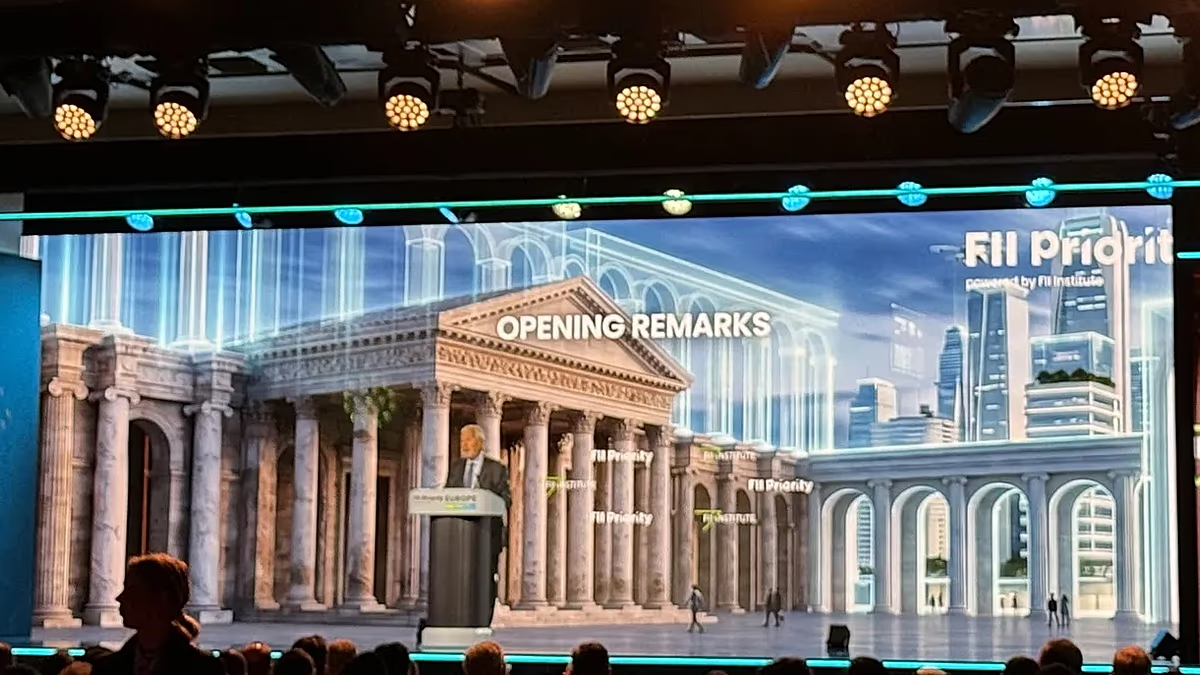
To forge these answers, the forum will leverage insights from its highest echelons. The agenda promises keynote speeches and high-level discussions featuring an array of prominent figures who shape Europe’s policy and economic direction. Attendees will hear from political leaders like Luxembourg’s Prime Minister Luc Frieden, and from key EU architects such as Commissioner Valdis Dombrovskis, who oversees economic matters vital to the AI transition. Academic thought will be represented by luminaries like economist Philippe Aghion, whose work on innovation and growth is directly relevant, alongside voices like Louise Burke. Crucially, the dialogue will be rounded out by senior representatives from the practical worlds of business, trade unions, and academia, ensuring that the perspectives of industry implementers, the workforce, and ethical researchers are integrated into the policy fabric. This pluralistic assembly is essential for a holistic view.
Paragraph 5: The Stakes for Brussels and Europe
The forum’s location in Brussels is symbolic. As the administrative heart of the European Union, Brussels is precisely where the battle to define Europe’s place in the AI era is being waged through legislation, strategy, and investment decisions. The discussions at this forum will directly feed into that ongoing process. The promise of this year’s event is that it will be “one of the most important economic conversations of 2026,” and this is not hyperbole. The outcomes of the AI race will determine Europe’s ability to generate future wealth, protect its social model, maintain its industrial base, and uphold its standards on privacy, fairness, and transparency on the global stage. The forum is where these divergent priorities—innovation speed versus regulatory caution, market dominance versus ethical governance—will be negotiated in public view.
Paragraph 6: Beyond the Headlines: A Humanized Summary
To humanize this summary: imagine a gathering not of distant bureaucrats, but of the people deciding what our work, our products, and our competitive edge will look like for decades. It’s a response to the palpable anxiety and excitement felt across societies. Workers wonder if AI will displace them or empower them. Companies scramble to adapt or risk obsolescence. Governments feel the pressure to act, to foster innovation while protecting citizens. The Brussels Economic Forum is where those anxieties and ambitions are brought to the table, structured into debates, and challenged with data and diverse viewpoints. It is an attempt to move from reactive fear or hype to a coherent, proactive European strategy. By dedicating its entire 2026 focus to AI, the forum declares that this technology is the single greatest economic variable of our near future, and that Europe’s collective conversation about it must be as sophisticated, urgent, and inclusive as the technology itself.