


A Balancing Act: Spain Adjusts Hantavirus Quarantine Protocol for Cruise Ship Contacts
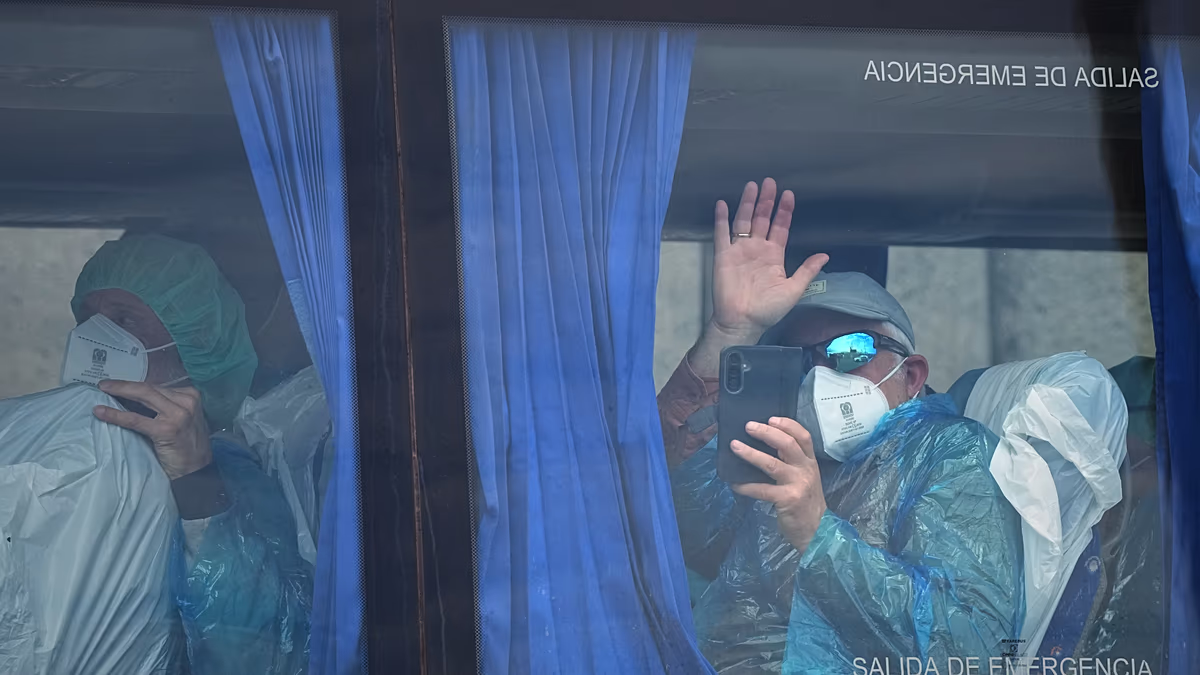
In response to the ongoing hantavirus outbreak linked to the MV Hondius cruise ship, Spanish public health authorities have introduced a nuanced update to their quarantine protocol, aiming to balance rigorous infection control with humane considerations. The outbreak, which has seen 14 passengers hospitalized in Spain—with one confirmed positive case—originated from the vessel and has created a complex international public health scenario. The newly approved guidelines stipulate a total quarantine period of 42 days for identified contacts. However, for those who remain asymptomatic and test negative via PCR, the final 14 days of this period may now be completed at home, provided they can guarantee strict isolation conditions. This shift represents an effort to alleviate the significant burden of lengthy hospital stays while maintaining safety, as these individuals will still undergo daily monitoring by public health officials.
Ensuring Safety Through Controlled Transitions
The protocol meticulously details the conditions for this transition to home quarantine, underscoring the continued priority of containment. The initial 28 days must still be spent in a hospital setting. When asymptomatic contacts are transferred home, the process is designed to minimize any risk of transmission. They must be transported using standard medical vehicles, not public transport, and both the individual and the driver are required to wear FFP2 masks and adhere to stringent hand hygiene practices. This careful orchestration highlights the authorities’ intent to prevent any potential spread during the movement phase. Meanwhile, the sole confirmed positive case in Spain will remain isolated in a specialized High-Level Isolation and Treatment Unit until full clinical recovery, ensuring the most intensive care is reserved for active infections.
The Global Picture: WHO Updates and International Coordination
The situation extends far beyond Spain, as highlighted by a recent update from the World Health Organization (WHO). The global body confirmed a new case in a crew member who disembarked in Tenerife and was repatriated to the Netherlands, bringing the total number of infections associated with this outbreak to 12. WHO Director-General Tedros Adhanom Ghebreyesus provided this information, noting reassuringly that no new deaths have been recorded in 20 days. The death toll remains at three, all occurring before May 2nd, when the outbreak was first formally reported. Tedros emphasized that this newly detected case has been in isolation since repatriation, demonstrating the effectiveness of international containment protocols.
A Call for Sustained Global Vigilance
In his statements, Tedros underscored the need for continued global vigilance. He urged all affected countries to maintain close monitoring of passengers and contacts throughout the remaining quarantine periods. The scale of the response is vast, with over 600 possible contacts across 30 countries still under observation. Tedros acknowledged that tracing a “small number of high-risk contacts” is still underway, indicating the challenges of managing a diffuse international incident. He extended thanks to the nations actively cooperating in the epidemiological investigation and response, including Argentina, Cabo Verde, Chile, the Netherlands, South Africa, Spain, and the United Kingdom. This collaborative effort is crucial in managing a outbreak that transcends borders.
The Human Dimension of Public Health Policy
Spain’s protocol adjustment—allowing eligible contacts to complete quarantine at home—reflects an important human dimension in public health crisis management. A 42-day hospital quarantine represents a profound personal and emotional strain. By permitting home isolation under strict safeguards for those showing no signs of illness, authorities acknowledge this burden while relying on technology (daily remote checks) and personal responsibility (guaranteeing home isolation conditions) to uphold safety. This approach fosters a more sustainable and compassionate response, potentially improving compliance and mental well-being among affected individuals, without compromising the overarching goal of stopping the virus’s spread.
Conclusion: A Model of Adaptive and Collaborative Response
The evolving management of the MV Hondius hantavirus outbreak illustrates a modern, adaptive approach to global public health. Spain’s refined protocol shows how policies can be tempered with practicality and compassion as more data is gathered. Simultaneously, the WHO’s coordination and updates demonstrate the indispensable role of international transparency and cooperation in tracking and containing such threats. While the reassuring news of no recent deaths and the isolation of new cases points to effective current measures, the continued monitoring of hundreds of contacts worldwide reminds us that such crises require persistent, collective effort. The blend of national policy adaptation and global solidarity offers a model for navigating the complex challenges posed by infectious diseases in an interconnected world.