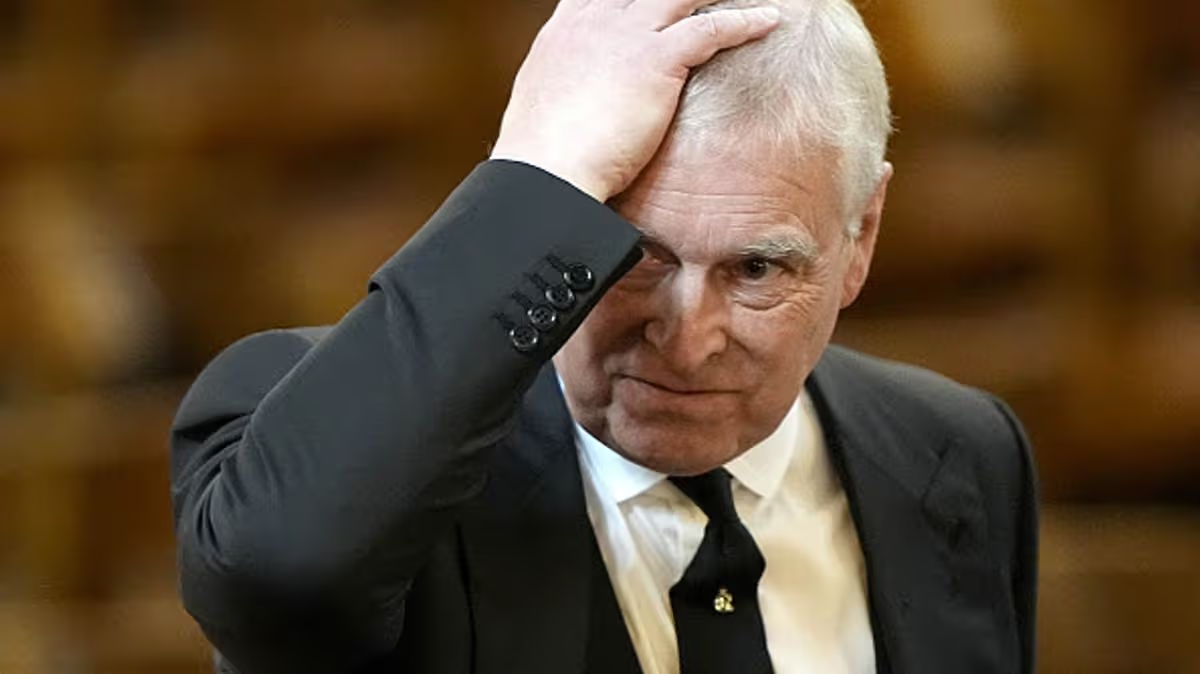


The investigation into allegations against the former Prince Andrew, Andrew Mountbatten-Windsor, has entered a significant and more complex phase, marked by the direct and formal involvement of Buckingham Palace. Thames Valley Police (TVP) has confirmed that the palace is now “actively assisting” their inquiries. This assistance, described as being in line with King Charles’s previous pledge of cooperation, reportedly includes providing visitor logs from royal residences connected to Andrew and detailed records of his Private Protection Officers’ shift patterns between 2001 and 2010. This development underscores the seriousness with which authorities are treating the case, moving the investigation from the periphery of the royal institution to its very heart. A source close to the matter emphasized the sensitivity of the probe, stating a commitment to leave “no stone unturned,” and issued a direct appeal for any potential victims or witnesses to come forward to speak with detectives.
The scope of the investigation itself has broadened considerably. Initially focused on potential misconduct in a public office related to Andrew’s former role as the UK’s special representative for international trade and investment, police have now explicitly expanded it to include allegations of sexual misconduct. This expansion reflects the multifaceted nature of the accusations swirling around Andrew, which are intrinsically linked to his well-documented association with the late convicted sex offender Jeffrey Epstein. The legal framework of misconduct in a public office is notably wide, encompassing not only financial impropriety or sharing confidential information but also sexual misconduct, corruption, and perverting the course of justice. Detectives are reportedly keen to clarify that their focus is not narrow, countering any public perception that they are looking only at his conduct as a trade envoy.
Central to the unfolding investigation are specific, grave allegations from a new source. Police are examining a claim by a woman, who is not a British national, that Jeffrey Epstein arranged for her to be flown to the United Kingdom for a sexual encounter with Andrew in 2010. She alleges that this took place at his then-home, Royal Lodge in Windsor, and was followed by a visit to Buckingham Palace for tea and a private tour. While this woman has not yet formally spoken with officers, specialist detectives have communicated through her attorney—who also represented Andrew’s late accuser, Virginia Giuffre—that they are ready to listen whenever she feels prepared. This allegation adds a new dimension to the case, directly linking the Epstein scandal to royal properties and suggesting a pattern of behavior that investigators are determined to explore fully.
The shadow of previous accusations looms large over this new phase. Virginia Giuffre’s civil lawsuit, which alleged sexual abuse by Andrew on three occasions when she was a teenager, was settled out of court in 2022, with Andrew consistently and strenuously denying the claims. Giuffre’s tragic death by suicide in April of last year, after years of torment from the abuse she suffered, is a somber reminder of the profound human cost at the center of the Epstein scandal. Her case, while legally resolved, has irrevocably shaped the public and judicial scrutiny of Andrew’s associations. The current criminal investigation, while separate, operates in this fraught context, with detectives now seeking the original Epstein files from the U.S. Department of Justice to aid their inquiry.
Within the royal family, the institutional and personal ramifications are profound. King Charles has moved decisively to distance the monarchy from his brother, stripping Andrew of his military affiliations, royal patronages, and the use of the style “His Royal Highness” in early 2022. He has also evicted Andrew from the Royal Lodge. The King’s statement following Andrew’s arrest in February expressed “deepest concern” and unequivocal support for the investigative process, stressing that “the law must take its course.” Royal sources have reiterated this position, confirming the family’s full cooperation. This stance represents a clear attempt to balance familial ties with the imperative to protect the integrity of the institution, acknowledging the gravity of a police investigation that has now physically entered royal homes through searches at both Royal Lodge and Andrew’s current residence, a cottage on the Sandringham estate.
As the investigation proceeds, it faces substantial legal and logistical challenges. A key hurdle will be establishing whether Andrew’s role as a trade envoy legally constituted a “public office,” a term with a complex definition in British law. Police have indicated that even if this specific charge cannot be sustained, they will continue to pursue evidence of any other separate offences uncovered. The path ahead is expected to be lengthy and meticulous, involving international legal cooperation and the delicate task of gathering evidence from years past. For the public, the case continues to raise painful questions about power, accountability, and privilege, while for the monarchy, it represents an ongoing and deeply unwelcome crisis that demands transparency and deference to the judicial process above all else. Buckingham Palace has declined to comment further, as the slow, determined wheels of justice continue to turn.