
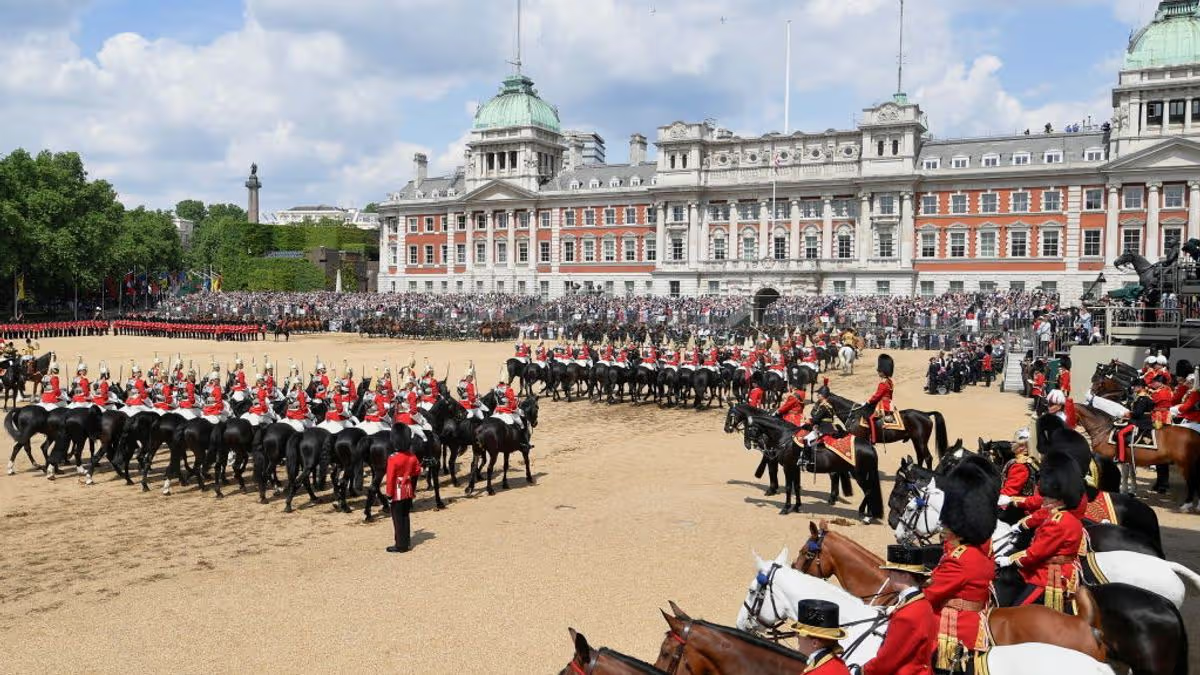


The Horse Guards building stands as a silent, stone sentinel, its Palladian façade watching over one of London’s most iconic and historic open spaces: the parade ground at Whitehall. This is not merely a structure of architectural interest, but the symbolic heart of British military ceremony and pageantry. Here, the daily Changing of the Guard occurs, a timeless ritual of precision and tradition that draws spectators from around the world. The building itself, completed in the mid-18th century, serves as the formal entrance to St. James’s Park and Buckingham Palace from Whitehall, a grand gateway between the public thoroughfare and the royal sanctums. Its clock tower and archway frame a view steeped in history, where the echoes of hoofbeats from cavalry regiments seem to linger in the air, connecting the present to centuries of service and spectacle.
Immediately adjacent to this military landmark, the quiet but immense power of the British government hums within a cluster of buildings whose names are synonymous with statecraft. To one side lies Dover House, an elegant Georgian building that houses the Scotland Office, a node in the complex network of UK governance. More significantly, the sprawling complex of the Cabinet and Privy Council Offices, along with the world-famous, modest black door of No. 10 Downing Street, form an intimate administrative neighbourhood with Horse Guards. This proximity is both practical and poetic. The Prime Minister’s residence is just steps away from the ceremonial military guard, a short walk that countless leaders have taken during moments of national crisis or celebration. It embodies a tangible link between the executive power of the government and the enduring, disciplined force that protects the state, a daily reminder that the business of running a nation occurs in the shadow of those who have historically defended it.
The web of influence extends further from this core. A short stroll in any direction brings one face-to-face with the institutions that shape the nation’s destiny. The Chancellor of the Exchequer has his offices nearby, the steward of the nation’s economy operating in close consultation with the Prime Minister at Number 10. The grand Victorian edifice of the Foreign and Commonwealth Office, with its ornate interiors and diplomatic bustle, stands as a monument to Britain’s global engagements and historical empire. Perhaps most evocative is the nearby entrance to the Cabinet War Rooms, the clandestine, reinforced basement where Winston Churchill and his government directed the defence of the nation during the darkest hours of the Second World War. This hidden bunker, now a museum, lies silently beneath the busy streets, a stark contrast to the ceremonial pomp above and a sobering reminder of the real and urgent decisions that have been made in this small quarter of London.
All of this—the military ceremony, the daily political administration, the economic planning, and the diplomatic manoeuvring—culminates in a direct visual and symbolic line to the ultimate seat of British legislative power: the Palace of Westminster. The Houses of Parliament, with their unmistakable Gothic Revival silhouette and the towering clock of Big Ben, are a near neighbour, dominating the skyline at the end of Whitehall. This proximity makes the entire area a living theatre of the British constitutional system. One can imagine a Minister walking from the Cabinet Offices through Horse Guards Arch, past the saluting guards, and on to the Commons to deliver a statement. The physical journey mirrors the democratic process: policy formulated in the executive offices is presented, debated, and ratified in the legislative chamber, all within a compact, walkable district. This geography fosters a unique and continuous dialogue between the branches of government.
Collectively, this concentration of buildings within a few hundred yards forms arguably the most dense and powerful nexus of national authority in the world. It is a landscape where history is not archived but actively inhabited. Every brick and cobblestone speaks of layered narratives: of royal processions, of political scandals whispered in corridors, of wartime resolve forged under ground, of economic budgets unveiled, and of laws debated under the watchful eye of the public. This is not a sterile government precinct; it is a vibrant part of the city, where tourists mingle with civil servants, and where the ring of a ceremonial sword on the parade ground might coincide with the closing of a diplomatic deal in a nearby office. The human experience here is one of constant intersection between the past and the pressing present.
Therefore, the Horse Guards building is far more than just a location on a map; it is the anchor of a profound historical and functional ecosystem. Its parade ground is the stage, but the surrounding buildings are the directors, writers, and producers of the ongoing national story. From here, one sees the British state in its full, dynamic form: the ceremonial majesty that inspires unity and pride, coupled with the pragmatic, often gritty, machinery that governs daily life. It is a place where symbolism and substance coexist, where the guard’s immobile horse statue looks upon a world of relentless motion and decision. To stand in this space is to stand at the very crossroads of British identity, witnessing the delicate, enduring balance between tradition and power, between the spectacle of the state and its solemn responsibilities.