


A Bite of History and Controversy: The Debate Over a “Legendary” Chippy
In a recent TikTok review, a visitor to Middleton’s Fish and Chip Shop, located within the Beamish Living Museum in County Durham, ignited a lively public debate that encapsulates modern British attitudes toward tradition, value, and the beloved national dish. The reviewer, posting under the username Fish and Chips Catering, framed his visit as a quest to determine if this “legendary” establishment was worth its reputation. His experience was steeped in nostalgia; he described stepping into the shop as akin to “going back in time to the 1900s,” complete with period fryers and cooking methods using traditional beef dripping. This deliberate historical authenticity extended to the service, with meals wrapped in newspaper-style packaging, enhancing the sense of a culinary time capsule.
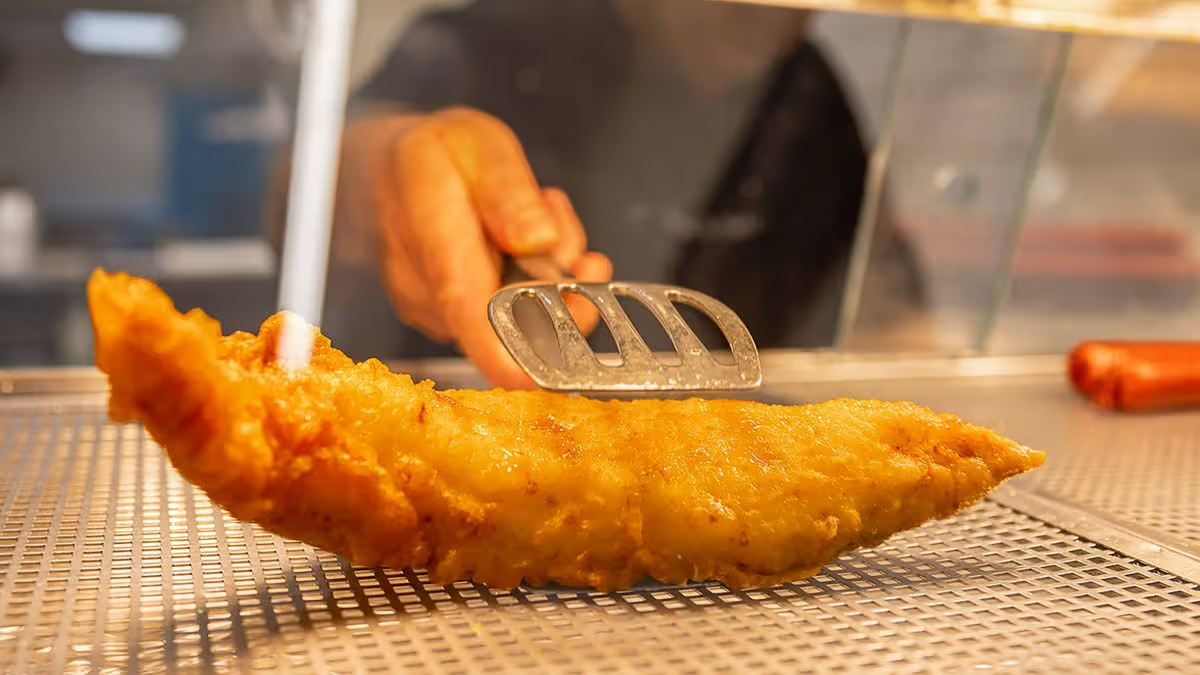
The reviewer’s verdict on the food itself was overwhelmingly positive. He praised the “golden” and “crisp” batter on the fish and celebrated the chips as “epic” with a “solid crunch.” Despite a minor critique that the fish portion “could have been bigger,” he awarded it a 9/10 rating and declared the overall meal “unreal,” strongly endorsing the trip. His enthusiasm highlighted a key aspect of the chippy’s appeal: it offers not just a meal, but a curated experience, blending edible satisfaction with a tangible connection to a bygone era. This resonates with a segment of consumers who prize authenticity and heritage over mere convenience.
However, the review’s focus on quality was swiftly overshadowed in the comments section by a fierce debate over cost. The reviewer noted that a small fish and chips was priced “under a tenner,” but the shop’s website lists it at £9.10. For many viewers, this price for a reportedly modest portion became the central issue. Comments ranged from sarcastic—“£9.10 for half a slice of fish. Get a grip”—to bluntly critical—“That is small for the price.” Another user exaggerated the portion with “Two fish bits and four chips. Madness,” illustrating the visceral reaction to perceived poor value. This backlash underscores a growing sensitivity among consumers to pricing, especially for what is traditionally considered a humble, everyday meal.
This incident at Middleton’s is a microcosm of a broader national conversation. The average price for a fish and chips supper across the UK currently hovers between £11 and £12, with a standard cod and chips typically ranging from £10.50 to £11.50. These figures represent a significant climb from past years, driven by a confluence of economic pressures. Global fishing quotas and sustainability concerns have led to shortages and higher costs for key species like cod. Simultaneously, soaring energy prices, particularly for running deep-fat fryers, and increased business overheads, including staff wages, have squeezed chippies from all sides. The museum setting of Middleton’s likely adds further operational complexities, potentially influencing its pricing structure.
The divided response to the TikTok review—split between those appalled by the cost and those, like one commenter who said it “looks like a fantastic restaurant,” eager to visit—reflects a societal split in dining priorities. One group evaluates a meal primarily through a lens of monetary value and portion size, a pragmatic approach in an era of inflation and tightened budgets. The other group places higher value on experiential dining: the ambiance, the historical context, and the perceived authenticity and quality of the food. Middleton’s, by its very design, caters powerfully to this second demographic, offering something beyond the standard takeaway.
Ultimately, the story of this one review transcends a simple assessment of a fish and chip shop. It serves as a cultural snapshot, highlighting the tensions between preserving cherished traditions and adapting to contemporary economic realities. The “legendary” status of such establishments is no longer judged solely on the taste of the batter or the flakiness of the fish, but also on the balance between the experience offered and the price paid. As Brits continue to navigate the rising costs of a classic supper, the debate over Middleton’s illustrates that the value of a meal is increasingly measured in both pounds and pennies, and in the intangible weight of history and memory.