

The Cost of a Single Punch: A Life Derailed by a Moment of Violence
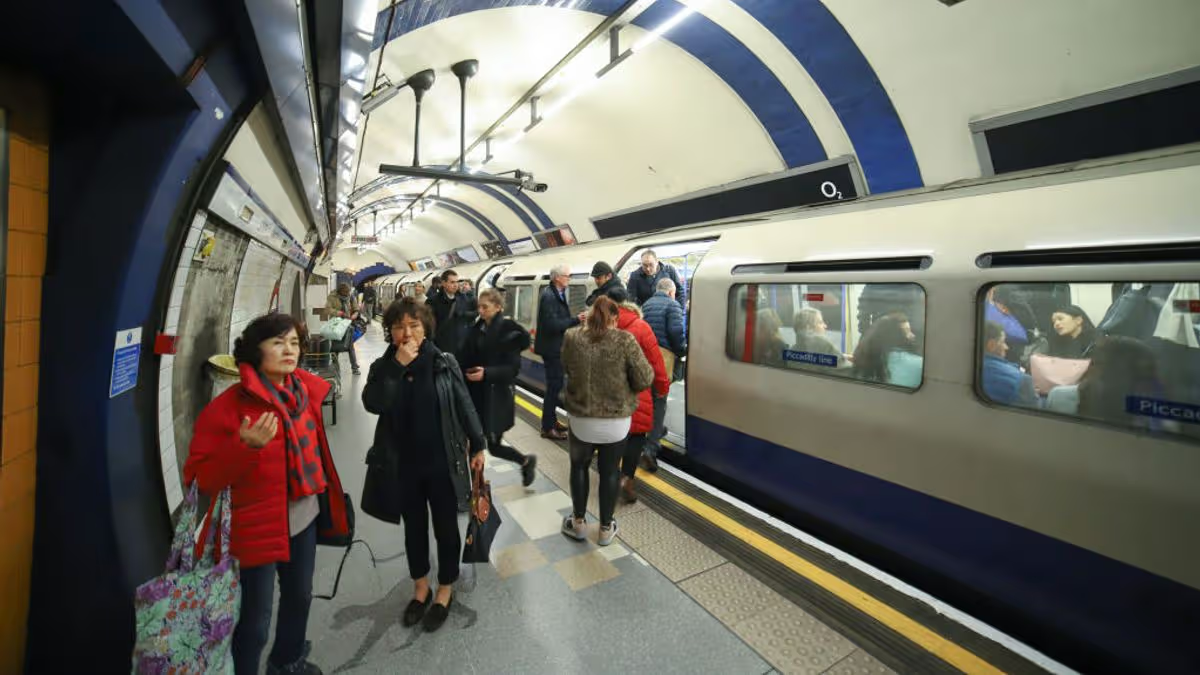
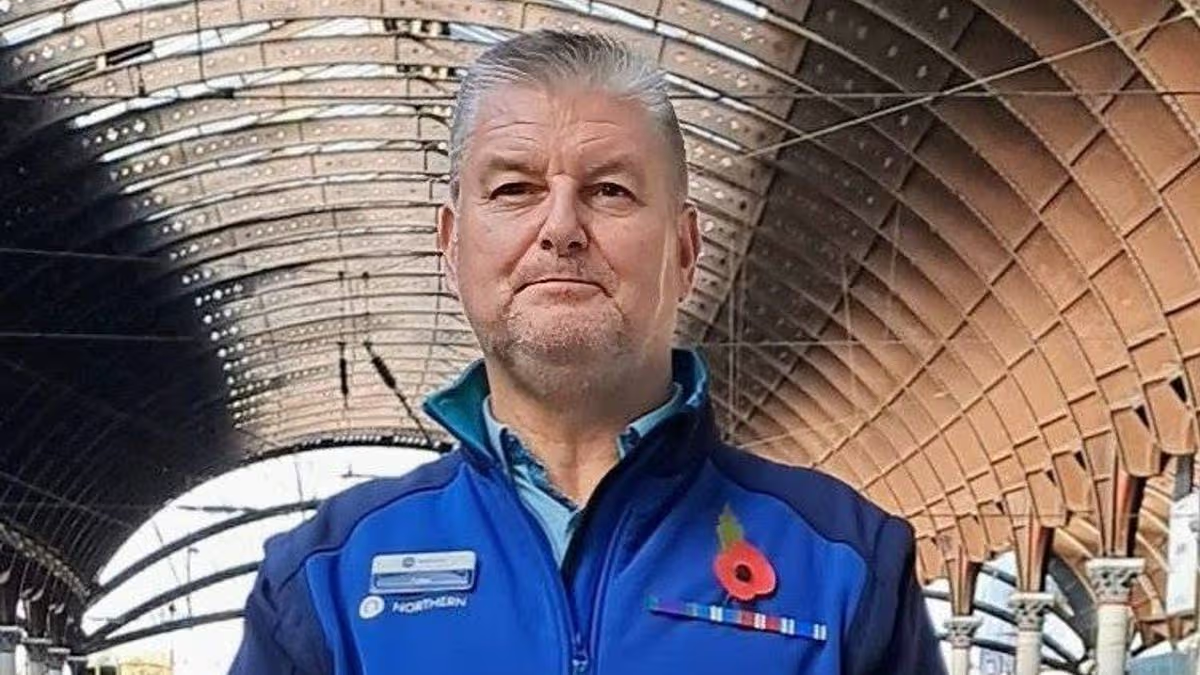
Peter Corley, a 62-year-old grandfather and former soldier, dedicated his post-retirement years to public service on Britain’s railways. For him, being a train conductor was more than a job; it was a way to stay active, connect with people, and contribute to the daily rhythm of community life. His commitment was so valued that his own voice was used for the automated announcements on Northern Trains. However, on a seemingly ordinary afternoon on December 14, 2024, this chapter of his life was violently closed. While working a Leeds to York service buzzing with pre-Christmas cheer, Peter approached two young men, Finley Seggie and a friend, for their tickets. A routine request, the very core of his duties, spiraled into a nightmare when Seggie, unable to produce a valid ticket, responded not with words but with a devastating blow.
The assault was swift and brutal. After being told they would need to disembark at the next station, Seggie, then 21, advanced with a “crooked unpleasant grin” and landed a single, powerful punch square on Peter’s mouth. The force was so great that Peter vividly recalls watching his own tooth fly through the air. He fell back, his glasses scattering, as the assailant fled. The festive atmosphere shattered, replaced by shock as passengers, covered in Peter’s blood, rushed to his aid. What should have been a simple case of fare evasion escalated in an instant into a life-altering act of aggression, leaving Peter physically wounded and psychologically scarred on the floor of a carriage.
The immediate physical aftermath was severe and costly. Peter lost his top-right incisor, requiring extensive dental work amounting to £3,000, which was later covered by his employer. Yet, the deeper wounds proved more enduring. The mental trauma stemming from the sudden, unprovoked attack gradually overwhelmed him. Despite a distinguished career that included service as a Lance Corporal and later as a custody inspector with West Yorkshire Police—roles that involved inherent risk—the psychological impact of this single violent encounter on his own train proved insurmountable. By May 2025, the man who thrived on public interaction and problem-solving was forced to relinquish the job he loved, leaving due to mental-health difficulties directly triggered by the assault.
While Peter transitioned to work in a supermarket, the judicial process unfolded for his attacker. Finley Seggie was arrested, identified via CCTV, and initially claimed self-defence—an assertion starkly contradicted by the evidence. He ultimately pleaded guilty to Actual Bodily Harm (ABH). In May 2026, he received a 16-month suspended sentence at Leeds Crown Court, avoiding immediate incarceration. For Peter, the legal outcome brought a measure of satisfaction, but not closure. He expressed a profound lack of personal grudge, viewing Seggie as someone who had chosen a “wrong path.” His deeper desire was for restorative justice: a face-to-face meeting where he could look his assailant in the eye and simply ask, “Why?”
Peter’s reflections on his career highlight what was lost, not just for him, but for the travelling public. He describes the role of a ticket inspector as intensely challenging, often involving solitary management of conflicts, including threats with knives. Yet, his focus remained on helping people, explaining delays, and striving to improve the passenger experience. He speaks with affection for the railways and the many dedicated individuals working within them. His forced departure represents more than a personal tragedy; it signifies the loss of an experienced, compassionate, and resilient professional from a system that relies on such people.
This story is a stark reminder of the human cost behind headlines of antisocial behaviour. For Finley Seggie, a momentary decision to evade a fare and then lash out resulted in a criminal record. For Peter Corley, that same moment meant the loss of a tooth, his career, and his sense of security. The suspended sentence may have spared one man prison time, but the attack imposed a lasting sentence of its own on the victim. Peter’s dignity in the face of this adversity, his lack of bitterness, and his yearning for understanding over vengeance speak to a resilience that no punch could destroy, even as the echoes of that blow continue to reshape his life.