

Beneath the idyllic images of Scotland’s misty glens and rugged highlands, a sophisticated deception was unfolding. Researchers from Clemson University’s Media Forensics Hub have uncovered a network of social media accounts that expertly masqueraded as Scottish independence supporters, sharing picturesque landscapes and critiques of the British government, only to reveal a far different allegiance. In reality, these seemingly grassroots profiles were a covert operation run by Iran’s Islamic Revolutionary Guard Corps (IRGC), an elite paramilitary force long accused of conducting foreign influence campaigns. For months, across platforms like X, Instagram, and Bluesky, these accounts diligently built a veneer of authenticity, cultivating followers and engaging in local political debates, all while hiding their true geopolitical purpose.
The pivotal shift came with the outbreak of conflict between the U.S., Israel, and Iran in late February. Overnight, the accounts that had spent years posting about Scottish nationalism or critiquing the UK’s Labour Party and Royal Family completely pivoted. They began flooding feeds with pro-Iranian propaganda, including footage of Iranian strikes, glorification of the late Ayatollah Ali Khamenei, and AI-generated images purporting to show destroyed U.S. military bases. The deception was meticulous; many profiles presented as women using stolen or AI-generated photos, and they so effectively blended into genuine Scottish and Irish political conversations that real users actively engaged with them. A crucial slip—a Farsi character accidentally inserted into an English hashtag—betrayed the operators’ true location and language, highlighting the constant challenge of maintaining a flawless false identity.
This network was not limited to the British Isles. In a parallel effort, another set of accounts, posting in Spanish, pretended to be progressive activists, immigrants, or supporters of Venezuela’s Nicolás Maduro from locations like Texas, California, Venezuela, and Chile. These profiles latched onto sensitive issues within American society, such as criticizing the U.S. Immigration and Customs Enforcement (ICE) agency and amplifying viral events like protests following police shootings. By posing as authentic local voices, they aimed to inflame existing social divisions and direct anger toward U.S. institutions, all while operating under the directive of a foreign military entity. The strategy was clear: build trust within a specific community around local grievances, then harness that audience for a sudden shift in messaging to serve Iranian interests.
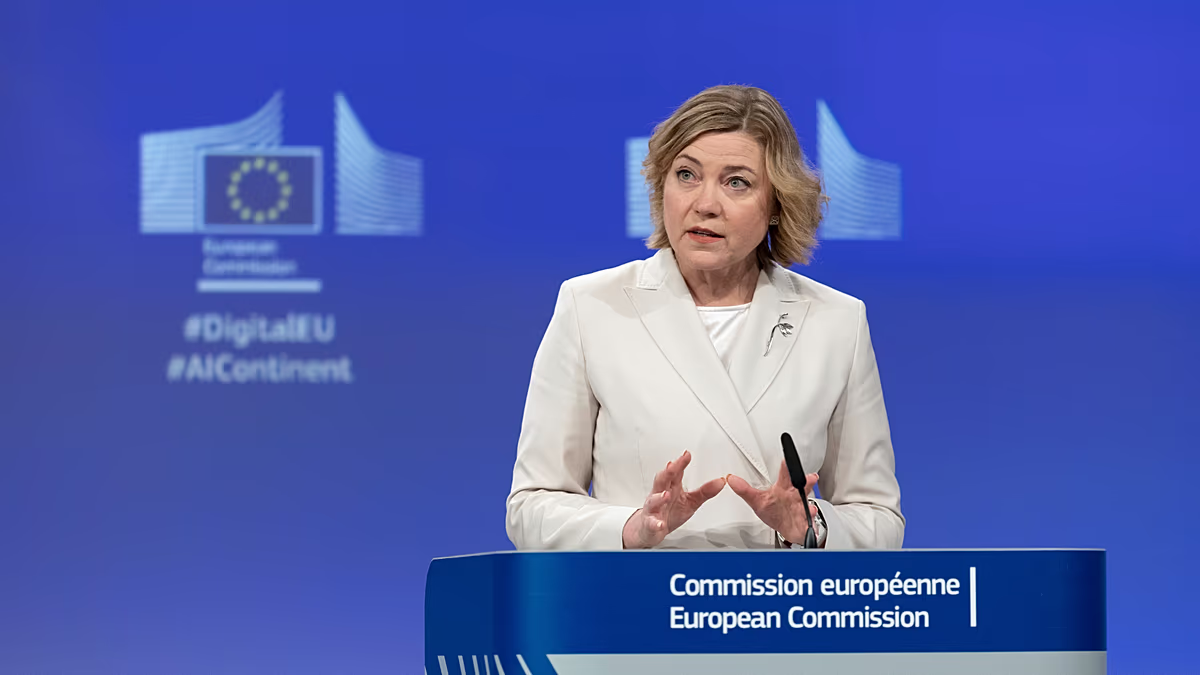
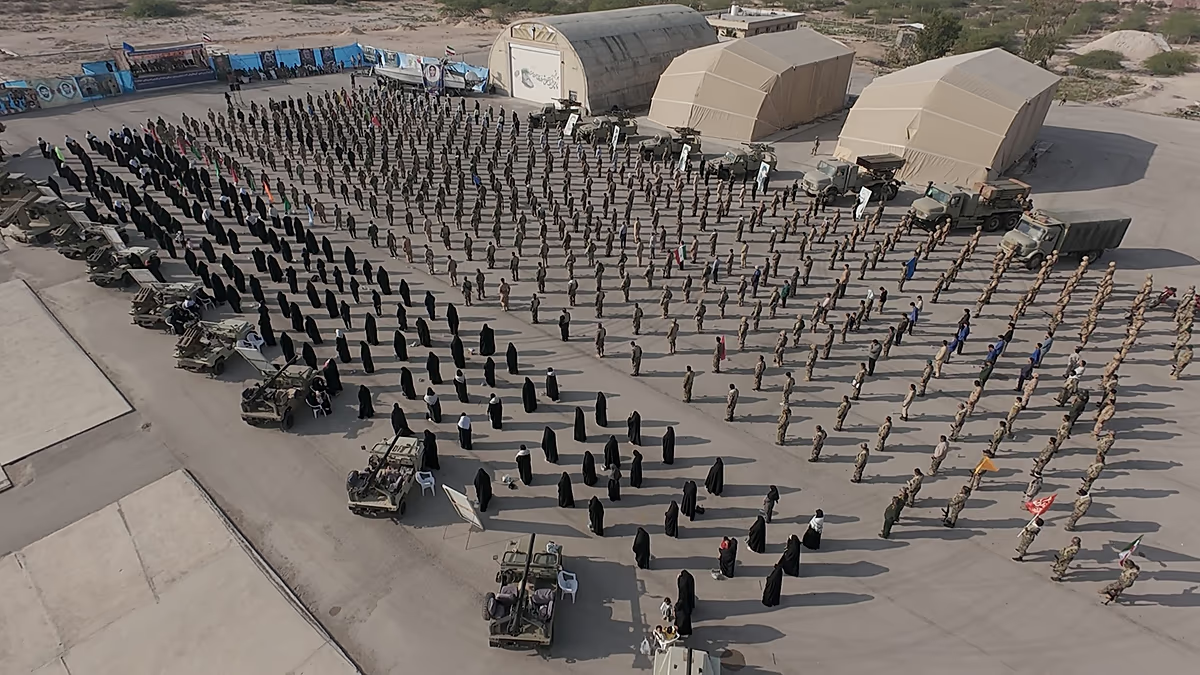
These revelations coincided with a major international crackdown. In May, Europol, the EU’s law enforcement agency, announced the shutdown of thousands of IRGC-linked accounts across 19 countries. This action was bolstered by the IRGC’s formal designation as a terrorist organization in February, which provided a legal foundation for targeting its online infrastructure. Europol’s operation even took down the IRGC’s main X account, which had amassed over 150,000 followers. Analysis showed these official channels blended religious martyrdom with political messaging, used AI-generated videos for glorification, and openly called for vengeance. This dual exposure—of both covert “sock puppet” accounts and overt official channels—illustrates the two-pronged nature of Iran’s digital influence strategy.
The incident underscores a broader and evolving threat in the digital age: state-sponsored disinformation that is patient, culturally nuanced, and highly adaptive. The Iranian operatives did not simply blast out generic propaganda; they invested years in building believable personas, learning the nuances of Scottish independence or U.S. immigration debates to gain credibility. This “long game” approach makes such operations far more insidious and effective, as they weaponize authentic social and political frustrations. The use of AI, both for generating fabricated images and for managing scalable networks of accounts, further lowers the barrier for such sophisticated deception, posing a persistent challenge to platform integrity and public discourse.
Ultimately, this campaign reveals a stark paradox. While Iranian state actors work diligently to infiltrate and influence online conversations abroad, shaping narratives from Scotland to California, internet access for ordinary Iranian citizens remains heavily restricted and patchy. This contrast highlights the instrumental nature of these operations: social media is viewed not as a tool for global connection, but as a weaponized arena for information warfare. For everyday users, the lesson is one of heightened vigilance—the most convincing profile, sharing the most beautiful landscape or the most relatable grievance, may not be a neighbor, but a soldier in a hidden digital battalion, waiting for the moment to swap the scenic view for a propaganda poster.