



Europe’s Push for Tech Sovereignty: A Risky but Necessary Gamble
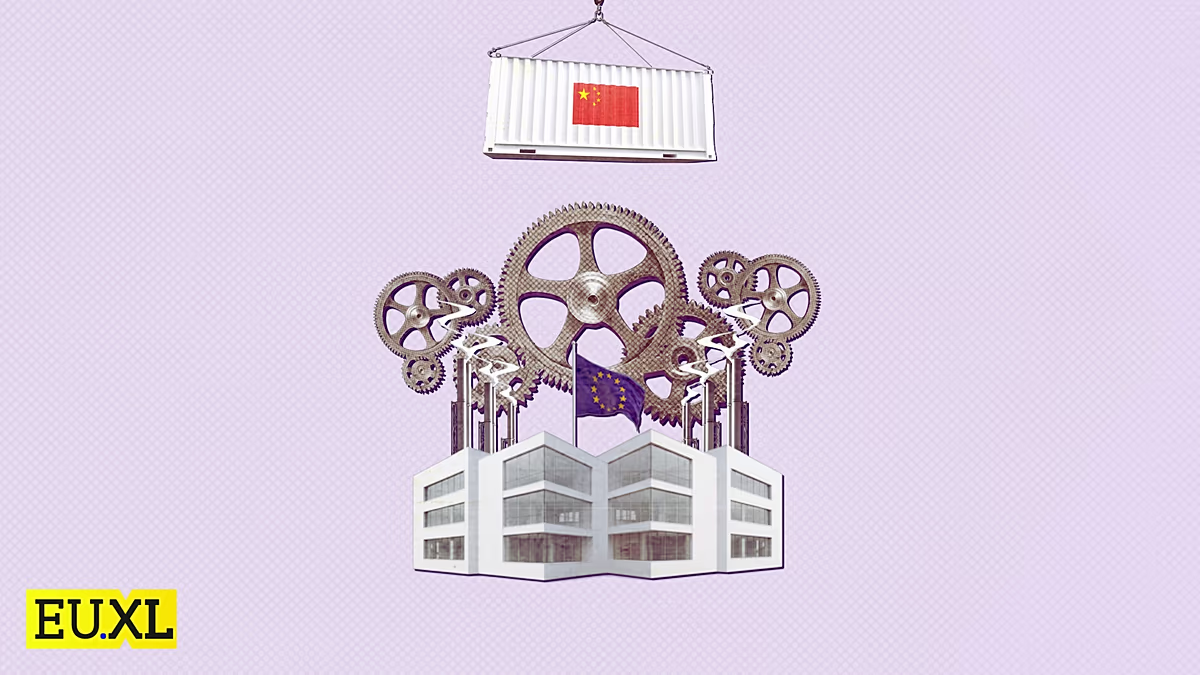
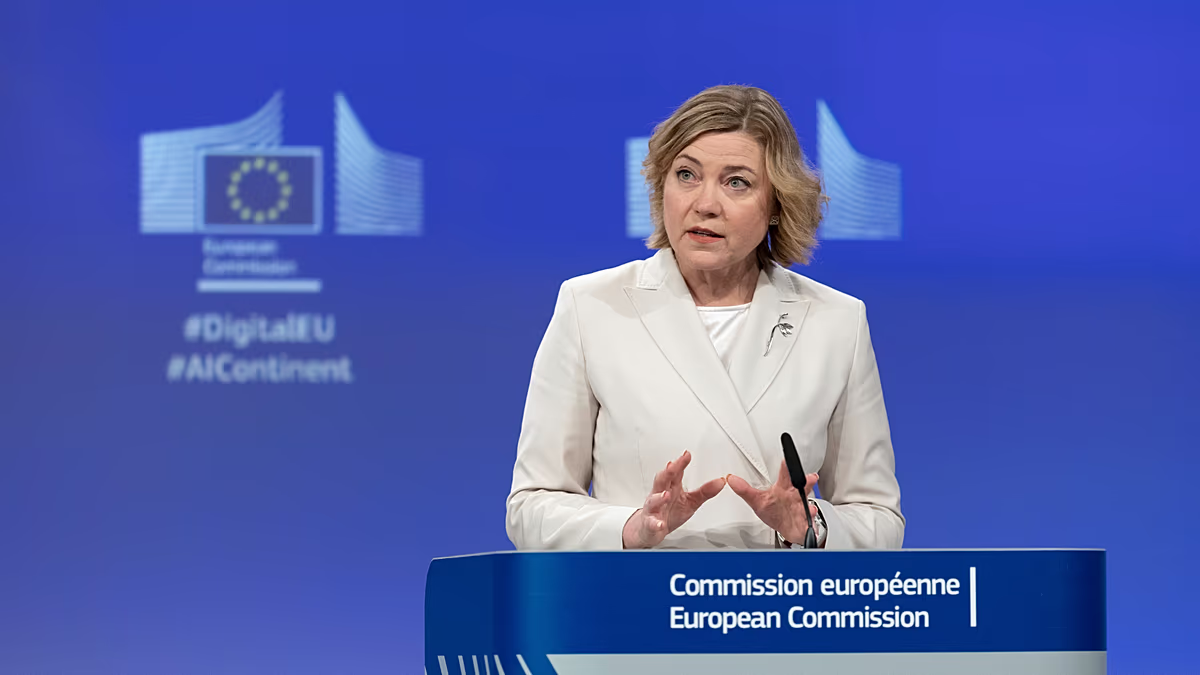
The European Commission has unveiled an ambitious plan aimed at reducing the bloc’s overwhelming reliance on American and Chinese technology giants. In a world where geopolitics and technological leadership are increasingly intertwined, the EU is attempting to reclaim a seat at the global tech table. The package centers on developing homegrown capabilities in critical areas like cloud computing, artificial intelligence, and semiconductor production. European Commission Executive Vice President Henna Virkkunen framed the move as existential: “Those who champion technological innovation will shape the future, and we must ensure that Europe plays a leading role.” However, the plan arrives late in the game. Analysts, including former Italian Prime Minister Mario Draghi, warn that Europe has already missed the internet-driven economic boom and now risks being left behind in the AI revolution. The urgency has been amplified by the aggressive trade policies of the Trump era and China’s willingness to use technological dependencies as political leverage, forcing Brussels to act or accept permanent vassalage in the digital economy.
The Core of the Plan: Building Walls in the Cloud and Chip Sectors
The proposal’s primary target is the cloud sector, where Amazon, Microsoft, and Google command a staggering 80% of the European market. To break this stranglehold, the draft law introduces a “digital sovereignty” framework for public contracts, with tiers based on sensitivity. For highly sensitive sectors like defense and healthcare, non-European companies could be entirely barred, a direct response to fears of a foreign government activating a “kill switch” on critical infrastructure. In parallel, the EU is launching a renewed push on semiconductors. Its first Chips Act, focused on subsidies for factories, yielded limited results. This new effort pivots to stimulating demand for European-made chips, hoping supply will follow, while mandating that key industries like automotive diversify their suppliers away from subsidized Chinese producers. As MEP Axel Voss notes, giving European providers “a fair seat at the table in strategic public tenders” is a pragmatic starting point for building genuine technological sovereignty.
The AI Imperative and Europe’s Capacity Deficit
Artificial intelligence is the transformative force underpinning the entire strategy, yet Europe finds itself playing catch-up. The global AI race is currently dominated by American firms like OpenAI and Anthropic, with France’s Mistral AI standing as the EU’s sole contender at the cutting edge. The Commission hopes that preferential treatment in lucrative public-sector AI contracts could provide a vital lifeline for such companies. However, significant structural hurdles remain. Europe lags in constructing the data centers needed to fuel an AI boom, hampered by bureaucratic red tape, high energy costs, and land scarcity. As MEP Matthias Ecke starkly put it, “Europe cannot regulate its way out of technological dependency.” The EU’s simultaneous decision to join the US-led “Pax Silica” initiative to secure chip supplies—a tacit admission of its short-term reliance on companies like Nvidia—highlights the delicate balancing act between achieving autonomy and acknowledging current, deeply entrenched realities.
Navigating the Geopolitical Minefield: Fear of Backlash
The quest for “technological sovereignty” carries immense geopolitical risk, potentially provoking retaliation from both Washington and Beijing. The concept, rooted in French defense strategy, gained digital relevance when the Trump administration demonstrated how easily the U.S. could weaponize dependencies, such as cutting off ICC officials from American services. While Commission insiders believe a major U.S. backlash has been mitigated by recent agreements, concerns persist. The relationship with China is even more fraught, with tech sovereignty being just one contentious issue in a broader landscape edging toward a trade war. Yet, analysts like Mark Leonard suggest that in this “Age of Unpeace,” neither superpower can afford to fully alienate the EU, given its status as one of the world’s largest and most lucrative consumer markets. Europe’s challenge is to assert its independence without triggering economic isolation.
Europe’s Hidden Strengths and Structural Weaknesses
Despite its dependencies, Europe holds critical leverage points. Dutch firm ASML, for instance, enjoys a near-monopoly on the advanced machinery required to produce the world’s most sophisticated chips. The new package also seeks to harness open-source technologies to overcome Europe’s fragmented digital landscape. However, deep-seated structural problems persist. The lack of a truly unified digital single market and scarce access to venture capital repeatedly drive promising European startups to relocate to the U.S. or Asia. Initiatives like the proposed “EU Inc.” framework and the capital markets union aim to address these gaps, but progress is slow. The sovereignty package, therefore, is a dual-track approach: it uses protective measures to create space for European champions while attempting to tackle the underlying market failures that have prevented a homegrown Google or Alibaba from emerging.
The Long Road to 2030: A Quest for Strategic Indispensability
In conclusion, the European Commission’s package is a high-stakes acknowledgment that the bloc can no longer outsource its technological future. It is a defensive yet necessary strategy to cultivate “strategic indispensability”—controlling critical nodes in global supply chains, as Japan has done—rather than pursuing unattainable full autonomy. As Executive Vice President Virkkunen concedes, with 80% of its technology currently imported, Europe will not change this reality overnight. The goal is to create tangible progress by 2030. The plan is a gamble: it may be too incremental to close the gap with the U.S. and China, and its protectionist elements risk provoking costly trade conflicts. Yet, for a continent that missed the last digital revolution, it represents a conscious choice to fight for relevance in the next one, betting that its market power and remaining industrial strengths can forge a more balanced, and sovereign, technological future.