

A profound tragedy has struck the United Kingdom’s armed forces, casting a shadow of mourning across the nation. Three brave members of the Royal Navy lost their lives in the early hours of Wednesday morning during a training exercise near the quiet village of Sourton in Devon. The service’s somber announcement, delivered via social media, confirmed the devastating loss and initiated an immediate and ongoing investigation into the circumstances. As emergency services swiftly responded to the remote scene, the full weight of the incident began to settle in, not just within the military community but across a public accustomed to seeing these dedicated individuals as pillars of strength and security. The core statement from the Navy extended its most heartfelt condolences, prioritizing the families left behind: “Our thoughts and deepest condolences are with the families and loved ones of those who have lost their lives.” In these first, raw hours, the institution moved to provide specialist support to the bereaved families, acknowledging that the true cost of such a loss is borne in private homes and shattered lives.
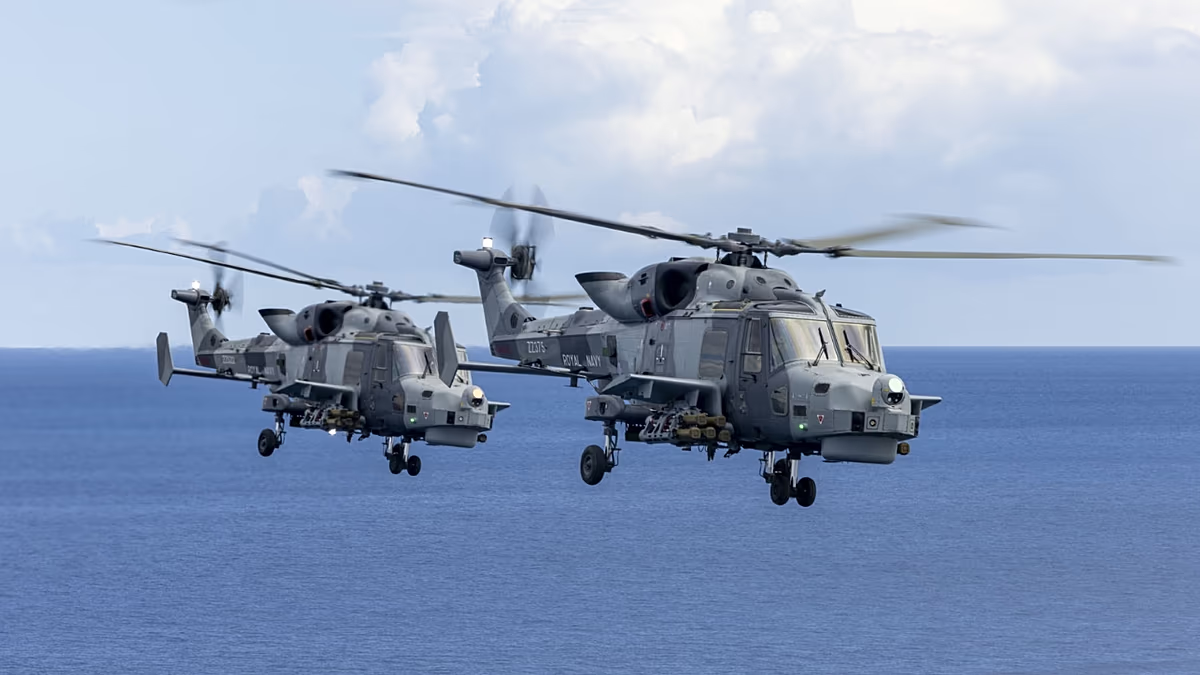
The human dimension of this disaster was tragically illustrated by video footage that began circulating online, depicting a harrowing scene: a military helicopter, engulfed in fierce flames, lying in a British field under the night sky. Reports identified the aircraft as a Merlin Mk4, a workhorse of the fleet primarily used for inserting Royal Marines into complex, “elevated” operations—a term that speaks to the high-risk, specialized nature of their duties. This visual evidence, though difficult to witness, underscored the inherent dangers servicemen and women face even in training, where they hone the skills meant to keep themselves and others safe. Adding a chilling auditory layer to the event, a local witness interviewed by the BBC described hearing sounds from the aircraft that seemed to indicate “troubled mechanics” as it flew over the area beforehand. This poignant account transforms the incident from a distant news bulletin into a shared community experience of alarm and helplessness, reminding us that these exercises take place in the air above our homes and countryside.
In the wake of the tragedy, the leadership of the United Kingdom moved swiftly to acknowledge the sacrifice and guide the national response. John Healey, the UK Secretary of State for Defence, issued a statement expressing his personal devastation at the loss. He took a moment to formally thank the emergency services—the paramedics, firefighters, and police—who rushed to the remote Devon site in a desperate attempt to render aid, a testament to the collective effort that follows such catastrophes. His words, “They served with excellence and will be much missed,” served as a formal and dignified eulogy, encapsulating the service’s pride and profound sense of loss. This official recognition from the highest levels of defence command is a crucial part of the social compact between a nation and its military, affirming that such sacrifices are seen, honored, and deeply felt by the government and the public they serve.
Beyond the immediate statements and the onset of investigations, this event forces a sober reflection on the silent contract between society and its military personnel. Training exercises, though routine, are far from benign; they are essential, high-fidelity rehearsals conducted under demanding conditions to ensure peak readiness for real-world conflicts and humanitarian missions. The deaths of these three sailors on home soil, not in a warzone, is a stark reminder that the price of national security is paid continuously, in unseen hours and through accepted risks that most citizens never have to contemplate. Each name, when released, will represent a life dedicated to discipline, camaraderie, and country—a career chosen with the full knowledge of its perils. Their loss reverberates through their squadrons and shipmates, creating a void where there once was expertise, friendship, and shared purpose, highlighting the tightly woven fabric of the military community that is torn by such events.
As the investigation now proceeds, led by the Royal Navy and relevant safety authorities, its focus will be meticulous and exhaustive. Every piece of wreckage, every data point from the aircraft’s systems, the conditions of the night, and the protocols followed will be scrutinized. This process, while technical, is also an act of profound respect and responsibility. Its primary aims are to provide answers to the grieving families, to identify any lessons that can prevent future tragedies, and to ensure the continued integrity of the UK’s aviation and training operations. It is a difficult but necessary journey from the raw emotion of loss toward understanding, a process that the military institution must navigate with transparency and care to maintain the trust of both its own people and the public.
Ultimately, the story of this day is not one of machinery or procedures, but of three individuals whose journey of service ended abruptly in a Devon field. They are more than the tragic headlines; they were colleagues, friends, sons, perhaps partners or parents. As the nation mourns alongside their families and the Royal Navy, the collective grief is tinged with immense gratitude. These servicemembers embodied the daily commitment and courage that defines the armed forces, a commitment that, in this terrible instance, culminated in the ultimate sacrifice. Their legacy is a solemn reminder of the human cost of defence and the enduring debt owed to those who volunteer to stand on the front lines, even in training, for the safety of others. The flames in that field have been extinguished, but the memory of their service and the mourning for their loss will burn for a long time in the heart of their service and their country.