


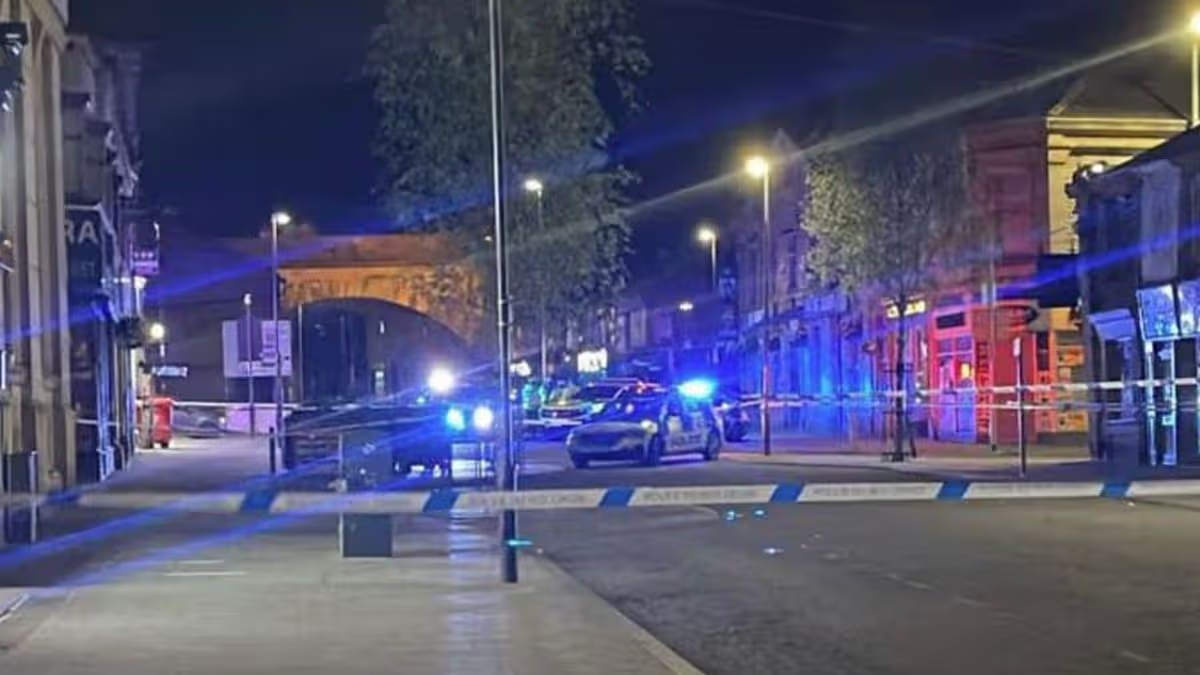
In the quiet, close-knit community of Accrington, Lancashire, a profound sense of shock and grief descended on Wednesday evening. The regular rhythm of life, marked by the familiar landmarks like the Nag’s Head pub at the junction of Blackburn Road and Birch Street, was shattered by an event of horrifying violence. Emergency services, summoned to reports of a man struck by a car, arrived to find 44-year-old Matthew Weller with catastrophic injuries. Despite the immediate and desperate efforts of paramedics at the scene and later at the hospital, his life could not be saved. The news of his death sent waves of anguish through the town, transforming an ordinary street corner into a site of profound tragedy and the start of a complex police investigation.
The devastating loss was compounded by the stark and startling details emerging from the investigation. Lancashire Police announced that not one, but four teenage boys had been arrested on suspicion of murder in connection with the fatal crash. This shift in terminology—from a potential traffic incident to a murder inquiry—indicates authorities believe there is evidence to suggest intent or circumstances far exceeding a simple, tragic accident. The image of four young lives, now in custody, entangled with the death of a man in his prime, creates a narrative that is difficult to comprehend, prompting urgent questions about what could have led to such a catastrophic collision and the events that preceded it.
Behind the stark police terminology and the breaking news alerts lies a human story of immeasurable loss. Matthew Weller, at 44 years old, was more than a name in a report; he was a son, perhaps a father, a partner, a friend, or a colleague with a lifetime of experiences and connections now abruptly severed. His family and loved ones are now navigating the most devastating news imaginable, their world forever altered. Simultaneously, the families of the four arrested teenagers are undoubtedly confronting their own nightmare, grappling with fear, confusion, and dread for what the future holds for their children. The tragedy ripples outward, touching countless lives in Accrington, a community now united in sorrow but also likely wrestling with a deep unease about how such violence could unfold on its streets.
As the community tries to process this horror, the legal process begins its meticulous course. The four teenagers remain in custody for questioning, as detectives work to piece together the precise sequence of events. This will involve forensic examination of the scene, analysis of any vehicle involved, witness statements, and digital evidence to establish the actions and intentions behind the wheel. The “suspicion of murder” indicates a serious line of inquiry into whether the actions that led to Matthew Weller’s death were deliberate or showed a wanton disregard for life. Each piece of information gathered will be crucial in determining the appropriate charges and, ultimately, in seeking some form of justice for the victim and his grieving family.
In the wake of such a sudden and public tragedy, it is a natural human response to seek information and understanding. The original report, marked as breaking news, underscores how quickly such events now enter our collective consciousness, and it provides resources for the public to follow developments as the case progresses. This connectivity allows for the dissemination of vital public information but also carries a weight of responsibility—to remember the real human beings at the heart of the headlines, to respect the ongoing judicial process, and to offer support, not speculation, to a wounded community.
Ultimately, the story unfolding in Accrington is a grim reminder of how fragile life can be and how swiftly normalcy can be destroyed. A man has lost his life under traumatic circumstances. Four young men face the most serious allegations possible, with their lives and futures hanging in the balance. Multiple families are living through a personal hell, and a whole town is left to mourn and to question. While the police investigation will focus on the forensics of “what” and “how,” the community is left to grapple with the far more difficult question of “why.” The path forward is one of pain, patience for the truth to emerge through proper legal channels, and a hope, however faint, for healing in the long shadow cast by a single, terrible evening.