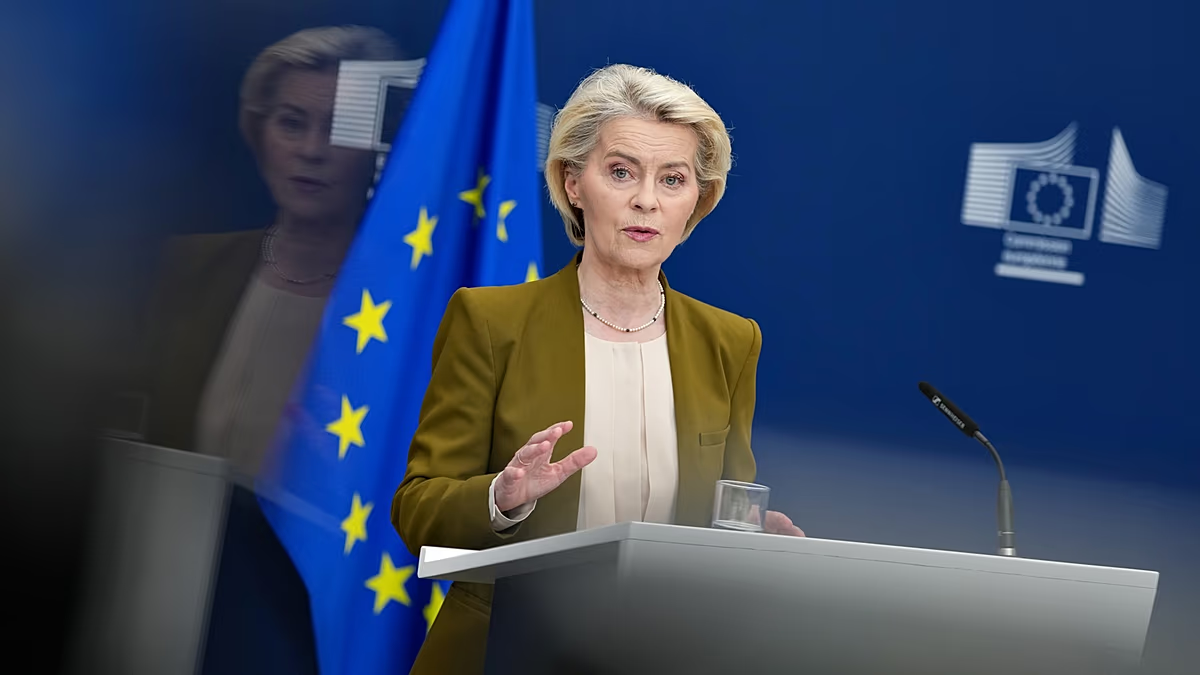




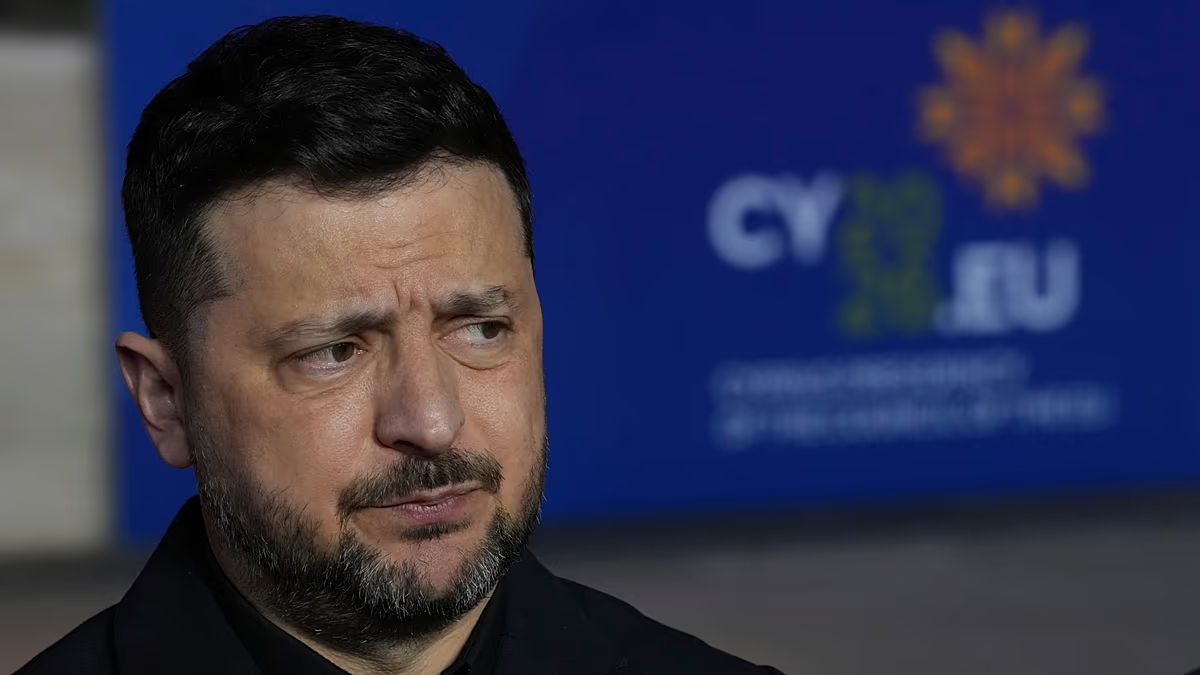
In a historic move that shifted the long-standing dynamics within the European Union, leaders gathered for a second day of an informal summit in Cyprus, their discussions buoyed by a sense of momentum. The most significant breakthrough occurred just prior, with the formal adoption of a colossal €90 billion loan package for Ukraine. This decision, a lifeline for Kyiv’s continued resistance against Russian forces, had been stalled for months by Hungarian Prime Minister Viktor Orbán’s veto. Orbán, often a disruptive force within EU councils, did not attend the Cyprus meeting, his absence symbolic of a changed political landscape following his recent election defeat. With Budapest’s objection lifted, the bloc demonstrated a renewed, collective resolve to support Ukraine, a sentiment underscored by Commission President Ursula von der Leyen’s declaration that as Russia doubles down on aggression, Europe doubles down on its support.
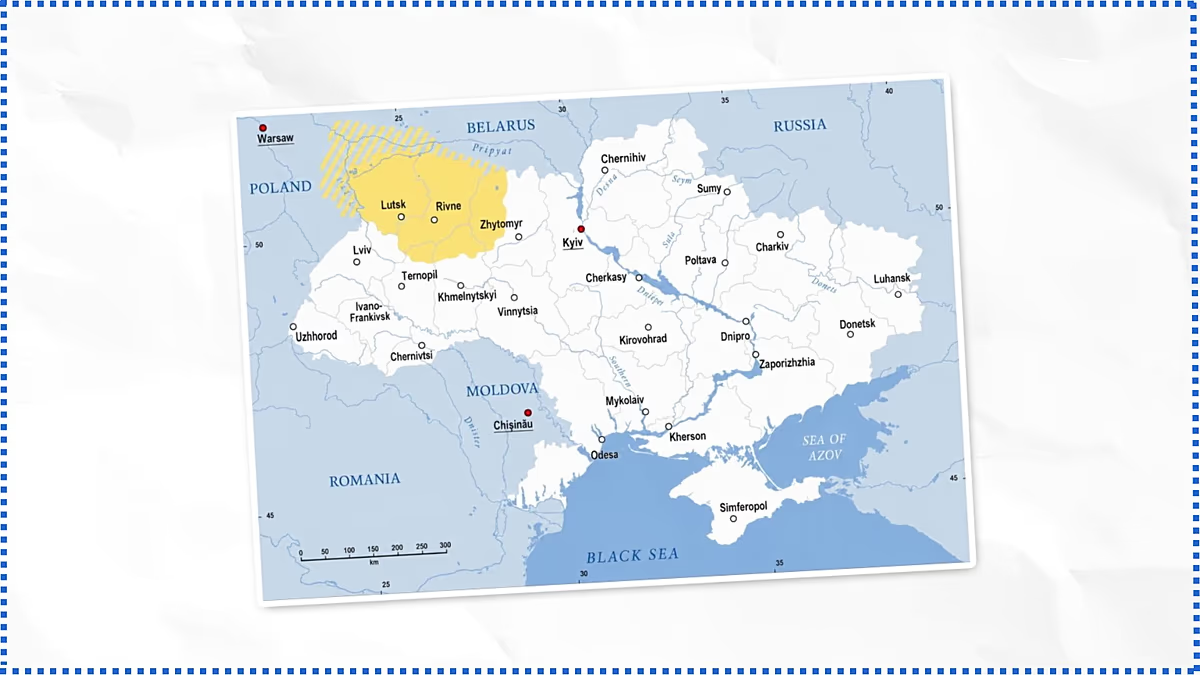
The summit’s atmosphere was further charged by the presence of Ukrainian President Volodymyr Zelenskyy, who attended in person to passionately advocate for his country’s future within the European family. He forcefully dismissed earlier discussions of a mere “symbolic” pre-accession status, stating that Ukraine, with its people dying in defense of European values, deserved a clear and accelerated path to full membership. His appeal resonated with many leaders, such as Estonian Prime Minister Kristen Michal, who affirmed that Ukraine’s future in Europe is a certainty—the question being only “when, not if.” With Orbán’s obstruction removed, the opening of specific negotiation “clusters,” the groupings of topics required for accession, now appears a more tangible prospect, moving Ukraine’s European dream from abstract hope toward a procedural reality.
Parallel to the focus on Ukraine, leaders confronted the escalating crisis emanating from the Iran conflict, which is spreading instability across the Middle East. The recent killing of French soldiers in Lebanon underscored the direct risks to European interests. A particular point of discussion was the EU’s own mutual defence clause, Article 42.7, which gained prominence after a drone attack struck a British base in Cyprus—a nation not covered by NATO’s protective umbrella. However, the conversation remained delicately balanced; leaders sought to strengthen European security autonomy while carefully avoiding any signal that might suggest a diminished reliance on NATO and its cornerstone ally, the United States. The conflict’s ripple effects also touched economic concerns, with disruptions around the Strait of Hormuz threatening energy supplies and driving up prices, prompting a review of mitigation strategies prepared by the European Commission.
Beyond immediate crises, the informal setting allowed leaders to broach other complex, long-term challenges. The agenda included a broader session on the Middle East, inviting representatives from Egypt, Lebanon, Jordan, Syria, and the Gulf Cooperation Council to discuss regional stability. Another perennial thorny issue was the EU’s seven-year budget, with negotiations set to focus on its size and the bloc’s “own resources.” A coalition of fiscally cautious nations, including traditional “frugals” like Austria and the Netherlands, alongside larger net contributors such as Germany and France, aimed to keep national contributions constrained. The goal of reaching a final agreement by 2026 promises the kind of gruelling, late-night negotiations that European policymakers have become accustomed to, a testament to the perpetual balancing act between ambition and fiscal responsibility within the union.
The summit also served as the stage for another consequential agreement: a fresh package of sanctions against Russia. This, too, followed the resolution of the Druzhba pipeline dispute, which had prompted Hungarian and Slovak vetoes. While the new measures target an additional 46 vessels linked to Russia’s “shadow fleet,” regional banks, crypto platforms, and restrict imports worth hundreds of millions, their impact was tempered by a critical compromise. A full ban on EU maritime services—like insurance and port access—for Russian oil tankers was held back, awaiting alignment from the G7 nations. Maritime states Greece and Malta had argued that acting alone would harm their economies and ironically bolster Russia’s illicit fleet, highlighting the intricate dance between imposing punitive measures and maintaining unified, effective global pressure.
As the discussions in Cyprus continued, the outcomes from the preceding day marked a significant inflection point for European unity and foreign policy. The €90 billion loan and new sanctions package, unlocked by a changed political reality in Hungary, showcased the bloc’s ability to overcome internal obstacles when geopolitics demand decisive action. Meanwhile, the earnest debates on Ukraine’s membership, European defence autonomy, and the budgetary future reflect the ongoing evolution of a union grappling with its role in an increasingly turbulent world. The informal summit, therefore, was not merely a talk shop but a snapshot of Europe in transition—moving from entrenched internal disputes toward a more cohesive, albeit still cautiously negotiated, stance on the defining challenges of this era.