



The dream of a seamless summer getaway is facing a stark reality check, as a combination of geopolitical strife and economic pressures converges to create significant turbulence for the aviation industry. The European Union has issued a sobering warning that passengers are confronting a “very serious crisis,” with the ripple effects of the conflict in Iran threatening to disrupt fuel supplies and send operational costs soaring. This isn’t merely a forecast of minor inconveniences; it is a looming scenario where the fundamental logistics of air travel are under threat. EU Energy Commissioner Dan Jorgensen articulated the grim possibility, stating, “Unfortunately, it’s very likely that many people’s holidays will be affected, either by flight cancellations or very, very expensive tickets.” He underscored a chilling reality for an industry reliant on constant motion: “Even if we do everything we can do, if the jet fuel is not there, then it’s not there.” This statement frames the current challenge not just as a financial issue, but as a potential physical shortage that could ground plans literally and figuratively.
The catalyst for this disruption lies in the Middle East, where conflict has critically disrupted global oil markets and, more specifically, the supply lines for aviation turbine fuel. A significant portion of the world’s jet fuel originates from the Gulf region, with a crucial transit route being the Strait of Hormuz. Since the start of the conflict in March, this vital maritime chokepoint has been effectively closed to shipping, severing a key artery for fuel delivery. The International Energy Agency cautions that tangible supply problems could materialize within five to six weeks, transforming what has been a cost crisis into a full-blown supply crisis. Airlines are not waiting for the worst to happen; they are acting preemptively. Major carriers, including the Lufthansa Group, have already announced sweeping cuts, scrapping thousands of flights scheduled for the coming months in a drastic effort to conserve fuel and manage untenable operating costs.
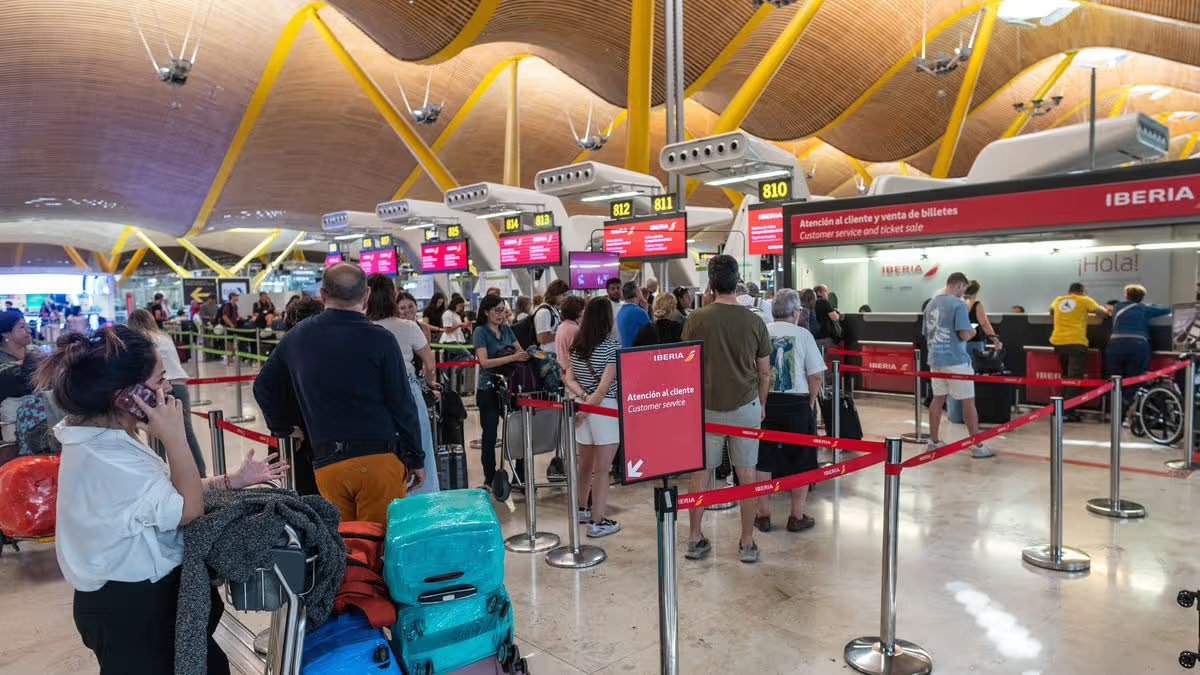
For travellers, this industrial response will manifest in two deeply frustrating ways: widespread cancellations and dramatically higher prices. A growing list of airlines serving the UK, such as KLM, Air Canada, Lufthansa, and Delta, have confirmed they will operate fewer flights. While industry analysts like Rory Boland of Which? note that overall cancellations will represent a small percentage of total flights, the impact will be acutely felt on popular routes and during peak holiday periods. Simultaneously, the cost of securing a seat is skyrocketing. Carriers like Air France-KLM, Virgin Atlantic, and Turkish Airlines are implementing fare hikes, particularly on long-haul routes, and some are adding new surcharges for baggage and services in an attempt to offset the punishing fuel prices. In a particularly controversial move, one budget airline has even attempted to add surcharges to tickets already purchased, sparking consumer rights battles.
The financial toll on the travel sector is severe and immediate. Holiday giant Tui provides a stark case study, revealing that the crisis cost it approximately €40 million in March alone, primarily due to the complex and expensive task of repatriating thousands of stranded passengers and crew from the Middle East. This extraordinary expense forced the company to cut its profit forecast, sending its shares tumbling and illustrating how quickly geopolitical instability can unravel corporate balance sheets. The episode underscores that for travel operators, the crisis is not a distant threat but a present-day operational and financial nightmare, consuming resources that would otherwise be used to enhance holiday experiences.
Amidst this uncertainty, a handful of airlines, including British Airways’ parent company IAG, EasyJet, and Jet2, have stated they currently have no plans to alter their schedules. This may offer a glimmer of hope for some passengers, but it remains a tentative promise in an exceptionally volatile environment. Their ability to hold this line depends entirely on the fluid and unpredictable situation regarding fuel availability and pricing in the weeks ahead. The overall picture, therefore, is one of a sector in defensive consolidation, prioritizing survival and stability over expansion. The industry’s message to travellers is increasingly one of caution, advising flexibility and prompt action for those determined to travel.
Ultimately, the summer of 2023 is shaping up to be a season where the simple act of flying becomes a significant challenge. The crisis moves beyond mere price volatility into the realm of material scarcity, where the actual availability of fuel dictates the feasibility of flights. For millions dreaming of a summer holiday, the advice is clear: brace for impact. Expect the distinct possibility of cancelled itineraries, book flights early if schedules permit, and budget for fares that reflect the new, harsh economics of global travel. The open skies, for the moment, are facing a period of severe constraint, reminding us that in our interconnected world, peace and stability are the most vital components of any journey.