


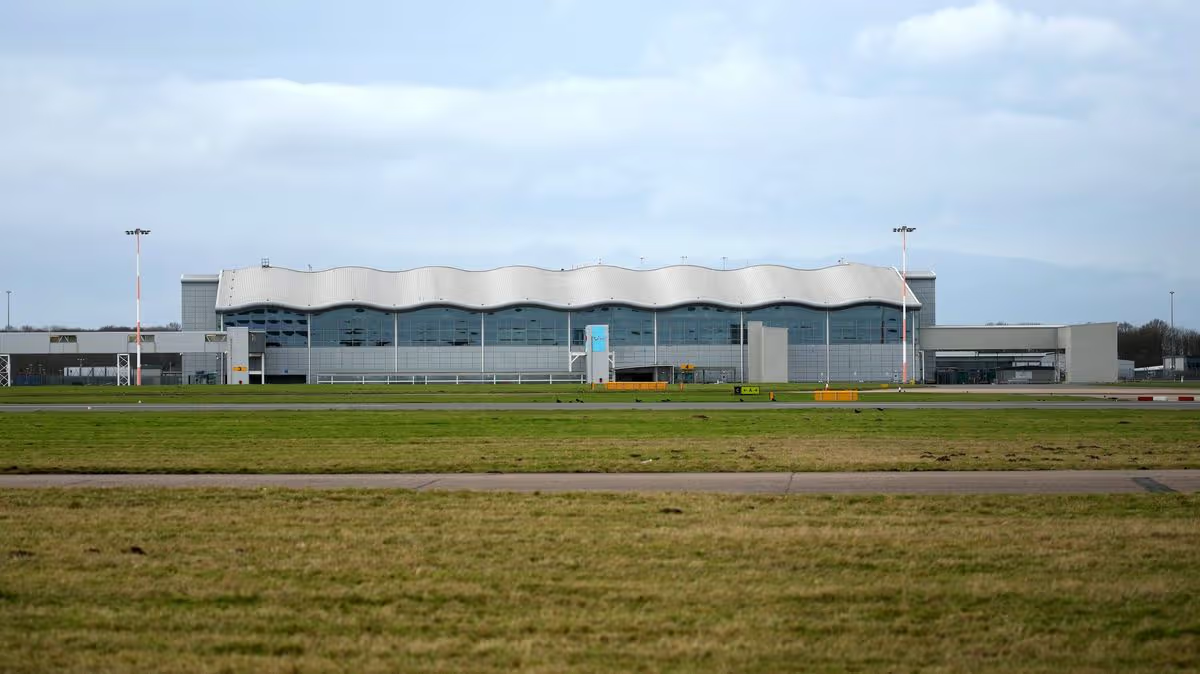
After more than two years of silence, the skies above South Yorkshire are preparing to welcome aircraft once again. Doncaster Sheffield Airport, which closed its doors in late 2022 after being declared financially unviable, is poised for a remarkable comeback. This revival is not a simple tweak but a profound transformation, fueled by a landmark £160 million investment supported by local councils and the South Yorkshire Mayoral Combined Authority. The ambitious plan, set to unfold over the coming years, aims to restore international aviation to a region left conspicuously absent from the flight map, promising not just to reopen an airport but to reforge a critical piece of regional identity and economic infrastructure.
The airport’s journey to this point has been a rollercoaster. Initially opening in 1915 as a military airfield for the Royal Flying Corps, it served the nation through two world wars. Its modern civilian life began in 2005, when it was reborn as Robin Hood Airport, a name evoking the local legend. Despite its promising start and impressive infrastructure—including one of the longest runways in the country at 2,895 meters, originally built to handle the world’s largest aircraft—the airport faced persistent financial headwinds. Its closure by the Peel Group in November 2022 was a significant blow, leaving a partially abandoned site and rendering South Yorkshire one of the largest UK regions without its own international airport, a status that local leaders were determined to change.
This determination has now materialized into a concrete, funded future. South Yorkshire’s Mayor, Oliver Coppard, alongside local council leaders, made the historic decision to intervene, approving the massive funding package needed to resuscitate the gateway. The authority underscored the strategic necessity of the move, stating that the closure had left “South Yorkshire one of the largest UK city regions without an international aviation presence.” The reopening is being orchestrated in partnership with the operating company Fly Doncaster, which is actively seeking expert operational partners to ensure a robust launch. The phased approach will see cargo flights returning this year, laying the operational groundwork for the full return of commercial passenger flights by 2027.
The vision for the renewed airport extends far beyond its previous incarnation. According to Fly Doncaster, the redevelopment includes a new passenger terminal with the capacity to serve up to four million travelers annually. Simon Hinchley, Executive Director for Airport Operations at FlyDoncaster, emphasized that the focus is on “building a safe, efficient and operationally robust airport that is ready to serve a broad range of users from day one.” This isn’t merely about restoring what was lost; it’s about building a modern, resilient hub designed for the future. The iconic long runway remains a crown jewel, offering unparalleled potential to attract a diverse mix of aircraft, from long-haul passenger jets to heavy freight carriers, setting the stage for a versatile and competitive aviation center.
The anticipated economic impact of this revival is staggering. Projections suggest the airport could generate a monumental £5 billion for the regional economy by 2050. This influx would stem from direct aviation operations, tourism, and the broader supply chain and business activity that a major airport catalyses. For the communities of Doncaster, Sheffield, and the wider region, this represents a powerful engine for job creation, investment, and global connectivity. It’s a story of reversing decline and betting on growth, transforming a site of recent abandonment back into a beacon of opportunity and a symbol of regional ambition.
From its origins intercepting Zeppelins over a century ago to its upcoming new chapter, Doncaster Sheffield Airport’s story is one of resilience and renewal. Its planned reopening is a testament to the power of local leadership and strategic vision to reclaim a vital asset. As cargo planes begin to land later this year, they will signal more than just resumed operations; they will herald the return of confidence, connectivity, and a renewed sense of place for South Yorkshire. The dormant runway, once again ready to guide aircraft safely to earth, stands as a powerful metaphor for a region taking off once more.