

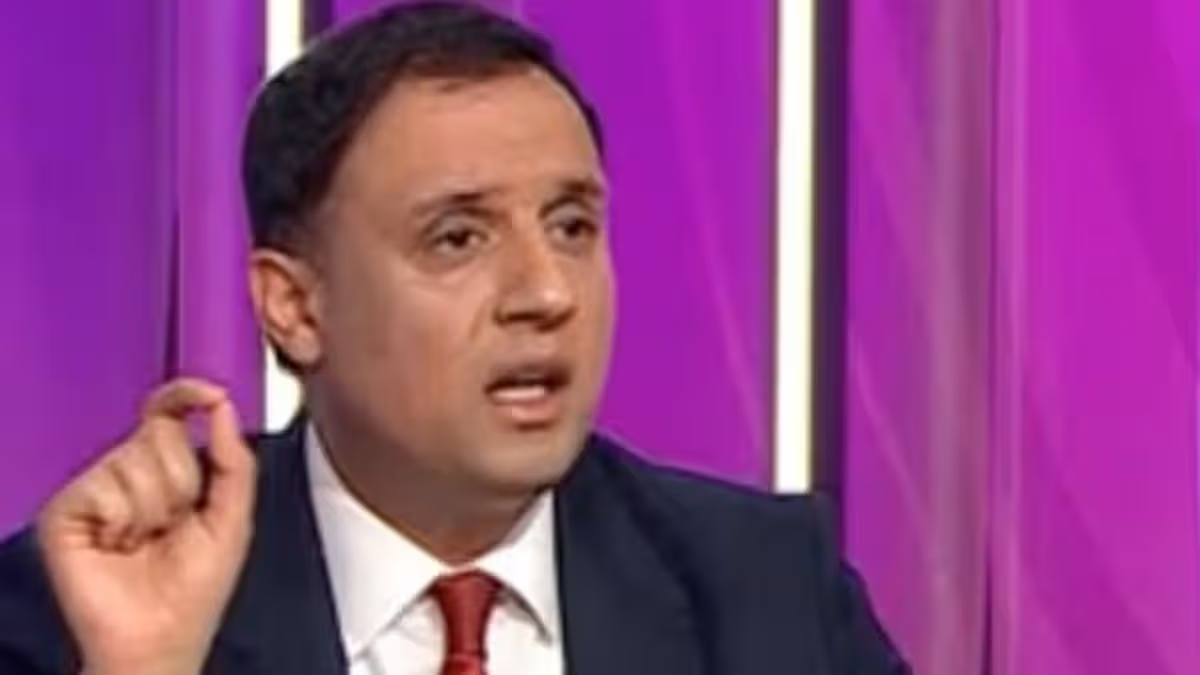
On a brisk April evening in Aberdeen, the BBC’s Question Time studio became a microcosm of the intense political battles defining Scotland and the wider United Kingdom. As the May 7th election loomed, the atmosphere was charged, with the Scottish Labour leader, Anas Sarwar, taking centre stage. To the clear delight of a significant portion of the audience, Sarwar delivered a performance that was both politically sharp and emotionally resonant, cutting through the usual parliamentary caution with a blunt, forthright style. His central mission was unequivocal: to rally voters against the rise of Reform UK, the right-wing populist party making significant gains across Britain. The night would become a stark illustration of the new political fault lines, where the traditional Labour-Conservative duel is increasingly overshadowed by a broader clash over national identity, social cohesion, and the very nature of democratic discourse.
The most electrifying moment of the evening came when presenter Fiona Bruce pressed Sarwar on persistent rumours—vigorously propagated by his opponents—that he would be willing to enter a post-election coalition with Reform UK if it secured him the position of First Minister. Sarwar’s response was immediate and visceral. Branding the claim “utter nonsense,” he leaned into the microphone and issued a direct, colloquial challenge: “I want Reform to get absolutely pumped in this election.” The Aberdeen audience erupted in applause and laughter, a wave of approval that underscored a deep-seated anxiety about Reform’s influence. This was more than a political soundbite; it was a cathartic release for many viewers, a moment where a leader mirrored their own fervent opposition in unvarnished, human terms. Sarwar transformed the accusation into a clarion call, urging tactical voting by telling supporters, “if you want [to stop] Reform, vote for me and Labour on May 7.”
Sarwar’s vehement rejection of any pact with Reform is deeply personal, rooted in the party’s previous attacks on his own background and character. He reminded the audience that Reform had previously funded advertisements that questioned his loyalty to Scotland, a transparent attempt to exploit his identity as the son of Pakistani Muslim immigrants born and raised in Glasgow. The subtext of such campaigns, which Sarwar has previously condemned as the work of “poisonous” figures like Nigel Farage who “don’t understand Scotland,” is a politics of division and ethnic suspicion. On the Question Time stage, Sarwar framed this not just as a personal slight but as a national concern, stating there are “lots of families” across Scotland who are genuinely afraid of the society Reform’s politics portends. In doing so, he positioned his party as a bulwark against a form of nationalism that defines belonging in narrow, exclusionary terms.
Facing Sarwar across the panel was Lord Malcolm Offord, the Leader of Reform UK in Scotland and a recent defector from the Conservative Party. His performance provided a stark contrast. Where Sarwar’s appeals were direct and emotive, Offord’s responses were repeatedly met with sceptical laughter from the audience, particularly when he insisted that Reform—a party whose senior figures have long championed English nationalism and criticized Scottish devolution—was committed to strengthening the Union. As the audience chuckled, Offord insisted Reform would “make Scotland a more successful part of the UK,” a claim that rang hollow for many in the room. His defensive retort to Sarwar, predicting Labour would come third and have to “explain to your own party how that happened,” highlighted Reform’s newfound confidence but also their outsider posture, relishing their role as disruptors of the political establishment.
The dynamic of the evening shone a spotlight on the evolving political landscape. The traditional Conservative voice was notably muted in this exchange, underscoring how Reform has successfully usurped the role of the primary right-wing challenger in many areas, pushing debates toward more extreme polarities. Sarwar’s success in Aberdeen lay in his ability to channel the widespread apprehension this shift provokes into a positive case for Labour. He did not merely criticise; he offered his party as the vehicle for a pluralist, compassionate alternative. The audience’s applause was a testament to a strategy that combines principle with pugilism, recognising that in an era of high political stakes, voters crave clarity and conviction as much as detailed policy.
Ultimately, this episode of Question Time was about more than a single election skirmish. It captured a moment of profound political realignment. Anas Sarwar’s well-received performance demonstrated a potent formula: confronting populist rhetoric head-on with equal parts moral authority and streetwise political combat. The laughter that greeted Lord Offord’s claims, juxtaposed with the applause for Sarwar’s rejection of division, suggested a public weary of insinuation and ambiguity. As Scotland and the wider UK navigate a future filled with complex questions on identity and governance, the appeal seems to be growing for leaders who can articulate a defence of inclusive democracy in language that is unapologetically clear and compellingly human. The battle in Aberdeen was a single night’s debate, but the themes it highlighted will resonate long after the votes on May 7th are counted.