


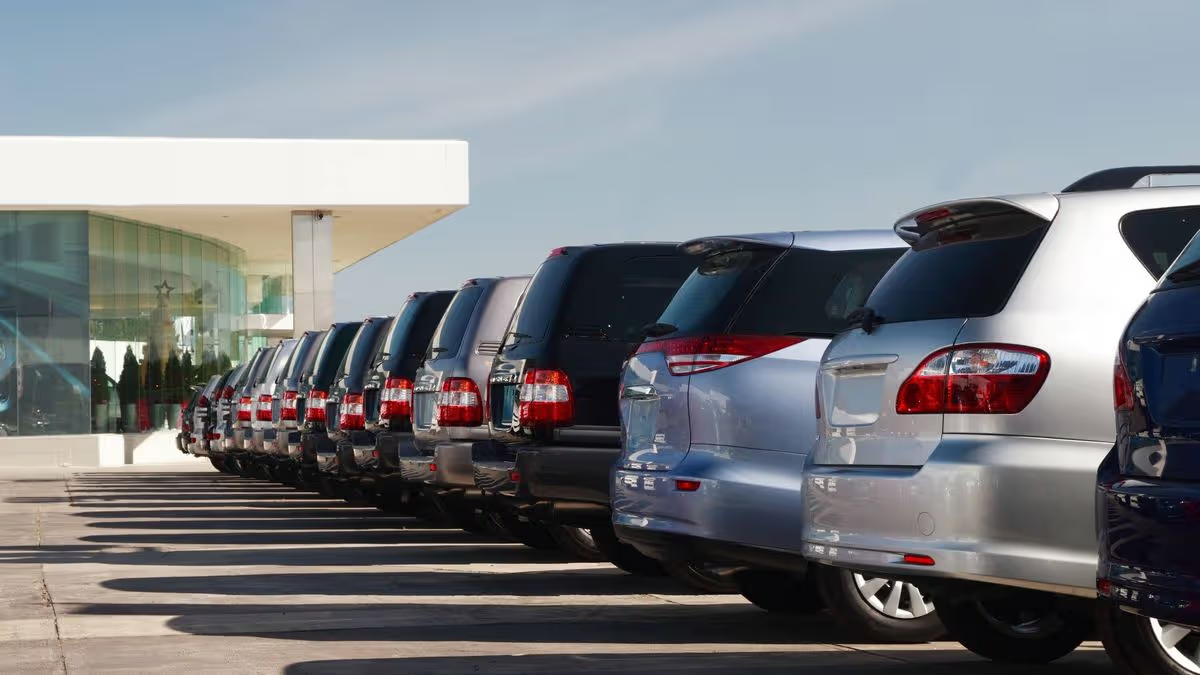
For over half a century, a landmark on London’s skyline wasn’t just a building, but a vast, bustling city of cars. Cargiant, sprawled across 46 acres in Park Royal, West London, grew from a simple used car lot into one of Britain’s most recognisable automotive institutions, a true supermarket for vehicles. It became a place where generations of families found their first car, their family wagon, or a reliable commuter, with a sprawling inventory that could feature over 2,000 vehicles at any given time. This Friday, after more than 50 years of trading and over one million cars sold, the lights in this automotive city will dim for the final time, marking a profound and poignant end of an era for the UK motor trade.
The decision to close the retail doors was described by the company as being made with “great sadness,” the final outcome of a difficult consultation process that sought, but ultimately failed to find, a sustainable path forward. This closure is not just a business transaction; it is a human story that places approximately 500 jobs in immediate jeopardy. For weeks, the dedicated workforce, praised by management for their professionalism, had been involved in discussions, hoping for a reprieve that never came. While after-sales services will continue temporarily to honour existing customer commitments, the heart of the operation—the vibrant, chaotic, and familiar sales floor—will fall silent.
The sheer scale of the site itself tells a story of ambition and its changing context. Valued at an estimated £100 million, the property sits at a pivotal crossroads, neighboured by major transport arteries like the Elizabeth Line and the planned HS2 route. Its closure opens a colossal chapter in London’s ongoing urban transformation. The land, once a destination for car buyers from across the country, now represents a blank canvas for future development, its fortune a testament to the vision of owner Geoff Warren, who built a multibillion-pound enterprise from this very spot. The end of Cargiant’s retail life inevitably turns the page to a new, yet unwritten, future for this significant piece of the capital.
For countless customers over the decades, Cargiant was more than a dealership; it was a rite of passage. Its model as a car supermarket democratised the buying process, offering a seemingly endless choice under one roof and changing how people shopped for used vehicles. Its departure creates a tangible void in the physical marketplace, removing a major, trusted player that had become woven into the fabric of British motoring culture. In an age increasingly shifting online, the shutdown of such a dominant physical presence signals a decisive shift in how the public will interact with the second-hand car market going forward.
The human impact resonates deepest, extending beyond the immediate employees to the wider ecosystem. Local suppliers, service providers, and the community that grew around this commercial giant will feel the loss. The closure follows a pattern of challenging news for British manufacturing and retail, a sobering reminder of the relentless pressures facing long-established businesses in a rapidly evolving economic landscape. It represents not just the loss of a company, but the fading of a particular, hands-on way of conducting business that defined an industry for generations.
As Friday approaches, the final cars will be driven off the lot, leaving behind empty tarmac and memories. The story of Cargiant is a capsule of post-war British commerce: a story of growth, adaptation, and ultimately, transition. Its legacy is found in the millions of vehicles on roads today that began their journey in Park Royal and in the expertise of the workforce that served the public for so long. The closure of its doors is a milestone, quietly underscoring the relentless passage of time and the inevitable change it brings to even the most steadfast of institutions.