


Cyprus at the Crossroads: From Mediterranean Haven to Geopolitical Frontline
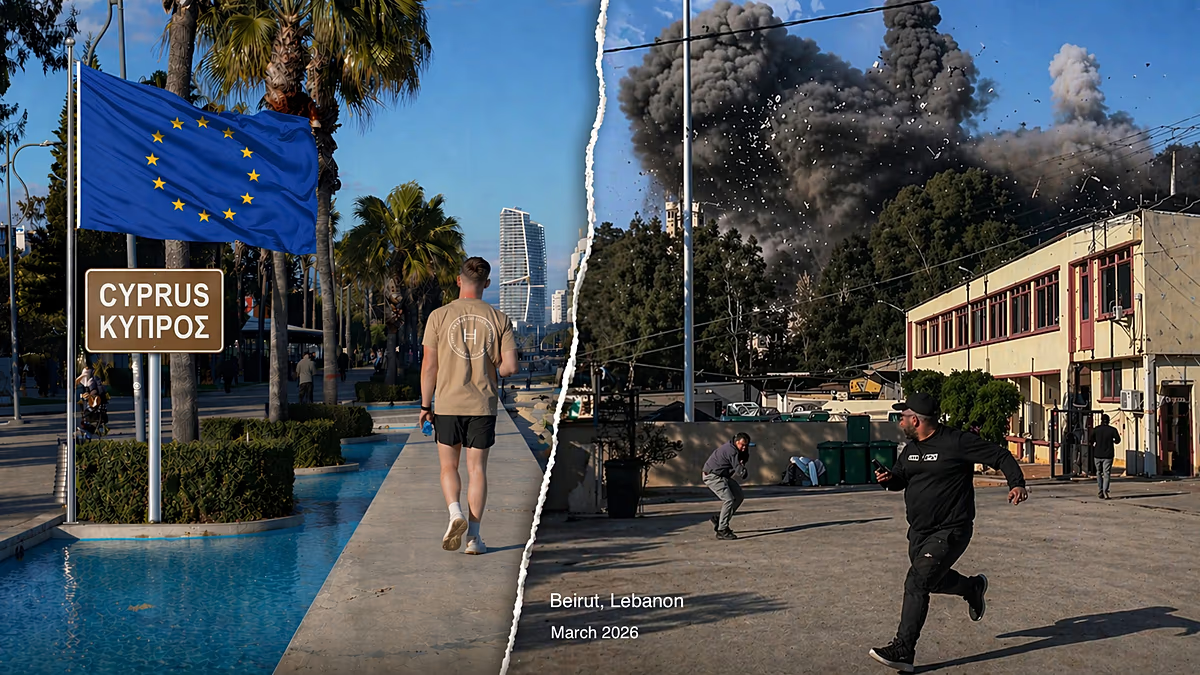
Long perceived as a quiet, stable haven in the Eastern Mediterranean, Cyprus now finds itself thrust into an unenviable role as a strategic frontline. The island is caught in a complex and tense convergence of escalating regional conflicts, the geopolitical maneuvering of global powers, and its own deeply entrenched, decades-old division between the Greek Cypriot south and the Turkish Cypriot north. This precarious position challenges the very notion of Cypriot stability, transforming it from a sun-drenched tourist destination into a potential flashpoint where international tensions are palpably felt.
This new reality was underscored by a recent drone strike near the village of Akrotiri, an event that exposed critical vulnerabilities. The strike occurred in proximity to the British Sovereign Base Areas (SBAs) of Akrotiri and Dhekelia, relics of the island’s colonial past that cover about 3% of the Republic’s territory. For local residents, the aftermath was marked by confusion and fear. Sirens wailed, but clear instructions were lacking; an official evacuation order for roughly 1,000 people arrived only a day later. The incident laid bare a troubling legal grey zone: Cypriot authorities have no jurisdiction within these British territories, severely hampering their ability to coordinate emergency responses and protect their own citizens living in the SBAs’ shadow. This has forced a stark question into public discourse: are these bases a strategic asset for island security, or a growing liability that attracts danger?
Consequently, the very presence of the British bases, a long-standing source of political friction, is being reevaluated with renewed urgency. Retained by the United Kingdom after Cyprus gained independence in 1960, many Cypriots view them as an unwelcome colonial legacy. The recent strike has amplified these sentiments. Local leaders, like Kourion Mayor Pantelis Georgiou, voice a growing public apprehension, stating that for many, “the base is becoming a threat,” and demanding clarity on responsibility for civil protection. The right-wing Cypriot government has also raised pointed questions about the bases’ future. This domestic pressure complicates the island’s defence posture, especially as Cyprus is not a member of NATO and relies heavily on partnerships with the UK and other European allies for its security.
The geopolitical ramifications extend far beyond Cypriot shores, directly impacting the island’s economic lifeline: tourism. Accounting for approximately 12% of the nation’s GDP, the tourism industry is acutely sensitive to perceptions of instability. While officials strive to project an image of calm, the economic impact of the drone strike was immediate and severe, with hotel bookings plunging by nearly 40% at the crucial start of the March season. Industry representatives may publicly downplay the incident, but the stark numbers reveal a sector caught in the crossfire. The long-term health of this vital industry now hinges not on Cypriot policy alone, but on the unpredictable evolution of conflicts hundreds of miles away, leaving families and businesses in a state of anxious uncertainty.
Perhaps most ominously, the tremors from the Middle East crisis are aggravating Cyprus’s own fundamental wound: the division of the island. Since 1974, Cyprus has been split between the internationally recognized Republic of Cyprus in the south and the self-declared Turkish Republic of Northern Cyprus, recognized solely by Turkey. The current regional instability has triggered a worrying cycle of military posturing. As European allies deployed assets to the south following the drone strike, Turkey responded by reinforcing its substantial military presence in the north. Analysts warn that this dynamic risks deepening the partition, entrenching distrust, and pushing any hope for reunification even further over the horizon, as external conflicts fuel internal divisions.
For now, the sun still shines on Cyprus’s beaches, and daily life maintains a semblance of normal routine. Yet, beneath this calm surface, the distant war is actively reshaping the island’s political landscape, economic prospects, and social fabric. Cyprus remains physically distant from the battlefields of Gaza or Ukraine, but it is now undeniably and increasingly exposed to their profound consequences. The pivotal question for its future is no longer if these remote conflicts will affect the island, but how deeply their effects will penetrate and for how long this Mediterranean nation can navigate the turbulent currents now swirling around its shores.