



The European Union faces a critical balancing act, torn between the urgent need to streamline bureaucracy for economic competitiveness and the equally vital imperative to uphold environmental and social protections. This tension has come to a head in the bloc’s approach to revising its rulebook, particularly the complex web of permits required for major projects like housing, renewable energy plants, and transport infrastructure. While the European Commission argues that sweeping deregulation is the key to growth, a coalition of member states, led by Ireland, is pushing back, warning that poorly designed simplifications could paradoxically slow down the very projects Europe desperately needs.
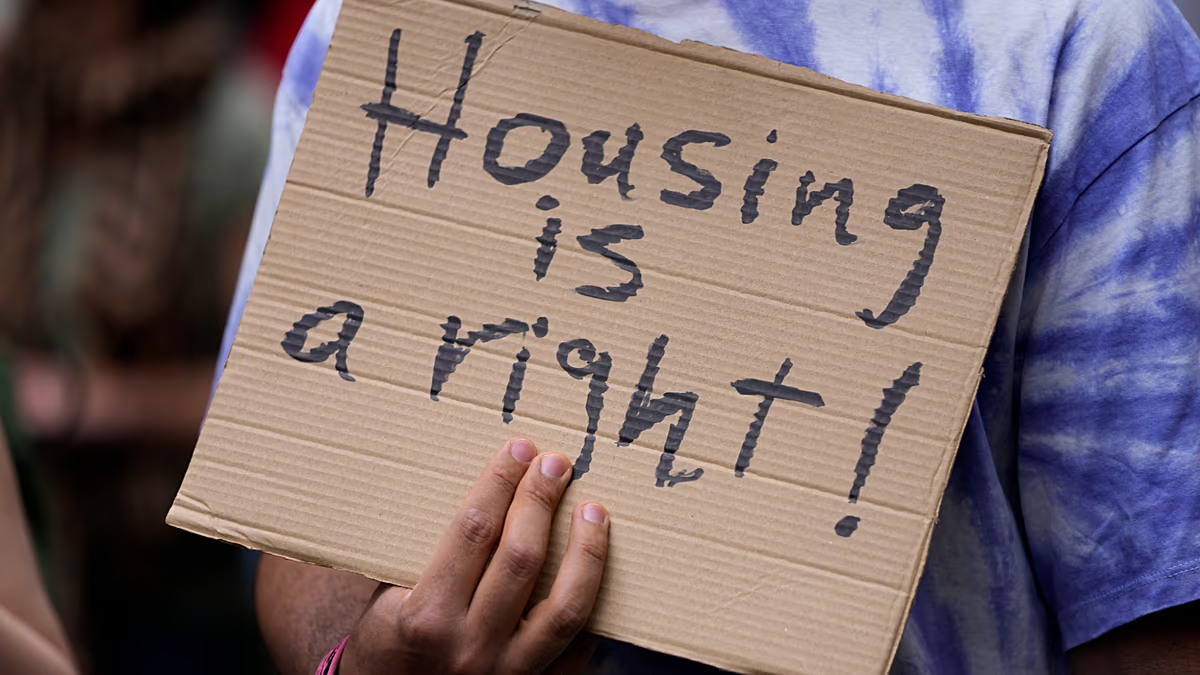
Ireland’s plea for a rethink is grounded in a severe national crisis. The country is grappling with a deepening housing emergency characterized by soaring rents, widespread homelessness, and a chronic shortage of supply. This crisis gives Ireland’s argument a particular urgency, as it views faster, more coherent permitting not as a mere regulatory tweak but as a lifeline. The recent collapse of a cost-rental housing scheme in Dublin—a model designed for workers who earn too much for social housing but are priced out of the private market—underscores the financial fragility of these vital projects. Irish Housing Minister James Browne has appealed to struggling developers to seek help, highlighting a “very significant pipeline” of such projects at risk. For Ireland, the EU’s regulatory framework is not an abstract policy debate; it directly impacts the ability to build homes and keep families sheltered.
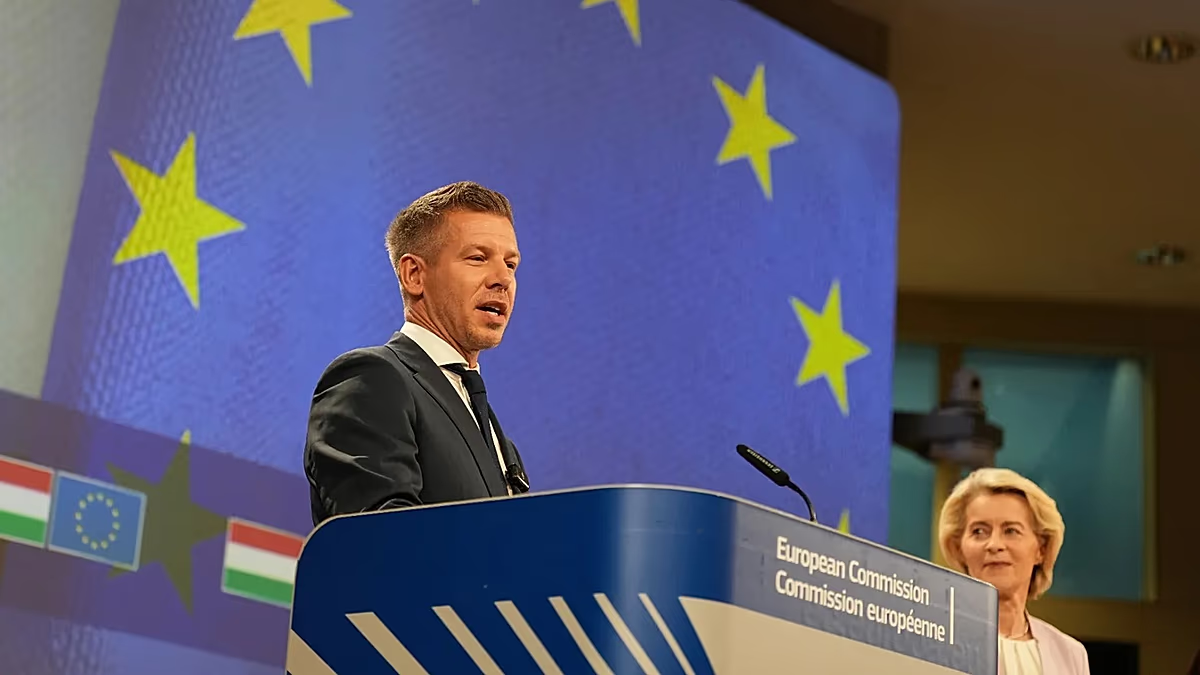
This social problem extends far beyond Irish borders, encapsulating a continental challenge. EU-wide data shows house prices have risen by 53% and rents by 25% between 2010 and 2024, placing immense pressure on households and governments alike. In response, the European Commission, under the leadership of Economy Commissioner Valdis Dombrovskis, has embarked on an ambitious agenda centered on “competitiveness.” Following the 2024 elections, the policy focus has shifted toward deregulation, manifested in ten fast-tracked ‘Omnibus’ legislative packages. These bundles of simplifications are designed to be a “deep clean” of EU rules, aiming to cut administrative costs by €37.5 billion annually and reduce burdens, especially for small businesses. The goal is unambiguous: to make Europe more agile and investment-friendly in the face of weak growth and fierce global competition from the United States and China.
However, Ireland and six other EU nations—Austria, Greece, Lithuania, Poland, Slovakia, and Slovenia—contend that the Commission’s current approach is misguided. In a joint letter, they stress that the core issue is not necessarily overregulation but the poor alignment and lack of coherence between different EU laws. They warn that the proposed simplifications, particularly around environmental assessments, may create new legal ambiguities and conflicts with existing frameworks. Instead of speeding up approvals for housing and critical infrastructure, authorities could be left struggling to interpret contradictory rules, causing further delays. Their argument reframes the debate: it is not about choosing between regulation and deregulation, but about crafting smarter, clearer, and more unified rules that actually work in practice.
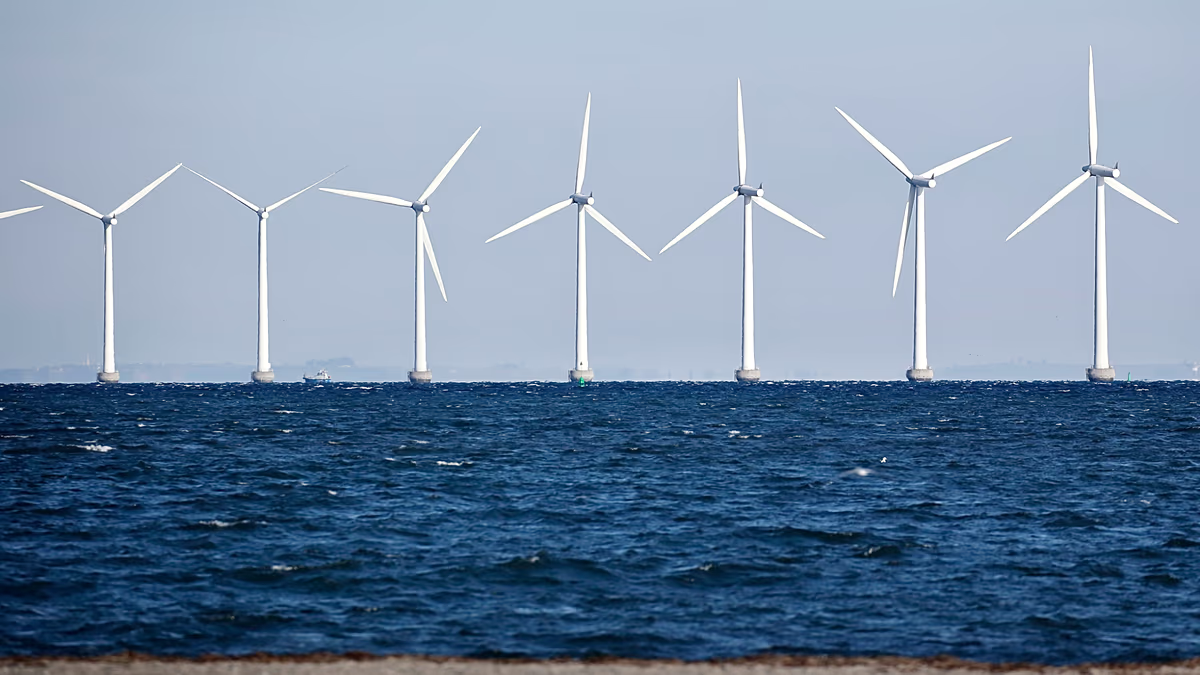
The heart of the dispute lies in Europe’s notoriously sluggish permitting processes, which can strangle essential projects. These delays threaten not just housing supply but also the continent’s green transition and energy security, as renewable energy projects get bogged down in red tape. Governments argue that without better coordination between environmental protections and business imperatives, the EU risks undermining its own climate goals and economic resilience. Critics of the Omnibus strategy, like the European Environmental Bureau, see it as “deregulation by stealth,” which chips away at the foundational pillars of the European Green Deal. They argue that today’s housing and energy crises stem from a market poorly regulated for public good, not from a surplus of protection, and that the solution lies in better enforcement of smart rules, not their erosion.
Thus, the EU finds itself at a policy crossroads. The Commission, championing competitiveness, advocates for stripping away administrative hurdles. A significant coalition of member states, however, calls for a more nuanced “clarification and coherence” of the existing rulebook. They seek a framework that simultaneously drives down costs, accelerates the construction of homes and clean energy, and maintains robust standards. The outcome of this debate will shape Europe’s landscape for years to come, determining whether it can build its way out of crises with both speed and responsibility, or if it remains trapped in a cycle of bureaucratic friction that serves neither people nor the planet.