



A Fragile Peace Amid Unstable Prices: Europe’s Fuel Market After the Middle East Conflict
The delicate ceasefire between the United States, Israel, and Iran, brokered in early April 2026, has brought a tentative pause to overt hostilities. However, the economic reverberations of the late February strikes continue to pulse forcefully through European daily life, most palpably at the fuel pump. Despite the cessation of military action, petrol prices across the European Union remain stubbornly elevated, averaging 12% higher than before the conflict erupted. This persistent inflation underscores a harsh reality: geopolitical instability in a key oil-producing region translates directly into sustained financial strain for European consumers, even after the guns fall silent.
The timeline of the crisis is critical to understanding its economic impact. On February 28, 2026, a series of strikes by the U.S. and Israel against Iran triggered immediate retaliatory measures from Tehran, sending shockwaves through global energy markets. This period of open conflict saw fuel costs skyrocket internationally. A fragile ceasefire agreement on April 8 provided some market relief, leading to a moderate decline from the peak prices recorded in early April. Yet, as data analysis comparing prices from February 23 and April 20 reveals, the retreat has been incomplete. The EU average price for a litre of standard petrol (Euro-super 95) climbed from €1.64 to €1.83 over this period, a significant jump that has not been fully reversed by the uneasy peace.
The burden of this price surge has not been borne equally across the continent, painting a varied map of economic impact. Belgium, Czechia, and Bulgaria endured the steepest petrol price hikes at 22% each. Among the bloc’s largest economies, France faced a sharp 18% increase, followed by Germany at 15%. Italy and Spain experienced more modest rises of 7% and 3%, respectively, while Malta saw no change at all. Notably, the situation for diesel—a fuel crucial for commercial transport, logistics, and many older vehicles—was markedly worse. The average price for diesel in the EU soared by 26%, more than double the petrol increase, leaping from €1.59 to €2.01 per litre. Bulgaria again led this painful ranking with a 43% surge, while France, Estonia, and Belgium each saw increases exceeding a third.
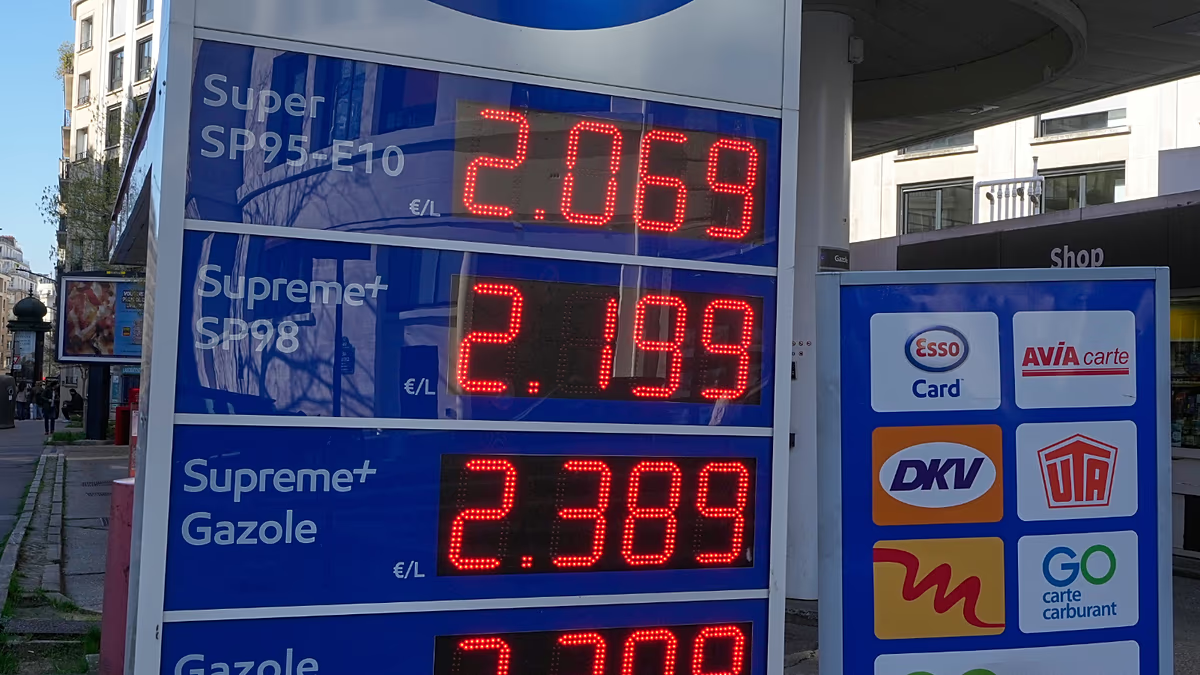
This crisis has also accentuated the existing landscape of fuel costs within Europe, defining clear tiers of affordability and expense. As of late April, the Netherlands holds the unwelcome title for the highest petrol price at €2.28 per litre, with Denmark, Germany, Greece, and France also above the psychologically significant €2 threshold. Conversely, Malta enjoys the cheapest petrol at €1.34, followed by Poland and Bulgaria. The diesel ranking is similarly stark, with the Netherlands again topping the list at €2.30, followed by Finland, France, Denmark, and Belgium. Malta remains a pronounced outlier for diesel as well, at a remarkable €1.21 per litre, with Poland as the next lowest at €1.64. Among the major economies, Spain stands out as the only one below the EU average for diesel prices.
Tracking the weekly evolution of prices since the start of 2026 provides a clear narrative graph of the conflict’s influence. Prices began an upward trend even in the weeks preceding the late-February strikes, likely driven by mounting geopolitical tensions and market anticipation. The outbreak of open hostilities then accelerated this climb dramatically, with petrol nearing €1.90 and diesel surpassing €2.06 by late March. Both fuels peaked in early April, with diesel briefly exceeding €2.10 per litre. The ceasefire agreement in April provided a tangible but limited remedy, initiating a decline that has, nevertheless, plateaued at levels substantially above the pre-conflict baseline. This trajectory illustrates how energy markets absorb risk premiums during conflict and only partially relinquish them during uncertain peace.
The broader context of Europe’s energy transition and taxation policies adds layers to this story. Taxes constitute a significant portion of final fuel prices in Europe, meaning that any increase in the base commodity price is amplified for the end consumer. Furthermore, the data reminds us that the automotive fleet is still overwhelmingly reliant on these now-volatile fuels. In 2024, petrol engines accounted for 67% of new car registrations and diesel for 17%, while battery-electric vehicles held a 14% share. This dependency ties the health of the European economy and the mobility of its citizens directly to global oil market stability. The current situation serves as a stark reminder of the tangible costs of geopolitical instability and the profound economic vulnerability that persists even after a ceasefire is signed, leaving drivers across the continent paying a premium for an uncertain peace.