

Paragraph 1
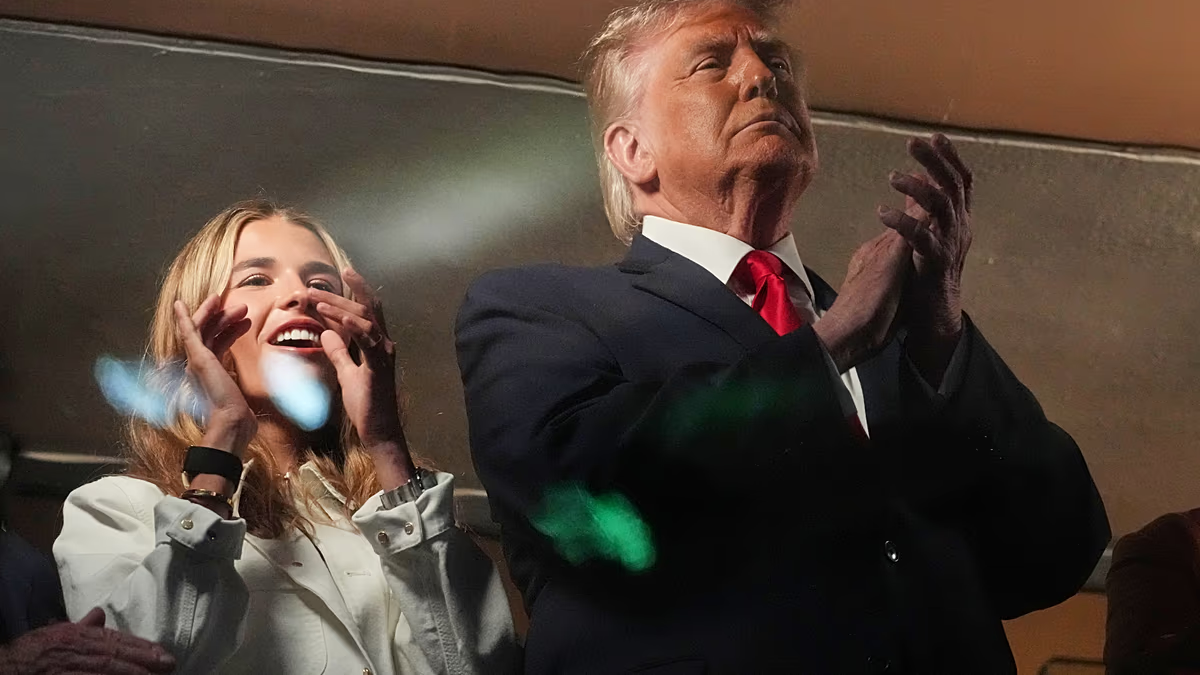
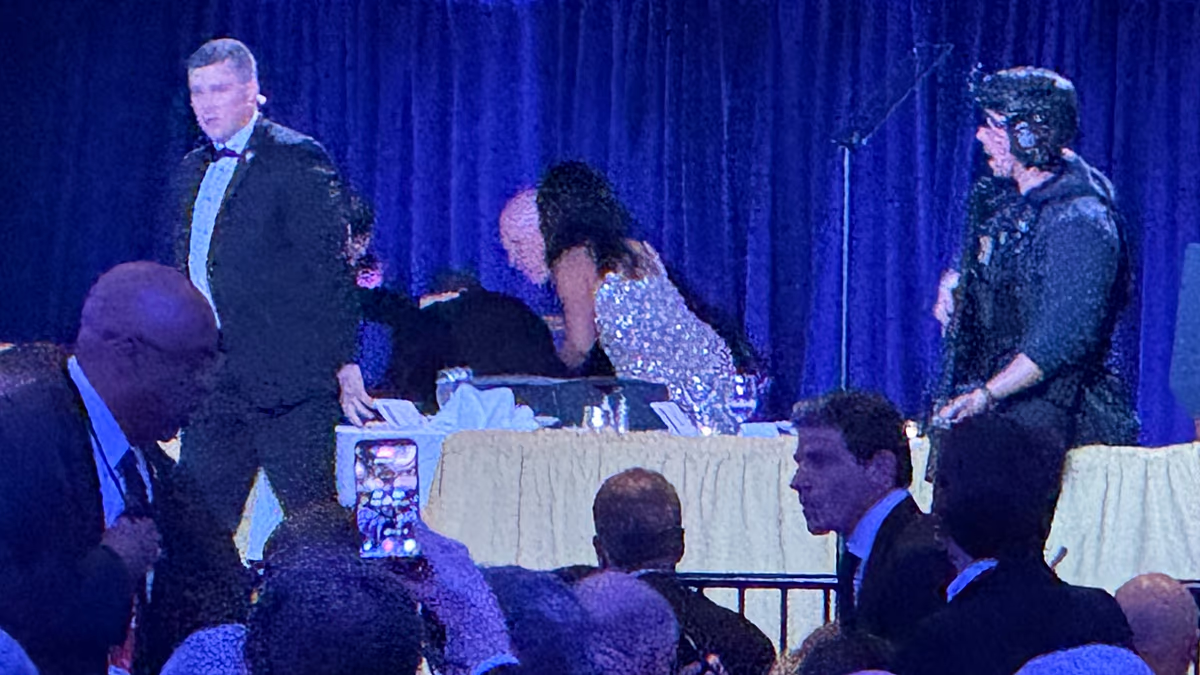
On the evening of the White House Correspondents’ Dinner, an event symbolizing the often-contentious but vital relationship between the presidency and the press, the atmosphere of political theater was shattered by genuine violence. At the Washington Hilton, as President Donald Trump and First Lady Melania Trump were in attendance, a 31-year-old armed man from California advanced toward the ballroom, brandishing firearms and knives. The swift and decisive actions of the U.S. Secret Service transformed a gala into a scene of urgent crisis. Viral videos, disseminating panic and reassurance in equal measure, captured the immediate aftermath: agents forming a protective shield around the President and First Lady, their professional calm a stark contrast to the chaos, before swiftly escorting the First Couple from the venue. This attempted breach was not merely a security incident; it was a direct attack on a core democratic institution, unfolding in real-time before a national audience.
Paragraph 2
In the wake of the gunfire, the political and personal rhetoric from President Trump was characteristically bold and unfiltered. At a hastily arranged press conference, he framed the presidency itself as a “dangerous profession,” asserting that such attempts at violence are “part of the job.” His comments wove together grim resolve, a call for unprecedented security measures, and a defiant message: “We’re not going to let anybody take over our society.” When probed on why he seemingly attracts such threats, Trump’s response pointed toward a perception of his own monumental influence, drawing a historical parallel that many found startling. He suggested that transformative figures are inherently targeted, invoking the memory of President Abraham Lincoln, the first American president to be assassinated. This comparison, while reflective of Trump’s self-view, underscored the profound weight of the moment—a sitting president consciously linking himself to the most tragic fate in the nation’s political history.
Paragraph 3
The suspect’s path to the ballroom door raised immediate and alarming questions about security protocols at a high-profile event protecting a president. Trump himself later released security footage showing the man’s attempt to “break through” at the hotel’s reception area, a visual that laid bare the frightening proximity of the threat. That an individual could penetrate layered defenses to come within reach of a major event, armed and intent on harm, prompted inevitable scrutiny of potential breakdowns in the security apparatus. This incident served as a stark reminder that no precaution is ever foolproof, and that the men and women of the Secret Service operate on a razor’s edge, where a single lapse can have catastrophic consequences. Their successful intervention prevented a national tragedy, yet the close call demands a thorough and public reckoning.
Paragraph 4
Amidst the questioning, President Trump was unequivocal in his praise for the Secret Service agents, whose rapid response undoubtedly saved lives. He shared the positive update that an officer struck in the chest during the confrontation was protected by his bullet-resistant vest and was “in good condition.” This detail highlighted the dual narrative of the night: a security scare that exposed vulnerabilities, countered by the professional heroism that contained it. The injured officer’s vest performed as designed, a small piece of technology representing the extensive, often unseen, preparations taken to shield public figures. This outcome, while fortunate, does not diminish the severity of the attempt or the bravery required of those who literally place themselves between the president and danger.
Paragraph 5
The cultural and political reverberations of the event extended far beyond the hotel walls. By personally posting a photo of the suspect on his Truth Social platform, President Trump demonstrated his direct, unmediated channel to his supporters, transforming a law enforcement matter into instant political content. His subsequent framing of the attack—linking it to his perceived historic impact—fuels the enduring narrative of a president perpetually under siege, a central theme for his political identity. For the public, the circulating videos and the president’s dramatic commentary created a disjointed experience: the jarring normality of a formal dinner interrupted by chaotic footage, followed by a presidential statement equating his tenure with Lincoln’s. It is a story that speaks to the unique tensions of the modern era, where political violence, personal branding, and historical allusion collide in real-time.
Paragraph 6
As this remains a developing story, with investigations ongoing into the assailant’s motives and the security response, the incident confronts the nation with enduring and uncomfortable questions. It tests the resilience of democratic norms against the threat of violence directed at its highest office. It forces a reevaluation of the balance between public engagement and imperative security in an age of intense polarization. Furthermore, it challenges the media and the public to process such events with nuance—acknowledging the genuine heroism of law enforcement, scrutinizing the legitimate security concerns raised, and critically engaging with the political narrative sown in its immediate aftermath. The shots fired at the Washington Hilton were not just an attack on a president, but a stress test on the systems, protocols, and very discourse that underpin American public life.