



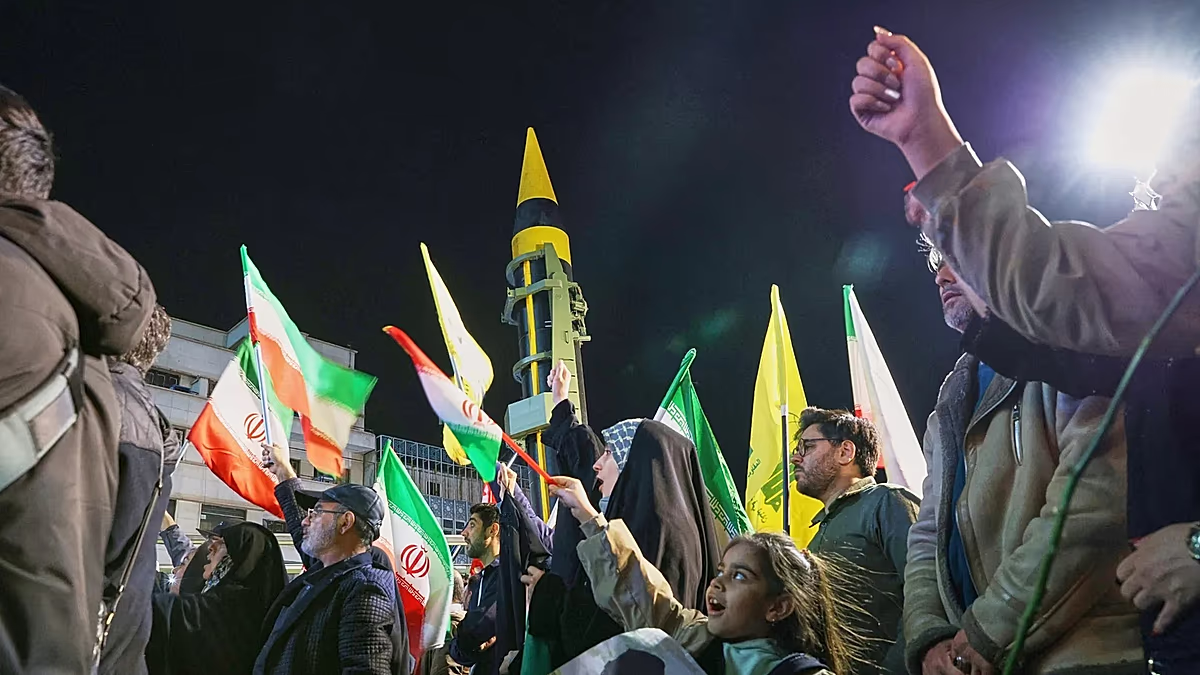
The path to a potential nuclear agreement between Iran and the United States remains fraught with profound internal challenges, as both nations grapple with the weight of their own political rhetoric and entrenched positions. According to Kourosh Ahmadi, a former Iranian diplomat, the decision-making elites in Tehran are “trapped in slogans they have already committed to,” creating a self-made prison that is difficult to escape. This dynamic is mirrored in Washington, where domestic political constraints also limit flexibility. Despite a brief ceasefire following the June 2025 conflict, renewed negotiations have already hit obstacles, exemplified by the cancellation of a second round of talks between Iranian parliament speaker Mohammad Bagher Ghalibaf and U.S. Vice President JD Vance. Internal disagreements within Iran, combined with Tehran’s anger over the ongoing U.S. naval blockade and threats from President Donald Trump, have stalled progress. Ahmadi cautions, however, that a complete Iranian withdrawal from talks would be a strategic misstep, allowing the U.S. to place full blame on Tehran and squandering the groundwork laid in initial face-to-face discussions.
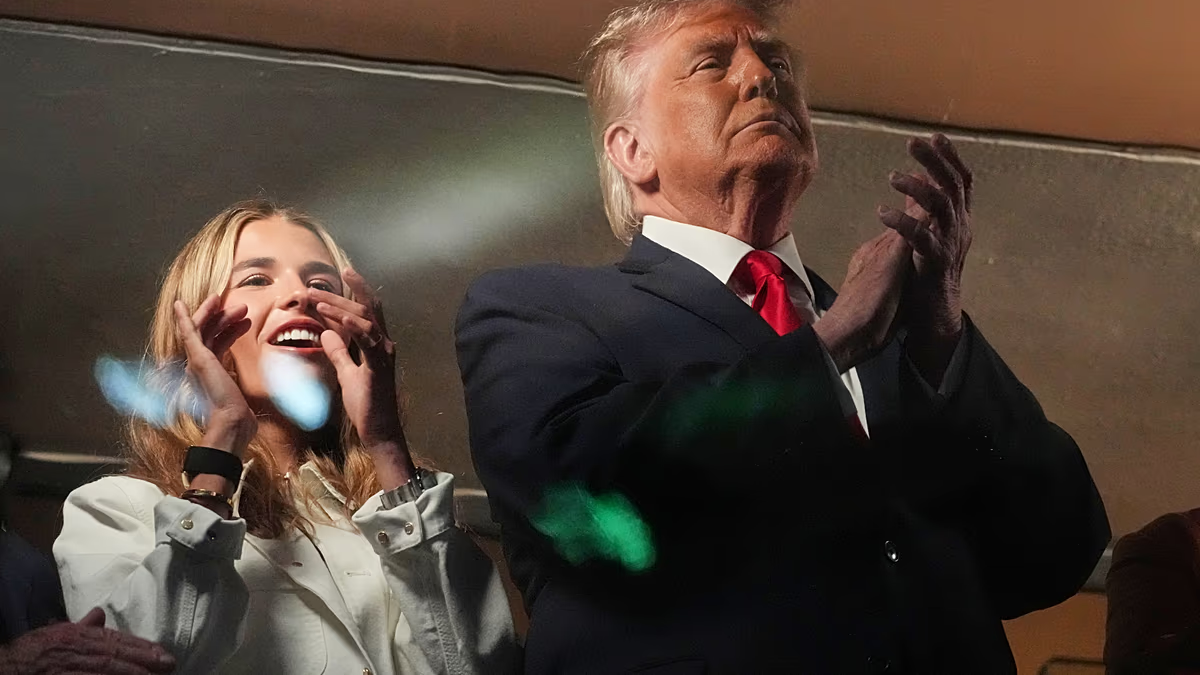
The current stalemate is underpinned by a tense and reciprocal military posture, with each side taking measures the other finds provocative. The United States maintains its blockade of Iranian ports, while Iran has restricted traffic in the critical Strait of Hormuz—a move Ahmadi describes as leaving both sides in a “relatively balanced position.” This balance is fragile, however, and subject to the escalatory impulses of domestic politics. The Iranian Supreme National Security Council’s firm declaration that Iran would not “back down one bit” on the strait’s closure came directly in response to a post by Trump vowing to continue the naval blockade regardless. This highlights how internal hardliners in Iran seized upon the U.S. president’s rhetoric to accuse their own negotiators of making excessive concessions. Ahmadi notes the tragic irony: had Trump not publicly insisted on maintaining the blockade, the strait might have remained open, creating an opening for de-escalation. Instead, the cycle of action and reaction tightens the trap for both governments.
Complicating the diplomatic calculus further is the potent role of ideological and religious narratives within Iran’s political landscape. Some hardline figures invoke powerful symbols, such as the sacrifice of Imam Husayn at Karbala, to frame resistance to U.S. pressure as a sacred duty. This rhetoric, echoed by figures like Vahid Jalili of the state broadcaster, serves to rally a specific domestic audience. Ahmadi urges against overinterpreting these statements as literal policy guides, noting they are often tools for political mobilization. “Political leaders have multiple audiences,” he explains, “and say things to the satisfaction of their social base on which these words cannot be based.” Yet, this inflammatory language carries risk, as officials can become “prisoners of their own rhetoric.” Ahmadi stresses a pragmatic hierarchy of needs: “First, there must be a viable state called Iran in this difficult region, and only then can it pursue a nuclear industry or any other development to improve people’s lives.”
On the core issue of uranium enrichment, Ahmadi provides a nuanced analysis that separates the program’s stated purposes from its practical utility. He reiterates that the official position, backed by a religious decree, forbids nuclear weapons, suggesting the drive for high-level enrichment served two strategic goals: military deterrence and leverage for sanctions relief. The recent conflict, however, demonstrated that enrichment did not prevent war, undermining its value as a deterrent. Therefore, Ahmadi argues, if the objective was always to create negotiating leverage, then logic dictates using that leverage now to secure a deal that lifts sanctions. He frames suspension—not permanent abandonment—of certain enrichment activities as a viable trade-off for economic relief, allowing Iran to retain its rights under international non-proliferation treaties. He reflects with regret that over two decades, from 2003 to 2025, the issue was treated as so vital and sacrosanct that it stifled pragmatic diplomacy and ultimately “contributed to war.”
The ultimate decision rests within Iran’s complex political system, where the shadow of legacy looms large. Any major agreement would require approval from the Supreme National Security Council and the current leader, Ayatollah Mojtaba Khamenei. Ahmadi points out that the political legacy of a long-serving leader like the late Ayatollah Ali Khamenei becomes an institutional obstacle, as passing through it is “usually not easy.” The critical factor is whether the current decision-making process can prioritize the interests of Iran’s 90 million citizens over the views of a minority favoring perpetual confrontation. Similarly, in the U.S., Trump faces his own constraints, seeking a deal distinct from the Obama-era agreement. The uncertainty is palpable; as Ahmadi states, he hopes an agreement is reached but notes it depends on whether the U.S. acts in a “reasonable and fair manner.” The process is inherently divisive, and no decision will garner universal support, but the majority view within the system must ultimately form the basis for action.
In conclusion, Ahmadi’s analysis presents a sobering yet cautiously hopeful perspective. The way forward requires both sides, but particularly Iran’s leadership, to consciously escape the trap of their own slogans and see the nuclear file not as an untouchable pillar of identity but as a negotiable instrument for national survival and prosperity. The alternative is the continued shadow of war, which Ahmadi condemns unequivocally: “War has never solved any problem… Contrary to common misconceptions, war disrupts rather than resolves processes.” A lasting ceasefire is presented as the essential foundation, creating the political space for leaders to function openly and make the difficult compromises peace requires. The coming period will test whether pragmatic interests can triumph over entrenched rhetoric and legacy, determining if a new chapter of stability is possible or if the region remains locked in a cycle of confrontation.