



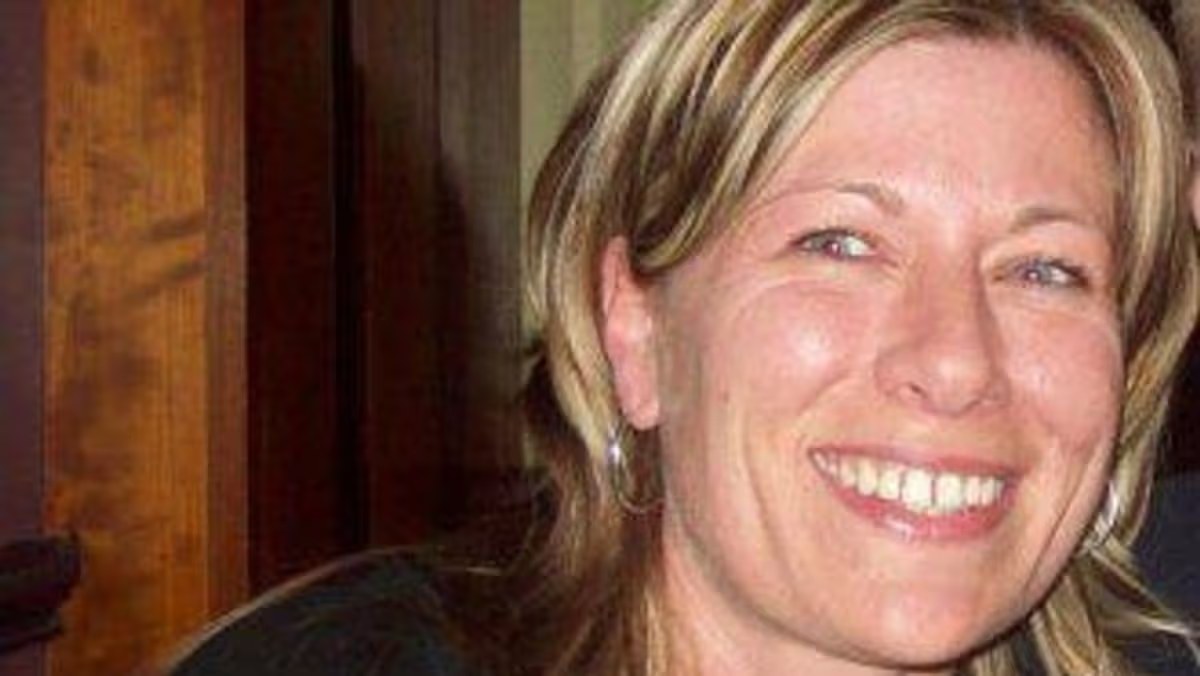
Wendy Duffy was 56 years old and physically healthy when she died by assisted suicide at the Pegasos clinic in Switzerland. Her decision, finalized in the spring of 2026, was not prompted by a terminal physical illness, but by an emotional wound she described as utterly untreatable: the profound and unrelenting grief following the death of her only son, Marcus, four years earlier. In interviews before her journey, Wendy painted a picture of a life that had lost all its color and meaning. “I exist. I don’t live,” she told The Daily Mail, encapsulating a reality where the world continued to turn while her inner world had ground to a permanent halt. She stated with quiet resolve, “When Marcus died, I died too, inside.” Her story forces a confrontation with the most complex questions of personal autonomy, the nature of unbearable suffering, and the boundaries society places on the right to die.
Her path to Switzerland was neither impulsive nor simple. It was a deliberate, year-long process of arranging what she saw as her only path to peace. She paid approximately £10,000, navigated a rigorous remote assessment via email and WhatsApp, and submitted her complete medical and therapeutic history to a panel of experts at Pegasos. This clinic is notable for accepting psychiatric—or in Wendy’s case, existential—suffering as a valid criterion, provided it is severe, long-lasting, and resistant to treatment. This set it apart from many other organizations, including the more widely known Dignitas and all proposed legislation in the UK, which restrict assisted dying to those with a terminal physical prognosis. For Wendy, this was a crucial distinction; traditional therapy had offered no solace, and UK law offered no legal pathway for her specific form of anguish.
In the weeks leading to her death, Wendy engaged in a series of poignant, heartbreakingly human acts of preparation. These final rituals were not about vanity, but about connection and legacy. She wrote letters to her loved ones, attempting to bridge the gap her choice would create with words of explanation and love. She carefully selected the music that would fill the room for her final moments, curating her own farewell soundtrack. Most movingly, she chose her “deathbed outfit”: a T-shirt that had belonged to Marcus, which, she noted, still carried his scent. This detail alone speaks volumes about the nature of her grief—a tangible, sensory connection to the child she lost, which she sought to carry with her literally to the end.
Wendy was acutely aware of the pain her decision would cause her large, close-knit family, including her four sisters and two brothers. While they knew of her application to Pegasos, she deliberately shielded them from the specific timeline to spare them prolonged anxiety, planning to call them only once she arrived in Switzerland. She acknowledged the difficulty her choice presented, yet her plea to them, and to the public, was framed in terms of her autonomy and her longed-for relief. “It will be hard for everyone,” she said. “But I want to die, and that’s what I’m going to do. And I’ll have a smile on my face when I do, so please be happy for me. My life; my choice.” Her final physical request was similarly symbolic: she asked for the clinic’s large windows to be opened wide, so that, as she said, “my spirit can be free.”
Her case sits at the volatile intersection of personal freedom and legal and medical ethics. The proposed assisted dying legislation in the United Kingdom, often debated but never passed in a form that would have included her, is strictly limited to terminally ill, mentally competent adults with less than six months to live. Wendy’s situation—a physically healthy individual suffering from prolonged, treatment-resistant grief—falls far outside these parameters, highlighting a significant gap between the realities of human suffering and the confines of most legal frameworks. Her journey to Switzerland underscores the stark geographic and legal disparities that dictate who can access a peaceful, planned death and under what circumstances.
Wendy Duffy’s ashes were cremated in Switzerland and returned to her family in accordance with her wishes: to be scattered by her son’s memorial bench, finally reuniting them. Her story is not one of a fleeting depression, but of a sustained, profound rupture in her very will to live following an irreplaceable loss. It challenges observers to look beyond simple categorizations of “illness” and consider the depths of what it means for a life to become, in a person’s own evaluation, unendurable. Whether viewed as a tragic failure of support systems or a courageous exercise of ultimate autonomy, her narrative adds a deeply personal, complicated voice to the ongoing global dialogue about death, dignity, and the right to determine our own stories’ endings.