



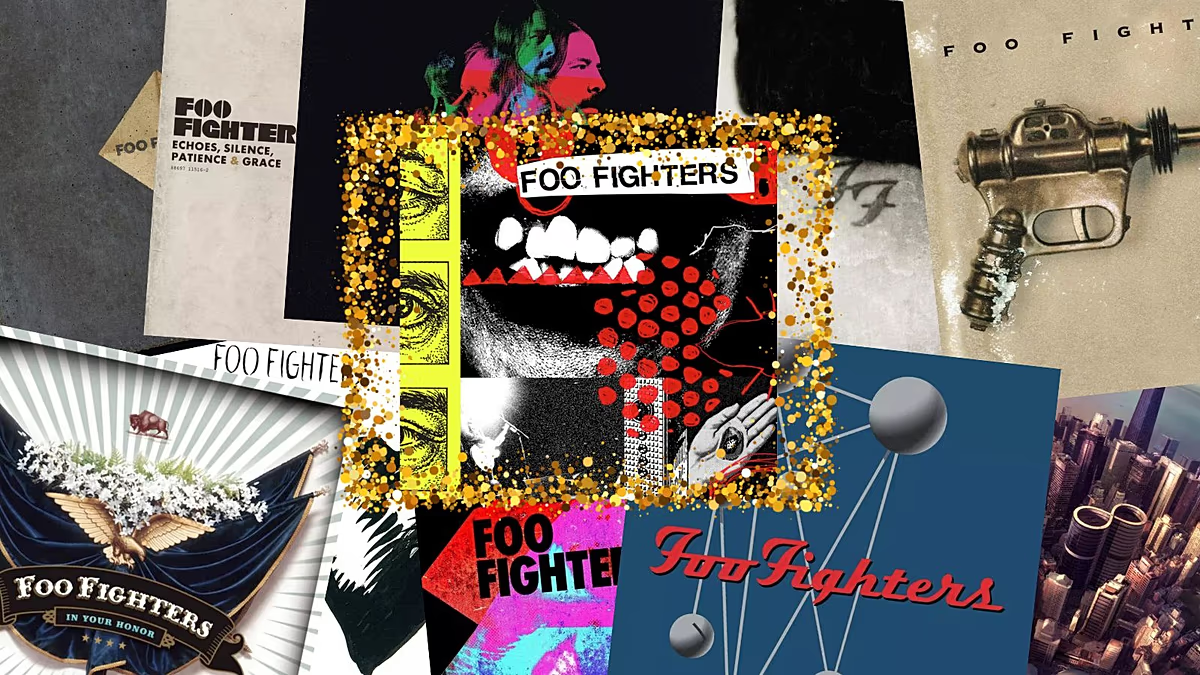
For over three decades, the Foo Fighters have navigated the tumultuous waters of rock stardom, experiencing profound peaks and devastating valleys. Their most recent chapter was defined by the cathartic 2023 album, But Here We Are, a record born from unimaginable grief following the sudden deaths of drummer Taylor Hawkins and Dave Grohl’s mother. That album served as a raw, powerful testament to the band’s resilience, channeling heartbreak into music that defiantly silenced critics who had lazily labeled them as “middle-of-the-road dad-rock.” It set a remarkably high emotional and artistic bar, making Grohl’s subsequent promise of a record that “feels new” for their twelfth album, Your Favorite Toy, a statement of intent for a fresh beginning.
Unfortunately, upon listening, that promised novelty is immediately elusive. Your Favorite Toy is undoubtedly a high-energy affair, featuring muscular riffs and Grohl’s signature gruff growl in full force. Yet, there’s an overwhelming sense of familiarity here, a retread of familiar ground that feels like a letdown after the piercing authenticity of its predecessor. The band seemed to aim for the rejuvenating, back-to-basics slap of 2011’s Wasting Light, and in pure sonic aggression, they sometimes succeed—tracks like ‘Caught In The Echo’ crackle with voltage, and ‘Of All People’ carries a welcome punk inflection. The album’s real standout, however, is new drummer Ilan Rubin, whose powerhouse performance, especially on the scorching ‘Spit Shine’, provides a thrilling new backbone.
Lyrically, the album ventures into themes of confession and self-flagellation, which is unsurprising given the personal turmoil and headline-grabbing controversies within the band’s camp prior to its release. However, where such raw material could have been creative fuel, the execution often falters. Attempts at deep reflection, through lines like “I move in complication / Waiting for intersection” or “Was it ever good enough? / Anything to be the person you want,” frequently come across as clumsy and shallow. They feel more like vague stabs at profundity than the candid, soul-baring confrontation of demons that made But Here We Are so compelling, ultimately undermining the album’s emotional intent.
It’s perhaps unfair to demand complete reinvention from a band with such a long and storied career. On its own terms, Your Favorite Toy functions effectively as a 36-minute jolt of riff-driven energy. It delivers immediate satisfaction and easily surpasses the less-inspired moments of their late 2010s output. Yet, it struggles to shed the feeling of being a dependable, rather than essential, entry in their catalog. It lacks the lasting weight and transformative spark that defines their best work, potentially leaving fans once again in the position of defending the Foos as a great rock band, rather than celebrating them as a vital, evolving one.
This conversation about what makes the Foo Fighters essential inevitably leads back to their iconic catalog. For the uninitiated, the journey must begin with 1997’s The Colour and The Shape, a near-perfect, skipless album that remains their most cohesive statement. It’s the definitive 90s rock record, boasting everything from the anthemic scream of ‘Monkey Wrench’ to the timeless beauty of ‘Everlong’. Close behind sits 1999’s There Is Nothing Left To Lose, a masterclass in balancing punchy pop-rock (‘Learn To Fly’) with hard-hitting gems (‘Stacked Actors’) and the wistful perfection of ‘Aurora’. Then there’s 2011’s Wasting Light, a ferocious back-to-basics triumph recorded in Grohl’s garage, which stands as the pinnacle of their later career.
Further down the list, but no less crucial, are the bookends of grief and rebirth. Their 1995 self-titled debut was a stunning solo catharsis for Grohl after Kurt Cobain’s death, a raw statement of intent with songs like ‘I’ll Stick Around’ proving there was fiery life after Nirvana. And, of course, there is But Here We Are, the painfully recent masterpiece that uses anguish as its sole instrument, setting the high watermark that Your Favorite Toy ultimately cannot reach. While the new album may not be the transformative new chapter some hoped for, it is a potent reminder of the band’s enduring engine—one fueled by loud guitars, thunderous drums, and an indomitable spirit that, even when not breaking new ground, refuses to quit.