



The Haunting Echoes of Chernobyl: A Memorial Etched in Time and Memory
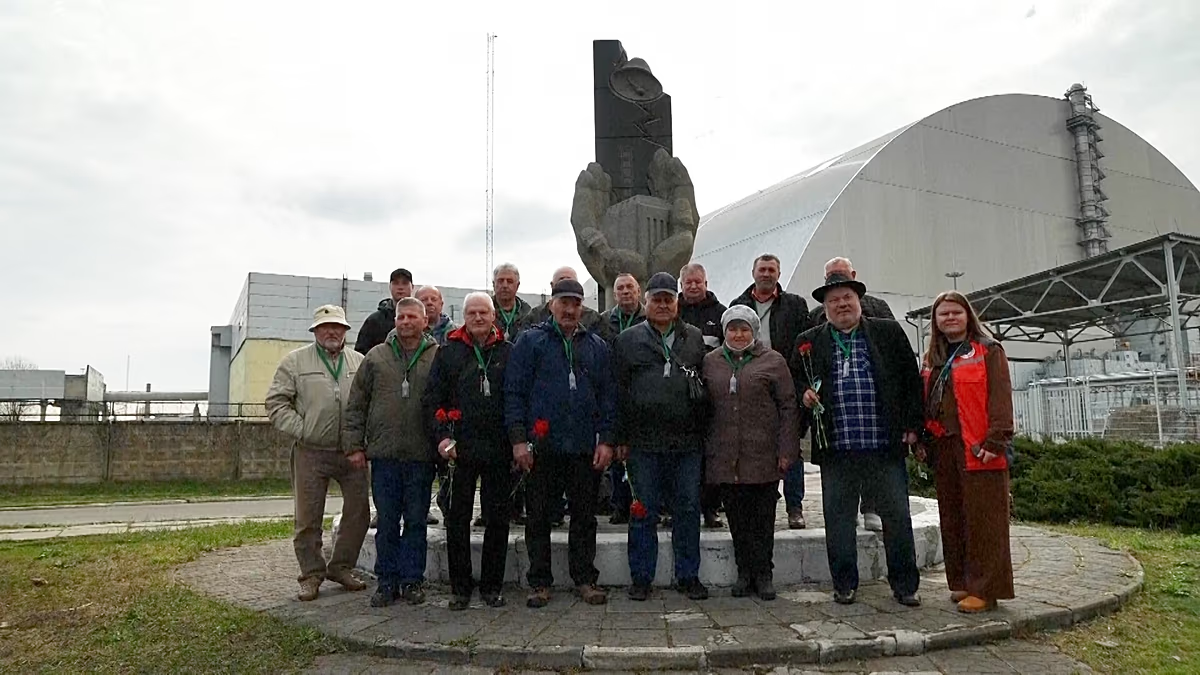
The solemn footsteps of returning heroes echoed through the ghostly silence of Pripyat, a city frozen in a moment thirty-eight years past. A group of elderly visitors, their faces etched with lines of time and experience, recently walked the desolate streets of this once-vibrant community, built for the workers of the Chernobyl Nuclear Power Plant and their families. Their pilgrimage was not to a mere historical site, but to the haunted heart of the world’s worst nuclear disaster, a place where over 50,000 lives were abruptly uprooted and a chapter of human history was tragically sealed. The visit underscored a somber anniversary, emphasizing the profound and lasting impact of the 1986 catastrophe—an impact measured not only in scientific scales but in the shattered lives and enduring scars borne by generations. The towering arch of the New Safe Confinement, a modern marvel of engineering that now entombs the ruined fourth reactor, stood as a stark symbol of this perpetual vigilance, a silent promise to contain a danger that will persist for millennia.
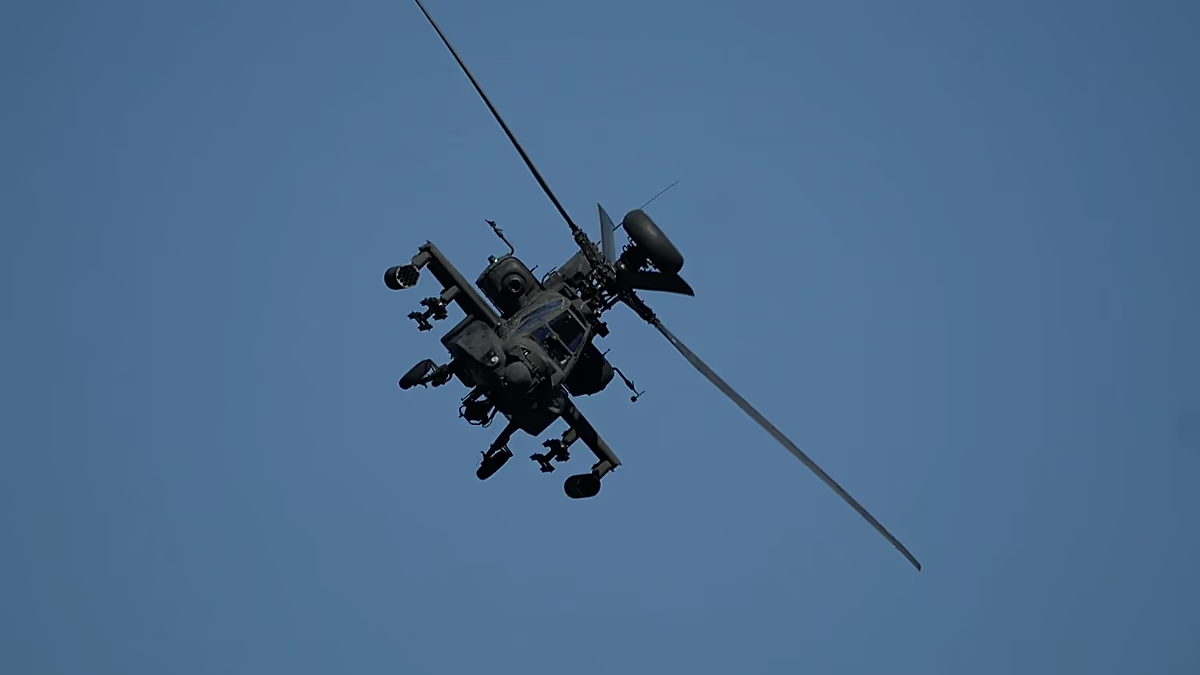
Among these visitors were the living legends of the Soviet Union’s desperate response, individuals known by the solemn title of “liquidators.” In the chaotic aftermath of the explosion, approximately 600,000 people—soldiers, miners, firefighters, engineers, and ordinary civilians—were mobilized from every corner of the vast empire. They were the human shield thrown against an invisible, lethal enemy: radiation. With often rudimentary protection, these men and women undertook Herculean tasks, piloting helicopters to dump sand and boron on the burning reactor core, clearing highly radioactive graphite debris with their hands, and constructing the initial, hurried sarcophagus. They worked in shifts measured in minutes to limit exposure, but for many, the damage was done. Their bravery came at an immense personal cost, leading to a legacy of long-term health problems, cancers, and early deaths that would shadow them and their families for decades. The group returning to the zone included men from the Poltava region who had toiled at decontamination between 1987 and 1988, carrying the memory of that service in their very bones.
For individuals like former firefighter Stanislav Tolumnyi, the experience was not just a chapter in his youth; it became the defining crucible of his life. The mission shaped his identity permanently, forging a bond of sacrifice and trauma shared with hundreds of thousands of others. To be a liquidator is to carry an inner landscape as complex and scarred as the Exclusion Zone itself—a mixture of pride in service, grief for lost comrades, and the quiet burden of survival. Their return was a poignant act of remembrance, a personal reckoning with the place that irrevocably altered their destinies. They are the human archive of the disaster, their memories and ailments a living testament to the scale of the sacrifice demanded to avert an even greater continental catastrophe.
The physical landscape they returned to stands as a chilling monument to that sacrifice. The disaster triggered the frantic evacuation of more than 116,000 people from Pripyat and surrounding villages, an exodus from homes left with meals on tables and children’s toys in yards. In its wake, a 30-kilometer Exclusion Zone was drawn, a silent, slowly rewilding territory that remains largely uninhabitable today. Nature, in a cruel irony, has thrived in the absence of humans, with wolves, lynx, and horses roaming forests that gradually reclaim decaying buildings. The zone is now a strange palimpsest: a nature reserve overlaying a post-apocalyptic snapshot of 1980s Soviet life, punctuated by haunting memorials to the lost villages. Every decaying school, every rusting amusement park Ferris wheel, and every radiation warning sign reflects the sheer, overwhelming scale of the catastrophe—not as a historical abstract, but as a tangible, ongoing reality.
This year’s commemoration carries a uniquely painful resonance, as Ukraine marks this anniversary while defending its very sovereignty in a brutal, ongoing war. Officials drawing a direct line between the resilience of the past and the fortitude of the present. The liquidators, who once fought an invisible enemy to protect the motherland, now share a symbolic mantle with the soldiers and emergency workers defending Ukraine from a very visible invasion. The lessons of Chernobyl—about the cost of secrecy, the valor of ordinary people, and the fragility of human infrastructure in the face of disaster—feel acutely relevant. Remembering the responders of 1986 becomes an act of national solidarity, a reminder that the spirit that compelled them to face the reactor fire is the same spirit now upholding the nation under siege.
Ultimately, the story of Chernobyl transcends the technical failures of reactor design or the political failures of a collapsing state. It is a profoundly human story of catastrophe and response, of a world violently altered in a single night. The abandoned city of Pripyat, the immense arch of the New Safe Confinement, the stories of the aging liquidators, and the enduring Exclusion Zone together form a powerful mosaic. It warns of the lasting consequences of our technological ambitions, but more importantly, it immortalizes the extraordinary courage of those who ran toward the fallout to save others. As the world moves forward, their pilgrimage reminds us that some shadows are cast long into the future, and some acts of sacrifice must never be forgotten.