



Based on the information provided, here is a humanized summary structured into six paragraphs.
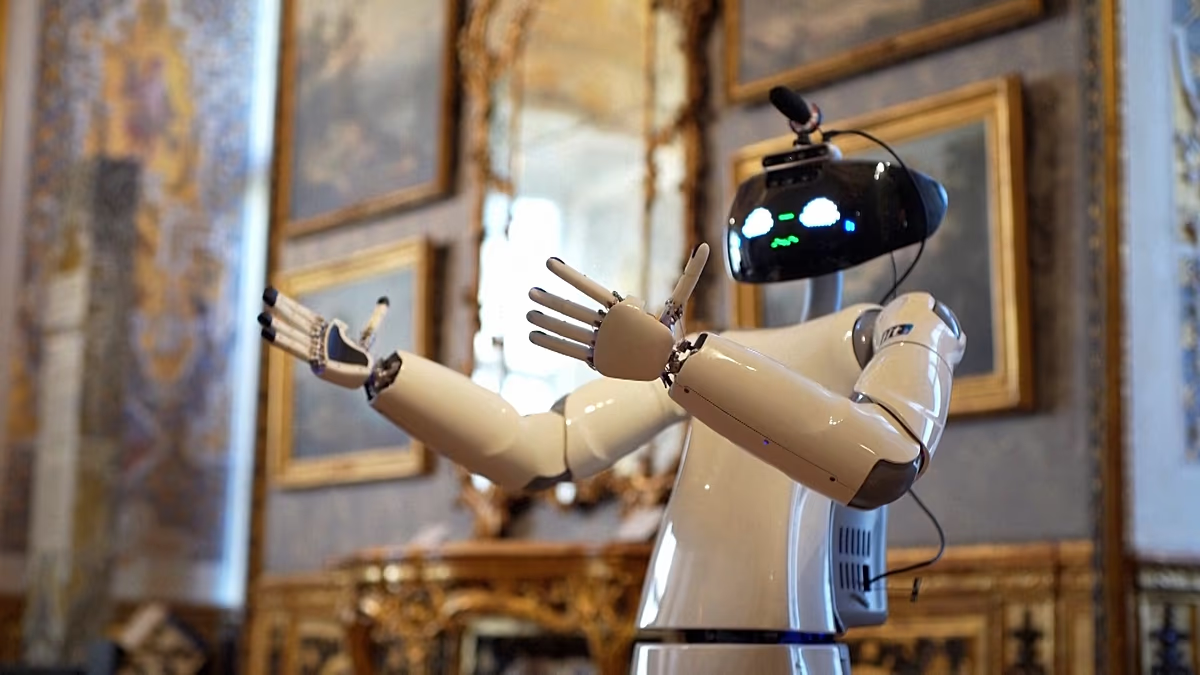
In the venerable halls of the National Museum of Montenegro, history is meeting the future in the form of a new, softly whirring ambassador. The robot, designated R1, glides on wheels at a gentle walking pace—up to 1.5 meters per second—through the museum’s historic corridors. Its primary mission is one of service: to greet visitors and, using its built-in artificial intelligence, provide explanations for the exhibits it encounters. This is not merely a rolling audio guide, but an interactive companion designed to help guests navigate the often narrow and intricate passageways of the heritage building, offering a novel layer of engagement with the nation’s treasures.
This innovative project is the result of significant collaboration and investment, backed by €4 million in funding from the European Union’s Digital Europe Programme. Key partners include the prestigious University of Genoa and the global engineering giant Robert Bosch GmbH. Since its deployment in late March, a six-week pilot has been underway, allowing engineers to refine R1’s capabilities in a real-world environment. The robot is far from a simple pre-programmed machine; it employs an array of sensors and cameras to perceive its surroundings dynamically. This allows it to avoid obstacles, adjust its route in real time as crowds shift, and even reorient itself by remapping its environment if it becomes confused, ensuring smooth and safe operation alongside human visitors.
Crucially, museum leadership is clear that R1’s role is one of support, not replacement. The robot is envisioned as an extra pair of “hands” and a supplementary voice, particularly during peak times when visitor numbers can surge by as much as 30%. By handling routine directional queries and basic exhibit introductions, R1 can free up human staff to focus on more complex questions, deeper contextual discussions, and the irreplaceable personal touch that defines a meaningful museum experience. This approach aims to enhance overall visitor throughput and satisfaction without diminishing the human expertise at the institution’s heart.
Early public feedback has been largely promising, indicating a strong curiosity and openness to this new technology. Museum officials report that over 80% of users have described their interactions with R1 as positive, often charmed by its novel presence and efficient assistance. For many, especially younger visitors or tech enthusiasts, the robot represents an exciting and accessible point of entry into the museum’s collections. It adds an element of modern wonder to the ancient artifacts, suggesting that institutions of culture can also be spaces of technological innovation.
However, the integration is not without its initial learning curves. Some visitors remain hesitant, unsure of how to initiate interaction with the machine or preferring the nuanced, empathetic dialogue only a human guide can provide for detailed explanations. This highlights a fundamental truth: while AI can deliver information, the spontaneous conversation, shared curiosity, and adaptive storytelling of a human docent carry a unique value. These early mixed reactions are valuable data, showing that the successful model will likely be a hybrid one, where robots manage logistical and introductory tasks, thereby empowering human staff to excel in the areas where they are truly irreplaceable.
The R1 project in Montenegro stands as a compelling test case for the thoughtful integration of robotics into public cultural spaces. It demonstrates a future where technology is deployed not as a spectacle or a substitute, but as a practical tool to augment human capability and enrich the visitor experience. By navigating historic corridors with modern sensors, this robot is doing more than avoiding obstacles; it is carefully navigating the balance between heritage and innovation, efficiency and personal touch, offering a glimpse into a collaborative future for museums worldwide.