


Title: A Tense Journey Home: Navigating Emergencies and Uncertainty in Modern Air Travel
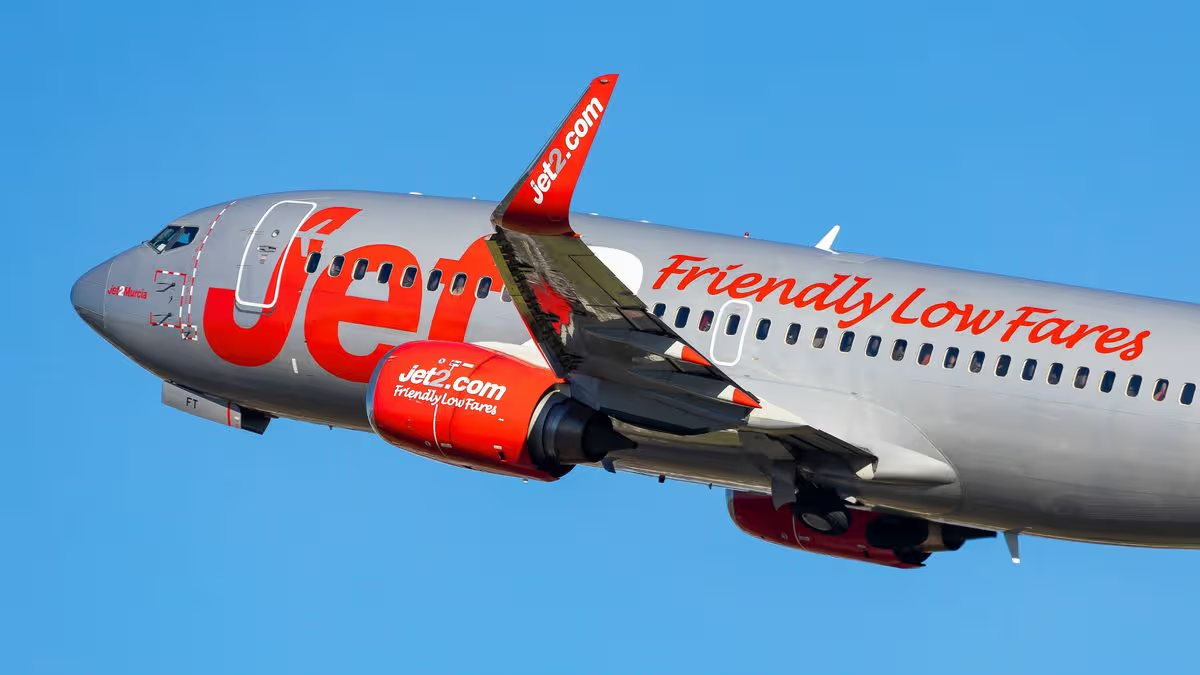
In the vast, open skies above the North Sea, a routine journey took a sudden and serious turn. A Jet2 Boeing 737, carrying passengers from the sunny coastal resort of Dalaman in Turkey back to Glasgow, Scotland, found itself in a situation demanding immediate attention. As the aircraft cruised at approximately 36,000 feet on its approach to the UK, the flight crew transmitted a critical ‘Squawk 7700’ alert—the universal transponder code signaling a general emergency to air traffic controllers worldwide. This digital distress signal cut through the ordinary radio chatter, transforming the flight’s status from standard procedure to priority handling. While the exact nature of the onboard issue remains undisclosed, the declaration prompted a coordinated and careful response from aviation authorities to shepherd the aircraft and the people aboard it safely to the ground.
Guided by air traffic control with heightened vigilance, the flight was granted a priority descent and approach into Glasgow Airport. Data from flight tracking services illustrates a brief period of level flight after the alert was issued, followed by a controlled descent as controllers cleared a direct path. This seamless coordination between the cockpit and the ground is a testament to the rigorous emergency protocols embedded in international aviation, designed to manage such high-pressure scenarios with calm efficiency. Ultimately, the professionalism of the crew and the support of the control teams paid off. The Jet2 flight touched down smoothly on Runway 23 at 4:32 PM UK time, just minutes ahead of its scheduled arrival, concluding a flight that will surely be remembered by its passengers not for its timeliness, but for the safe resolution of an unexpected mid-air event.
This incident, while resolved without physical harm, casts a light on the complex and often fragile ecosystem of global air travel, where challenges extend far beyond a single aircraft’s technical systems. In a separate but deeply related development, the CEO of Norse Atlantic Airways, Eivind Roald, has issued a sobering warning about the state of the industry. His airline was recently forced to cancel its flights between London Gatwick and Los Angeles, a decision he described as being made with a “heavy heart.” The primary culprit is a dramatic and destabilizing surge in the price of jet fuel, which Roald noted skyrocketed by “more than 100 per cent after a few days.” This economic pressure turns long-haul route planning into a high-stakes gamble, threatening the connectivity and travel plans upon which millions of people and businesses rely.
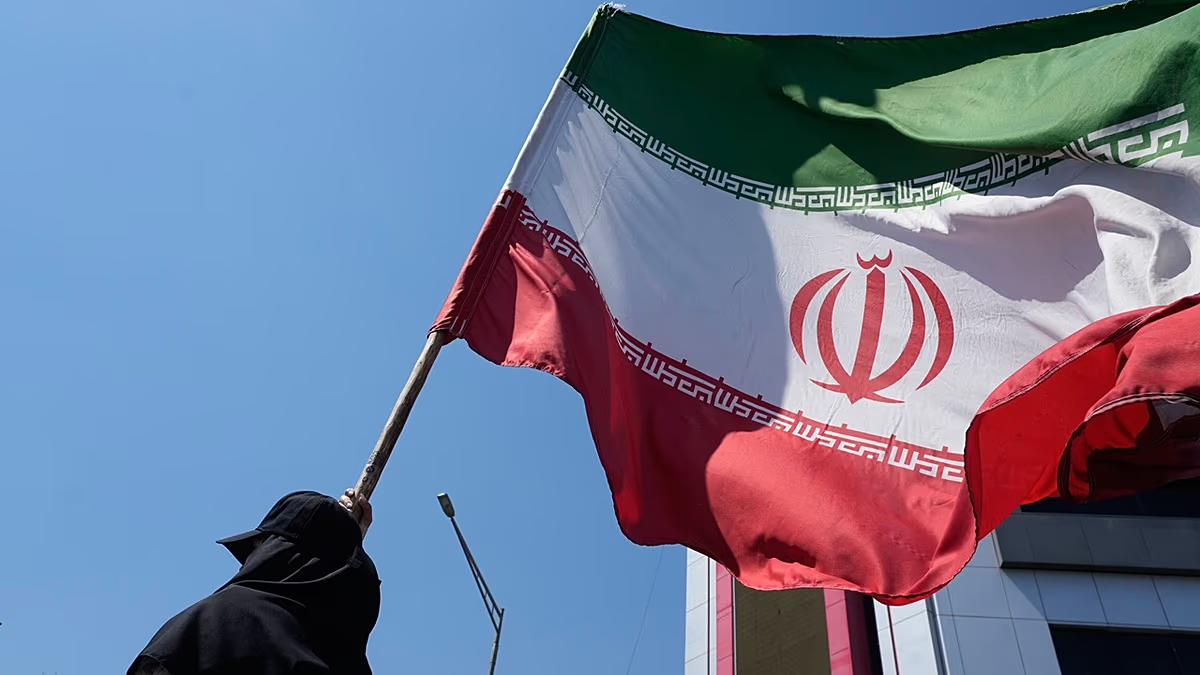
The roots of this fuel crisis are geopolitical, painting a picture of a world where international tensions directly impact everyday lives. Dozens of airlines worldwide are contending with cancellations as Iran’s strategic control over the Strait of Hormuz—a vital maritime chokepoint for global oil shipments—continues to disrupt supplies. Compounding this is the reported involvement of the US Navy, under orders to blockade Iranian ports. This confluence of actions creates a volatile situation far removed from an airport terminal, yet its repercussions are felt acutely by airlines trying to secure affordable fuel and by passengers facing sudden itinerary changes. Roald, in an interview with BBC Newsnight, expressed a grim expectation that more cancellations, particularly on short-haul European routes, are likely on the horizon as carriers grapple with these unsustainable cost pressures.
For the passengers affected by Norse Atlantic’s cancellations, the company’s apology and assurance to “assist disrupted passengers as best we can” are small consolations against the reality of upended plans. The airline framed its difficult choice as a necessity to protect its “sustainable future” and maintain reliability on its other routes this summer. This highlights the painful balancing act airlines now face: managing existential financial risks while upholding their duty of care to customers. The travel industry is thus caught between immediate operational hurdles, like the emergency encountered by the Jet2 flight, and broader systemic storms fueled by international discord and market instability.
Together, these stories form a dual narrative about modern aviation. One is a contained, technical drama that underscores the industry’s formidable capacity for safety and real-time problem-solving under duress. The other is a sprawling, economic and political saga that reveals its deep vulnerabilities to global forces. For the traveler, it is a reminder that the miracle of flight rests on a foundation of both meticulous engineering and intricate international logistics. As passengers disembarked safely from the Jet2 flight in Glasgow, they stepped back onto solid ground, their journey complete. Meanwhile, for an industry navigating turbulent skies both literal and figurative, the path ahead requires careful navigation through continued uncertainty, where the priority remains ensuring that every landing is as safe as the one witnessed in Glasgow today.