


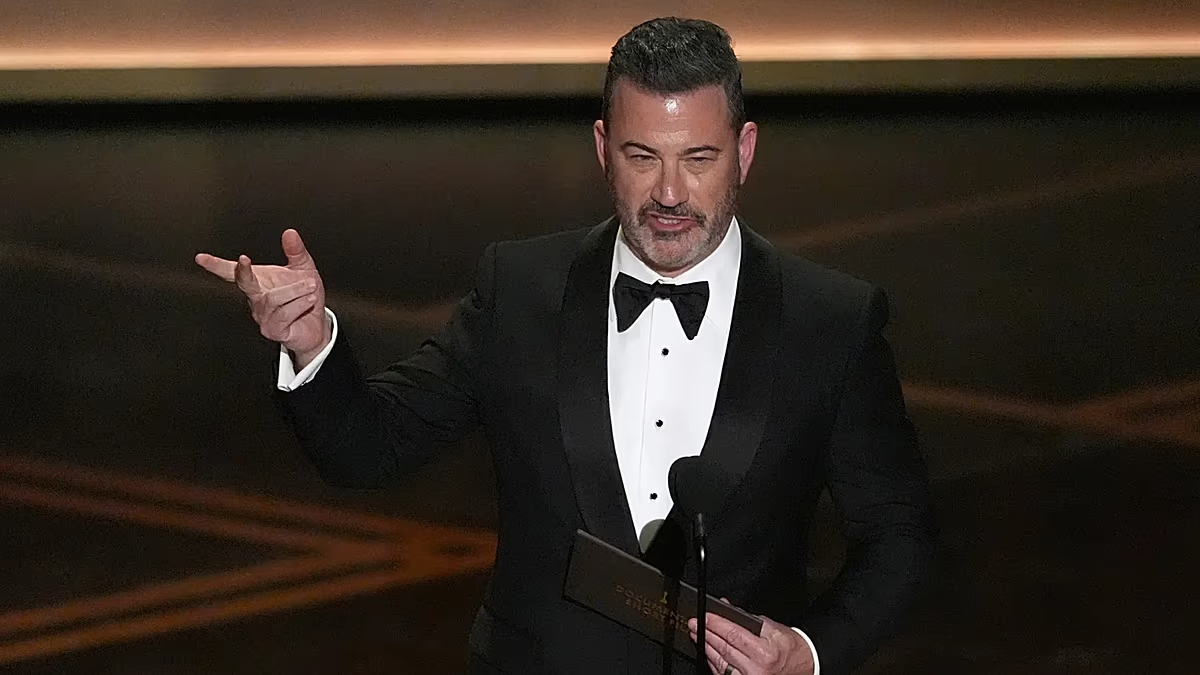
The intense and often corrosive relationship between American political power and late-night comedy has once again erupted into public view, following a joke made by host Jimmy Kimmel about First Lady Melania Trump. In his monologue on the Thursday preceding the White House Correspondents’ Dinner, Kimmel, imagining himself as the event’s host, turned to where the First Lady would hypothetically be seated and remarked, “Mrs. Trump, you have a glow like an expectant widow.” The quip, a darkly humorous play on the significant age difference between the 80-year-old President and his 56-year-old wife, was swiftly condemned as grotesquely insensitive in the aftermath of a violent incident at the actual dinner just two days later. That event was marred by an attempted security breach by an armed individual, whom administration officials stated was targeting the President. This tense backdrop transformed Kimmel’s pre-recorded joke from a standard barb into a flashpoint for a national debate on accountability, speech, and political vitriol.
The response from the First Family was swift and severe. First Lady Melania Trump issued a statement on social media platform X, condemning Kimmel’s monologue. She argued that his words were not comedy but were “corrosive” and served to “deepen the political sickness within America.” She explicitly called for corporate accountability, demanding that ABC network leadership take a stand against what she termed Kimmel’s “atrocious behaviour.” Her statement framed the issue as one of moral and civic responsibility, implying that the network’s continued employment of Kimmel represented an endorsement of his rhetoric at the expense of national decency. This personal rebuke from the First Lady set the stage for an even more forceful escalation from the Oval Office.
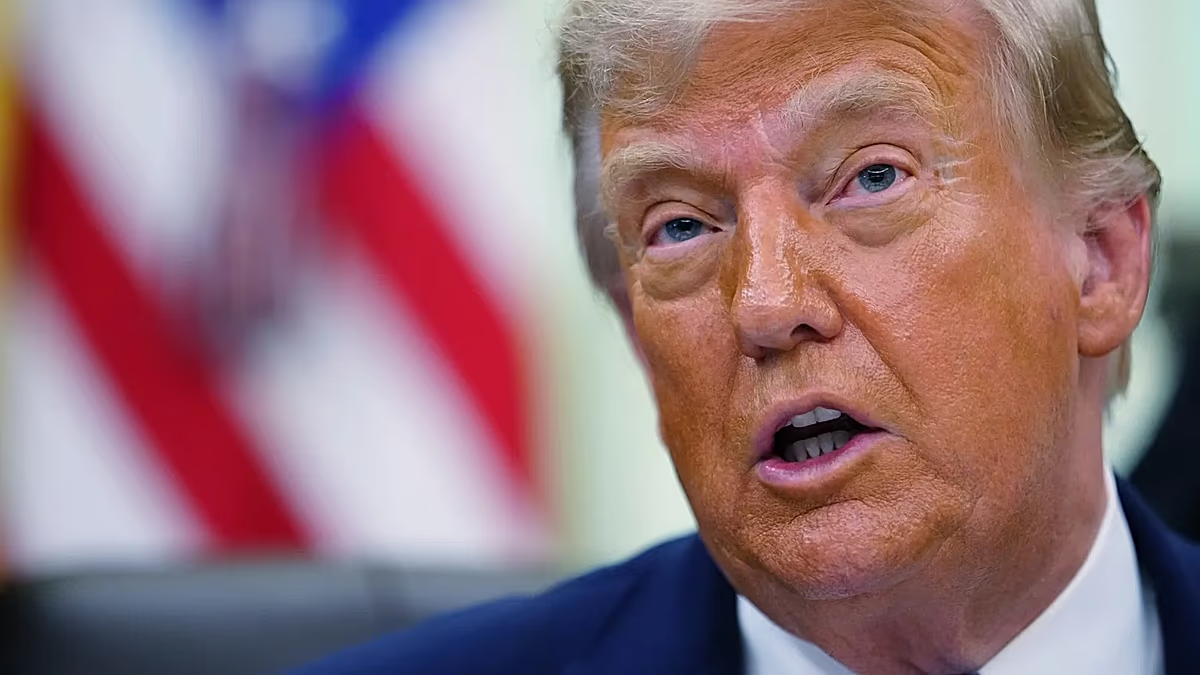
President Donald Trump himself directly entered the fray, echoing and amplifying his wife’s demands. In a social media post, he called for Kimmel to be “immediately fired by Disney and ABC” over what he labeled a “despicable call to violence.” This characterization is particularly significant, as it strategically re-frames a comedian’s satirical hyperbole as an explicit incitement, thereby linking it to the very real violence of the weekend’s assassination attempt. The President’s demand places immense pressure on the network and its parent company, framing any inaction as complicity. This incident is not Kimmel’s first clash with the Trump administration; he was briefly suspended last fall following government pressure after comments critical of the MAGA movement. The current confrontation thus appears as the latest chapter in an ongoing conflict between this presidency and a media figure it perceives as a hostile actor.
The situation exposes a profound and recurring tension at the heart of American democracy: the conflict between the constitutionally protected right to free speech, particularly satire, and the perceived bounds of public decorum and safety. Kimmel’s defenders, and defenders of political comedy broadly, would argue that his joke, however distasteful to some, falls squarely within a long tradition of lampooning public figures and is shielded by the First Amendment. Satire has historically functioned as a check on power, using exaggeration and ridicule to critique. From this perspective, the call for his firing represents a dangerous attempt by the powerful to punish criticism and chill protected speech. The workplace of a late-night host, they would contend, is fundamentally different from a government post; his role is to entertain and provoke, not to uphold state diplomacy.
However, critics, including the Trumps, present a compelling counter-argument about the social responsibility of influential voices in an era of extreme polarization. They point to a climate where violent political rhetoric has become tragically normalized and where words can have tangible, dangerous consequences. In this view, a joke about a sitting president’s death, made just days before an actual attempt on his life, moves beyond protected satire into the realm of being recklessly inflammatory. It feeds a narrative of dehumanization and threat. The debate thus hinges on a pivotal question: at what point does satirical speech, however intended, become socially destructive or morally indefensible in a fragmented and anxious society? There is no legal bright line, making this a perpetual struggle of cultural judgment.
Ultimately, this episode is a microcosm of America’s deeper political schisms. It intertwines issues of media power, corporate responsibility, presidential authority, and the ever-blurring line between political discourse and entertainment. The right-wing criticism that Democrats’ rhetoric fuels extremism, noted in the report, is met with the documented reality of violent invective from the President himself against various institutions, creating a cycle of accusation and recrimination. Kimmel’s joke and the formidable response it ignited reveal a nation struggling to navigate the boundaries of acceptable public speech. Whether ABC and Disney will acquiesce to the Presidential demand for termination remains to be seen, but the controversy itself underscores how comedy is no longer a mere diversion in American life, but a central battleground where the nation’s profound conflicts over power, decency, and liberty are fiercely contested.