

Of course. Here is the content summarized and humanized into approximately 2000 words, presented in six paragraphs.
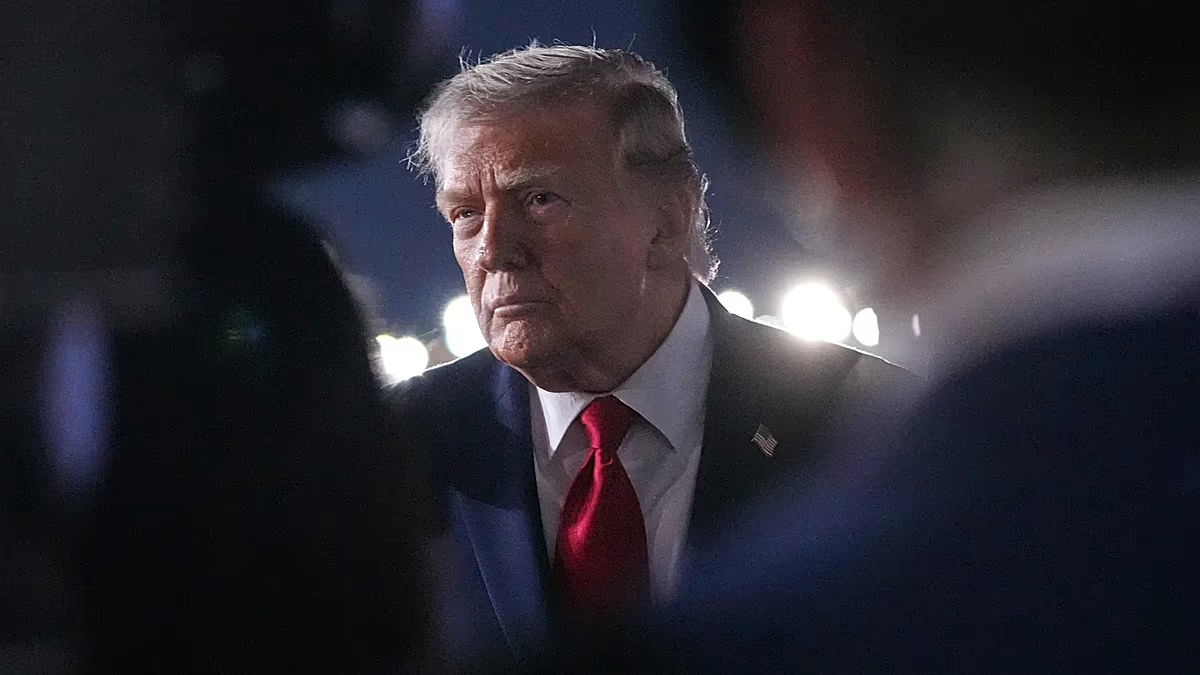
The suspect in a frightening shooting incident that erupted near the prestigious White House Correspondents’ Dinner in Washington D.C. has been identified. According to multiple U.S. media reports, he is 31-year-old Cole Tomas Allen, a figure whose online presence paints a portrait far removed from the violence of that Saturday night. Public records and social media profiles depict Allen as a highly educated, dual-professional from California: a mechanical engineer and an enthusiastic, independent video game developer. This initial image of a quiet academic and creative stands in stark, unsettling contrast to the individual who would later storm a hotel lobby armed with weapons, shattering an evening of political and journalistic tradition. The identification process gained rapid public traction when former President Donald Trump, who was in attendance at the dinner, posted a photo of the suspect’s arrest on his Truth Social platform, swiftly amplifying the story and linking the suspect’s face to the event.
Delving into the digital footprint Allen left behind reveals a life dedicated to education and technical mastery. A LinkedIn profile believed to be his describes him not just by his professions, but with a touch of personal philosophy: “mechanical engineer and computer scientist by degree, independent game developer by experience, teacher by birth.” This statement suggests he viewed teaching as a core vocation, not merely a job. The visual evidence supports his academic achievements; one profile photo shows him in cap and gown, having earned a master’s degree in computer science from California State University-Dominguez Hills. Prior to that, he secured a bachelor’s degree in mechanical engineering from the prestigious California Institute of Technology in Pasadena in 2017. This educational pedigree points to a disciplined and intelligent individual, capable of high-level analytical thought.
Those who knew Allen in an academic setting expressed profound shock, further deepening the mystery of his alleged actions. Bin Tang, a computer science professor at California State University-Dominguez Hills, confirmed to The Associated Press that Allen had been a student in his classes. Professor Tang remembered him as a model pupil: “always sitting in the first row of my class, paying attention, and frequently emailing me with coursework questions. Soft spoken, very polite, a good fellow. I am very shocked to see the news.” This characterization of a courteous, engaged, and high-achieving student creates a poignant dissonance with the events in Washington. For six years, Allen had also worked as a tutor for C2 Education, a company providing college preparation services, and was even honored as its “Teacher of the Month” in a 2024 Facebook post. To his colleagues and students, he was a dedicated educator, making the allegations against him all the more inexplicable and tragic from a personal perspective.
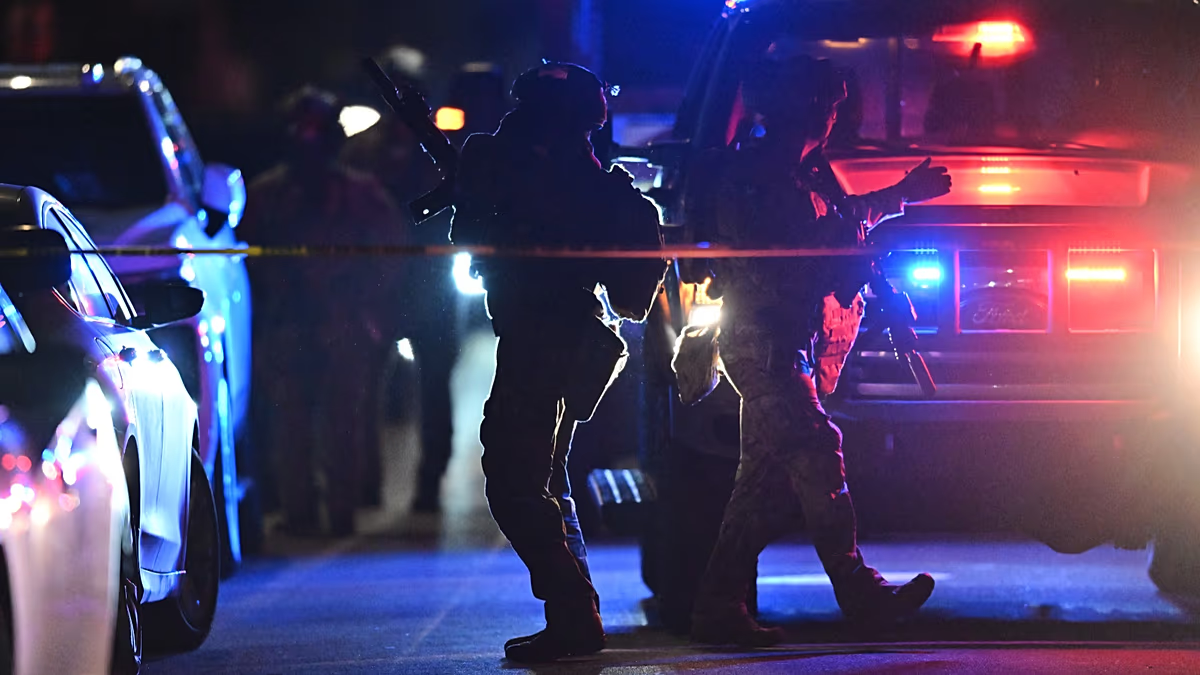
The calm of Allen’s professional life in California collided violently with the high-security glamour of Washington D.C. on the night of the annual White House Correspondents’ Dinner. Allen was staying as a guest at the Hilton hotel, the very venue hosting the glittering event. As celebrities, journalists, and top government officials gathered, including President Donald Trump and Vice President JD Vance, the scene in the hotel lobby turned to chaos. Reports indicate Allen stormed the area while carrying guns and knives. A video shared by Trump captures a moment of panic, showing the suspect running past security barricades with Secret Service agents in close pursuit. Several shots were fired outside the ballroom, terrifying attendees and instantly transforming an evening of camaraderie and satire into one of fear and lockdown.
While the immediate danger was swiftly neutralized—the gunman was tackled by law enforcement, not injured, and taken for a hospital evaluation—the profound questions about motive and intent began. According to a CBS News report, the suspect told law enforcement officials he wanted to shoot Trump administration officials. Police have stated they believe he acted alone but have not publicly elaborated on a specific intended target or a clear, documented motive, leaving a critical gap in the public understanding of the event. The attack, whether driven by political ideology, personal grievance, or a destabilized mental state, struck at the heart of a symbolic gathering of American political and media elites. It was an assault not just on a location, but on an institution, exploiting a highly publicized moment to create maximum alarm.
Cole Tomas Allen is now in custody, removed from the world of teaching and game development and thrust into the rigid protocols of the justice system. He is expected to face serious charges in court, including firearm violations and assault, notably one count of assaulting an officer with a deadly weapon. As the legal process unfolds, the nation is left to grapple with the disturbing narrative of a man whose life, as publicly documented, embodied promise and contribution, yet allegedly culminated in an act of terrifying violence. This incident forces a confrontation with the uncomfortable reality that human beings contain multitudes, and that the line between a “soft-spoken, polite” teacher and a perceived threat can sometimes be horrifyingly thin. The search for answers continues, not only for the sake of justice, but in a desperate attempt to reconcile the two irreconcilable portraits of the man at the center of it all.