



Paragraph 1: A Forgotten Field of Lost Souls
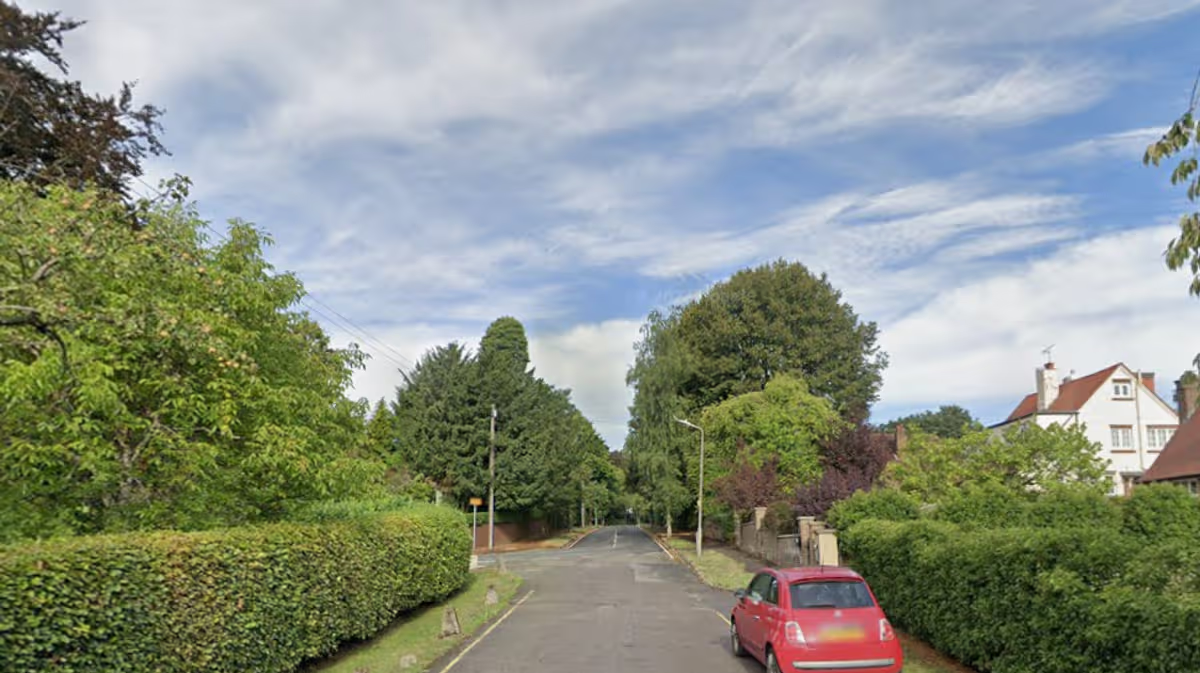
In the quiet Surrey outskirts of London, nestled near Epsom, lies a five-acre patch of land known as Horton Cemetery. To the casual observer, it appears as nothing more than an overgrown, largely impenetrable woodland, protected by an old iron fence. Yet beneath this forgotten ground rest approximately 9,000 souls, former patients of what was once the largest cluster of psychiatric hospitals in Europe. These were individuals from all walks of life—butchers, hat makers, piano tuners, artists, and nobles—who, due to poverty, illness, or the traumas of their time, came to an unfortunate end within the nearby asylum walls. Buried between 1899 and 1955, often in unmarked paupers’ graves, sometimes three or four bodies deep, they represent a profound chapter of social and medical history that has been physically abandoned and largely erased from memory.
Paragraph 2: A Campaign to Restore Memory and Dignity
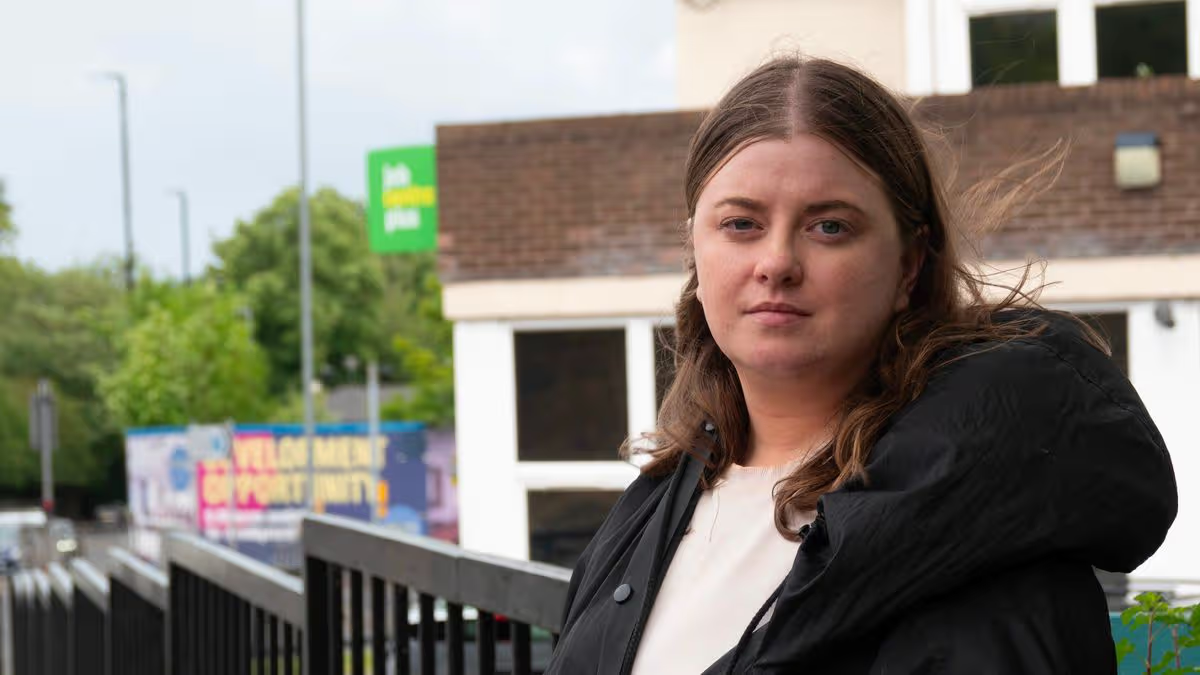
Today, a dedicated campaign spearheaded by the charity Friends of Horton Cemetery seeks to bring this privately owned site back into public ownership and, crucially, to restore the dignity and memory of those interred there. Led by honorary secretary Lionel Blackman, the effort is driven by a belief that Horton is of national importance, potentially the largest abandoned hospital cemetery in Europe. The charity envisions transforming the space into a garden, a nature reserve, and a proper memorial. Their volunteer researchers have already unearthed information on around 500 individuals, piecing together fragmented lives to better understand the society that institutionalized them. This mission is supported by local MP Helen Maguire, who sees Horton as a unique pilot site for addressing neglected burial grounds and restoring long-term protection and respect.
Paragraph 3: The Epsom Cluster and the Reasons Behind the Walls
The cemetery served the “Epsom cluster,” five large psychiatric hospitals—The Manor, Horton, Ewell Epileptic Colony, Long Grove, and West Park—built by the London County Council to offer patients recovery in the countryside. However, the reasons for admission were often a stark reflection of societal norms and ignorance. Lionel Blackman notes shocking historical criteria: trauma after miscarriage, children born out of wedlock, soldiers suffering shell shock, and the now-unthinkable concept of an “epileptic colony.” In an era when a man could have his wife certified, many entered due to circumstances far beyond mere mental illness. If families were financially strained or absent, patients who died were laid to rest in Horton’s simple, communal graves, with few headstones or crosses remaining today.
Paragraph 4: Uncovering the Human Stories Behind the Statistics
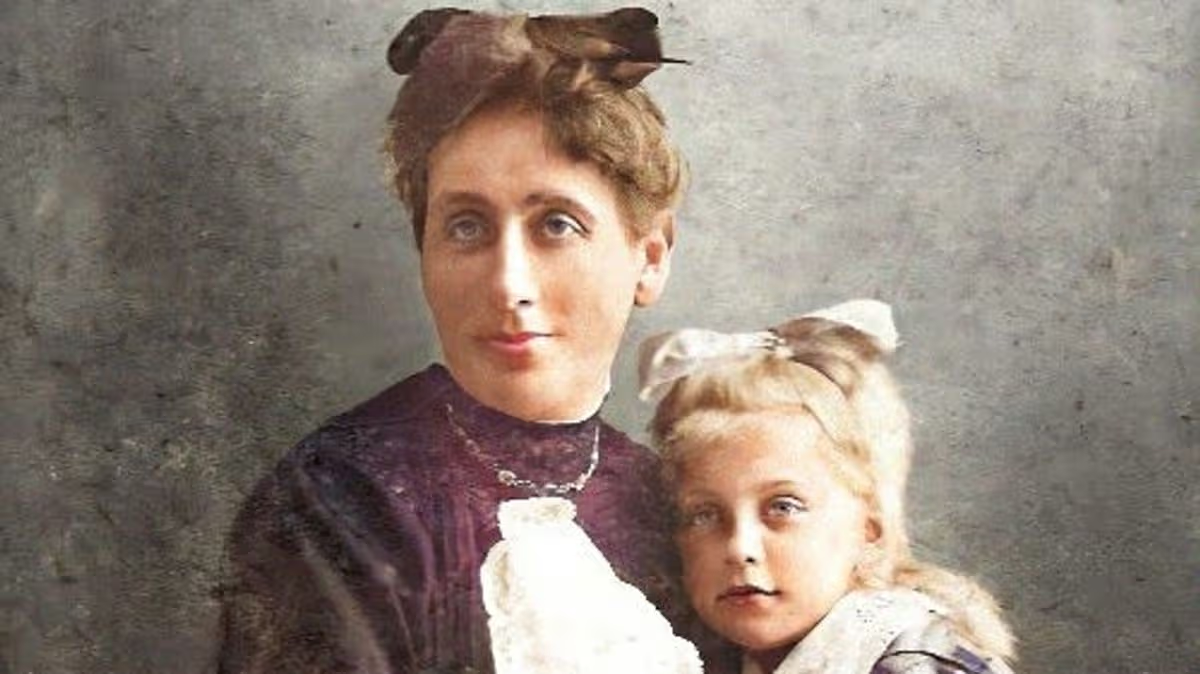
The charity’s research reveals poignant, individual stories that transcend statistics. Among the buried is Felicja Staszewicz, a Polish noblewoman and mother of ten who fled her estate at the outbreak of World War II, endured arrest and slave labour under Russian forces, and arrived in the UK in 1947 only to decline in health and die at Horton in 1950. Her great grandson speaks of her with admiration and a desire to visit her restored resting place. Another is Mary Ann Godfrey, admitted in 1912 and diagnosed with ‘chronic melancholia,’ a condition likely understood today as anxiety and depression. Her descendant speaks of the modern openness around such issues and the sadness that her ancestor’s burial site resembles a rubbish tip. These stories personalize the vast number, reminding us that each was a person with a full life before their institutionalization.
Paragraph 5: A Diverse Tapestry of Lives and Legacy
The cemetery holds an astonishingly diverse tapestry of lives. It includes Byron Pedley, a popular Manchester-born comedy actor, and Felix Garcia, a famed Spanish dancer sketched by Picasso. Perhaps most symbolically resonant is George Pelham, a London shoemaker’s son who survived the sinking of the Titanic in 1912 only to be torpedoed on another ship during World War I. These cumulative traumas likely contributed to his later breakdown and admission to Horton, where he died in 1939. Another notable figure is ‘Tottie Fay,’ a Victorian conwoman and alcoholic dubbed “the worst and wickedest woman in London.” Her case, involving repeated incarcerations and admissions, was instrumental in pushing through The Inebriates Act of 1899, which championed reformative treatment over imprisonment. Each story underscores how these individuals, though vulnerable and often voiceless, impacted history and culture.
Paragraph 6: The Personal Quest to Bridge Time and Banish Stigma
For Lionel Blackman and the campaigners, the quest is deeply personal. The tragedies they uncover—like that of boy soldier Leslie Attwood, who lied about his age to join the military at 15 in 1914—send a chill down the spine and bridge the distance of time. By bringing these stories to light, the campaign aims not only to secure a dignified memorial space but also to challenge the enduring stigma toward mental illness. These were people “just like me and you,” Blackman emphasizes, whose lives were altered by circumstance, trauma, and the limited understanding of their era. Restoring Horton Cemetery is thus an act of historical preservation, community healing, and ethical reckoning, ensuring that 9000 souls are no longer lost, but remembered as part of our shared human story.