


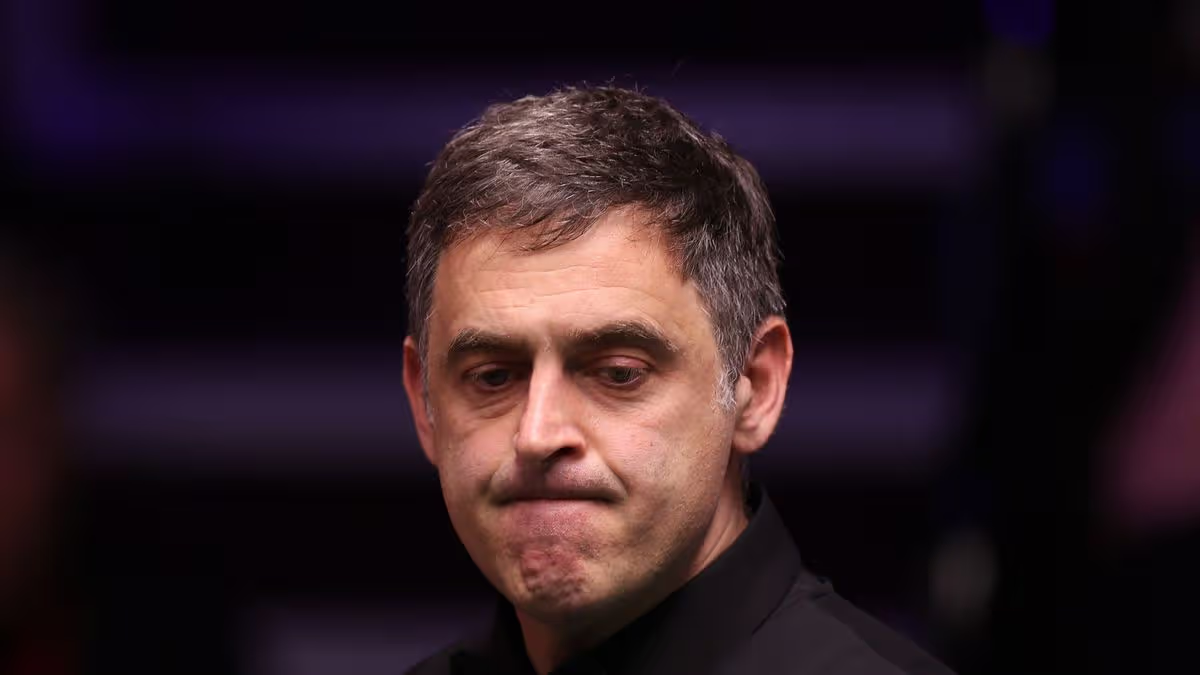
In a stunning reversal of fortune at the Crucible Theatre, snooker legend Ronnie O’Sullivan saw his quest for an unprecedented eighth world title dramatically ended by his great contemporary, John Higgins. What seemed poised to be another step in O’Sullivan’s historic campaign transformed into a testament to Higgins’ enduring class and resilience, as the Scot mounted a magnificent comeback from 9-4 down to clinch a 13-12 victory in a tense final-frame decider. This wasn’t merely a quarter-final loss; it was the conclusion of a gripping narrative between two of the sport’s all-time giants, played out with the intensity of a final. The result sent shockwaves through the snooker world, underscoring the razor-thin margins and profound psychological warfare that define the sport’s pinnacle event.
The match unfolded with a characteristic O’Sullivan flourish, as ‘The Rocket’ built commanding leads of 6-2 and later 9-4, seemingly in control. Yet, beneath the surface, O’Sullivan was wrestling with deep-seated doubts. In a revealing confession after the defeat, he admitted to having booked a flight home for after the second session, so convinced was he that Higgins would “expose” him. He contrasted his recent form against lower-ranked players with the furnace of pressure that comes from facing the elite, stating he was “really shocked” to have even made a competitive match of it. This vulnerability, a rare admission from the often-imperious O’Sullivan, highlighted the unique mental burden carried by champions and set the stage for Higgins’ relentless fightback.
John Higgins, a four-time champion known as ‘The Wizard of Wishaw,’ summoned all his tactical genius and battling spirit. Over the course of Sunday and Monday, he engineered a devastating six-frame winning streak, turning a five-frame deficit into a 10-9 lead. His performance on the final day was particularly ruthless, punctuated by three century breaks that demonstrated sublime scoring power under duress. As the momentum irrevocably shifted, O’Sullivan’s frustration became visible—most notably in a moment where he punched the table after a missed opportunity. He later described this as a calculated release, a way to “delete” the error and move on, but it symbolized the mounting pressure Higgins was applying.
Ultimately, the contest distilled into a single, nerve-shredding frame. Both veterans, with a combined age over 90 and a shared history stretching back to their teenage years, navigated the unbearable tension. It was Higgins who held his nerve, potting the decisive balls to seal a memorable 13-12 triumph. This victory was more than a place in the semi-finals; it was a reaffirmation of Higgins’ stature as one of the game’s great competitors, capable of overturning any opponent on the grandest stage. For O’Sullivan, it was a bitter end to his Sheffield campaign, a reminder that even the greatest are not immune to the Crucible’s cruel demands.
In defeat, O’Sullivan displayed a gracious and philosophical perspective. He expressed hope that Higgins could now “go all the way” and secure a fifth world title, offering a poignant insight into the gruelling nature of the tournament. He mused that losing in the semi-final or final—after a 15 or 17-day slog—is a uniquely painful experience, worse in his view than an early exit. This camaraderie, born of decades of shared battles, added a layer of depth to the rivalry. It was the acknowledgment of a worthy victor from a man who, despite his pre-match pessimism, had come agonizingly close to extending his own legendary story.
The epic clash between O’Sullivan and Higgins serves as a powerful chapter in snooker’s rich history. It was a match that defied expectations, twisted through momentum shifts, and was decided by the finest of margins. While Higgins advances, his legacy further burnished by one of his greatest Crucible wins, the snooker world is left to ponder the future of O’Sullivan’s pursuit of an eighth crown. This dramatic encounter proved that the hunger, skill, and dramatic intensity of snooker’s golden generation remain undimmed, capable of producing moments of sporting theatre that will be recounted for years to come.