

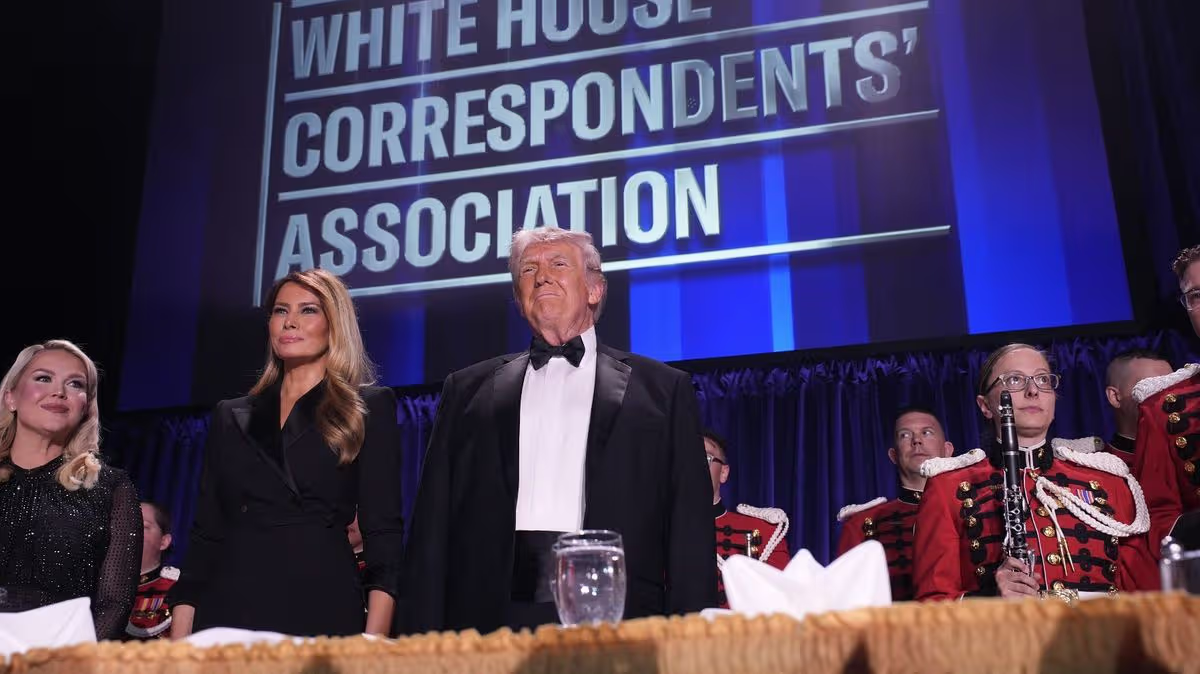
In a deeply unsettling moment that underscores the intense personal and political divisions within American society, former President Donald Trump has publicly condemned comedian Jimmy Kimmel for a joke made on his late-night talk show. The controversial remark, which suggested that former First Lady Melania Trump possessed the “glow of an expectant widow,” was delivered during the April 23rd episode of Jimmy Kimmel Live!. This verbal jab occurred just two days prior to a frightening security incident at the White House Correspondents’ Dinner, a timing that Trump and his allies have since framed as recklessly inflammatory. From his personal social media platform, Truth Social, Trump launched a fierce offensive against the comedian, demanding that the Walt Disney Company and its subsidiary, ABC, immediately terminate Kimmel’s employment. This call for censorship highlights the ongoing battle over the boundaries of political satire and free speech, set against a backdrop of heightened national tension.
The offensive comment was part of Kimmel’s monologue, where he addressed the First Lady’s attendance at the annual dinner. “Our First Lady, Melania, is here. Look at Melania, so beautiful. Mrs. Trump, you have a glow like an expectant widow,” Kimmel quipped. In his lengthy social media post, Trump expressed outrage not only at the joke’s content but also at the show’s use of a superimposed video suggesting Melania and their son, Barron, were in the audience. He characterized the segment as a “fake video” and a “despicable call to violence,” directly linking Kimmel’s words to the actions of an armed individual who attempted to breach the Washington Hilton hotel during the dinner. This connection, drawn by the former President, transforms a comedic insult into a grave accusation of incitement, reflecting the extreme sensitivity and perceived stakes in today’s political discourse.
The security incident at the Correspondents’ Dinner involved a 31-year-old California man, Cole Tomas Allen, who was apprehended after allegedly attempting to enter the venue armed with multiple weapons. While authorities have not publicly linked the suspect’s motives to any media commentary, Trump’s statement explicitly draws a line from Kimmel’s monologue to the suspect’s “obvious and sinister reason” for being there. This narrative frames the comedian’s joke not as protected political satire but as dangerous rhetoric that could potentially endanger public figures. The former President’s reaction amplifies a recurring theme in his public life: a vehement rejection of media criticism and a pattern of responding to personal attacks with severe counter-accusations and demands for professional reprisal against his critics.
This episode is merely the latest chapter in a protracted feud between Trump and Kimmel. Their history of animosity includes a previous incident where Trump publicly applauded ABC’s decision to briefly suspend Kimmel following another monologue. In that instance, Kimmel had criticized Trump’s response to a different shooting, comparing the former President’s expression of grief to “how a 4-year-old mourns a goldfish.” The cycle of provocation and retaliation illustrates how celebrity, media, and political power intersect in modern America, often reducing complex debates to personal vitriol. Trump’s latest demand for Kimmel’s dismissal seeks to wield influence as a former head of state to directly impact the career of a media figure, testing the resilience of corporate and editorial independence in the face of political pressure.
Adding her voice to the controversy, Melania Trump issued a formal statement on the social media platform X, urging ABC to “take a stand” against Kimmel. She condemned his “hateful and violent rhetoric,” arguing that his comedy deepens the nation’s “political sickness” and is intended to sow division. Her message characterized Kimmel as a “coward” shielded by his network and called on corporate leadership to cease enabling what she described as “atrocious behavior.” This personal appeal from a former First Lady elevates the dispute beyond typical political sparring, framing it as a matter of moral responsibility for a major broadcaster and highlighting the profound personal toll such public ridicule can exact on a family, regardless of their political station.
Ultimately, the clash between Donald Trump and Jimmy Kimmel transcends a simple war of words. It serves as a potent microcosm of America’s fractured political landscape, where humor is weaponized, speech is labeled as violence, and public figures engage in relentless, deeply personal conflict. The central questions raised—about the limits of satire, the responsibility of media platforms, and the impact of violent rhetoric in an already volatile climate—remain unresolved. As Trump demands accountability through termination and the Trumps decry the corrosion of public discourse, the incident reinforces the challenging reality that in today’s America, even a late-night joke can become a national flashpoint, reverberating with implications for security, free expression, and the very health of the republic’s democratic conversations.