

Paragraph 1: A Crisis at Sea and a Fracturing Alliance
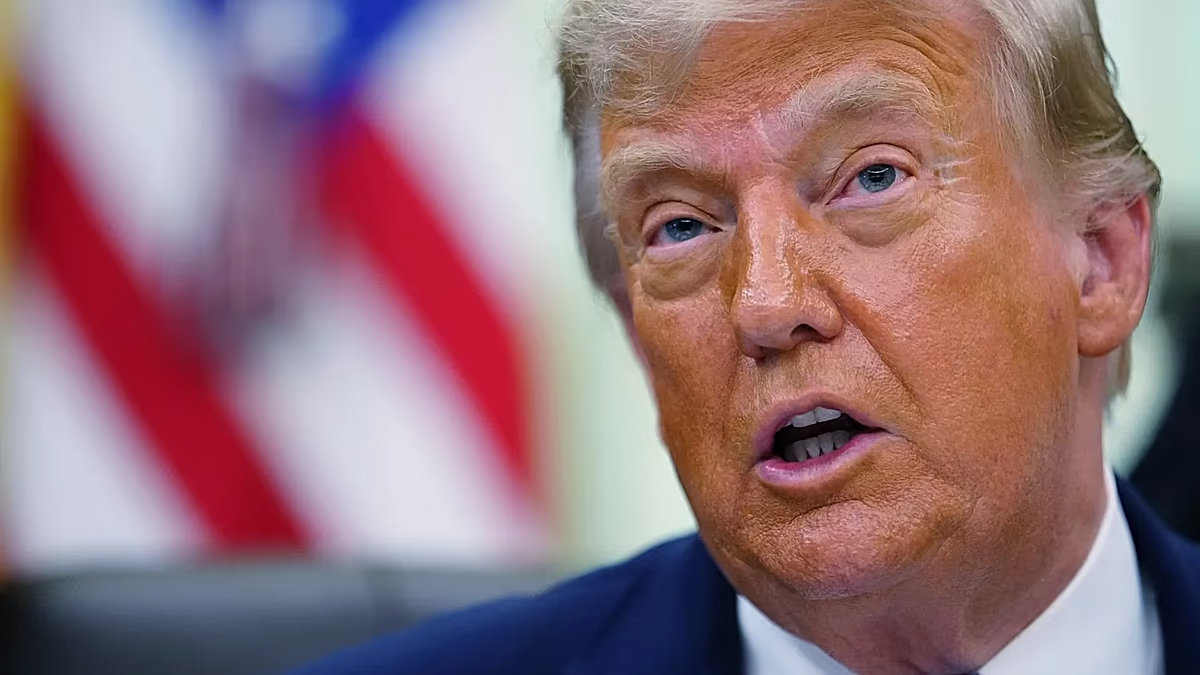
The strategic Strait of Hormuz, a narrow passageway responsible for transporting one-fifth of the world’s oil, has become the epicenter of a major international crisis. Following its closure due to hostilities involving Iran, global energy markets have been thrown into turmoil, with prices soaring and supply chains disrupted. In response, U.S. President Donald Trump has issued a blunt demand to NATO allies for assistance in reopening the vital waterway, characterizing the task as a “small endeavor.” His appeals, however, have been met with notable reluctance from European partners, prompting him to unleash a torrent of criticism. He has labeled these allies “cowards” for their inaction and launched a broadside against the alliance itself, dismissing NATO as a “paper tiger” that is wholly dependent on American military might. This rhetoric signals a profound reassessment of the United States’ relationship with the transatlantic partnership it helped create, casting a shadow over the alliance’s unity at a time of global tension.
Paragraph 2: The Legal Reality of Alliance Membership
Amid this discord, a specific flashpoint has emerged with Spain, which denied the U.S. access to its military bases and criticized American actions alongside Israel against Iran as a violation of international law. Reports of a leaked Pentagon email suggested the U.S. was considering extreme retaliatory measures, including suspending Spain from NATO. This raises a fundamental question about the alliance’s foundations: can a member state actually be expelled? The clear answer, according to NATO’s own charter and decades of precedent, is no. The North Atlantic Treaty, signed in 1949, contains no provision for the suspension or expulsion of a member country. Throughout NATO’s 77-year history, even during periods of severe internal disagreement—such as after Turkey’s 1974 invasion of Cyprus—the alliance has navigated disputes without threatening the core membership of any nation. Therefore, any threat to suspend Spain represents a political maneuver rather than a legally viable option, highlighting the gap between heated rhetoric and the enduring, treaty-bound reality of the alliance.
Paragraph 3: The Sacred Covenant: Understanding Article 5
The heart of NATO’s purpose and strength is encapsulated in Article 5 of its founding treaty. This clause enshrines the principle of collective defense, famously declaring that “an attack on one is an attack on all.” It is a sacred covenant that obligates every member to come to the aid of any ally who is victim of an armed attack. Importantly, this commitment has geographical and situational limits; it applies specifically to attacks on the territory of member states in Europe and North America, or on their forces in that region, and is designed to counter external aggression, not internal unrest. This provision has been the cornerstone of transatlantic security for generations, creating a deterrent shield for now 32 nations and nearly one billion people. Its invocation is a grave and rare act, reserved for the most severe threats to the alliance’s common security.
Paragraph 4: The Sole Invocation: Unity After 9/11
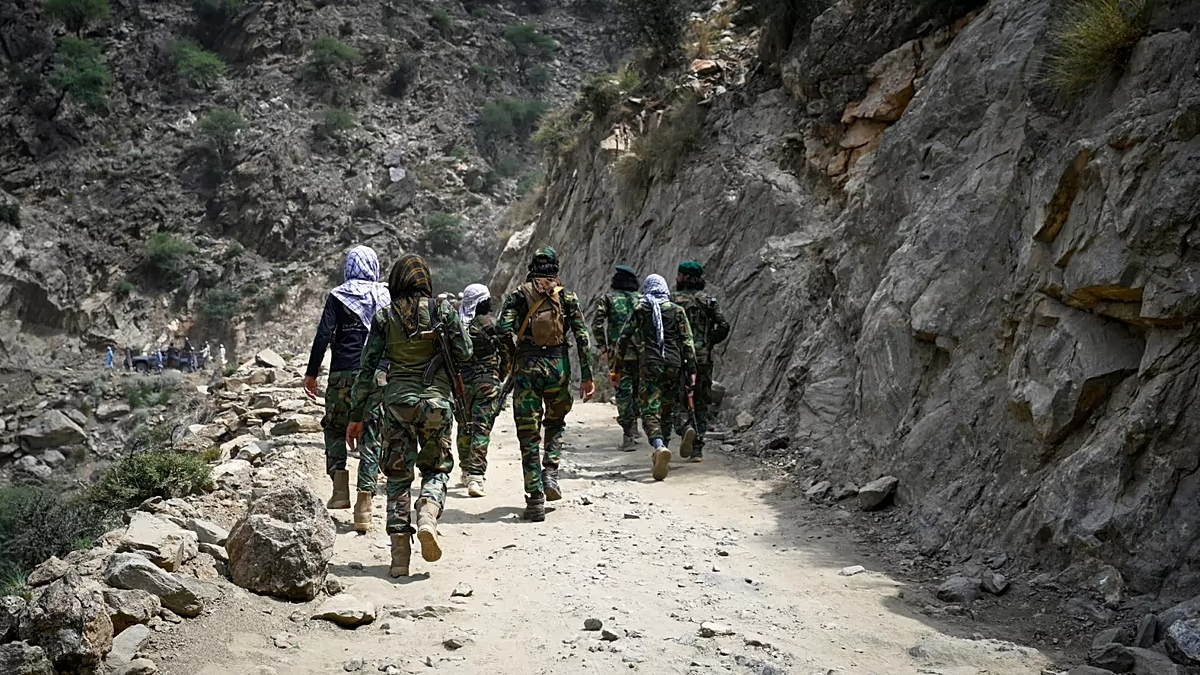
In practice, Article 5 has been triggered only once in NATO’s history, following the devastating terrorist attacks on the United States on September 11, 2001. This historic decision demonstrated the alliance’s tangible value, translating the promise of collective defense into concrete action. It led directly to NATO’s deep involvement in the war in Afghanistan, with allies like the United Kingdom, Germany, France, and Denmark contributing significant military forces and suffering profound losses alongside American troops. The human cost was heavy: the UK lost 457 service personnel, France 90, and Denmark 44—a number that, relative to its population, represented one of the highest sacrifices of any ally. Recent tensions, including controversial comments from President Trump about allied contributions, have reopened painful wounds for these nations, with leaders and veterans alike emphasizing that the sacrifices made in solidarity deserve to be remembered with truth and respect.
Paragraph 5: NATO’s Role and Limits in Current Conflicts
The current crisis surrounding the Strait of Hormuz and the conflict with Iran illuminates the defined boundaries of NATO’s obligations. As a strictly defensive alliance, NATO has no automatic duty to support offensive military actions undertaken by a single member outside allied territory. The U.S. strikes on Iran were not a coordinated NATO operation, and the Strait of Hormuz itself falls outside the geographic scope of Article 5. Consequently, allies were not formally required to participate. However, the conflict has indirectly affected the alliance. NATO air defenses were activated to protect Turkey from incoming missiles, and alliance training missions in Iraq were suspended due to the instability. Furthermore, over 40 nations, including many NATO members, have pledged future support to secure the Strait once conditions allow, showing a willingness to collaborate on critical global security issues even outside the strict Article 5 framework.
Paragraph 6: An Alliance at a Crossroads
The unfolding situation presents NATO with a stark challenge that goes beyond any single geopolitical hotspot. On one hand, the alliance has demonstrated its intrinsic resilience: the legal impossibility of expelling a member like Spain reinforces its permanent nature, and the shared history of sacrifice under Article 5 remains a powerful binding force. On the other hand, the vitriolic accusations from the American president and the reluctance of European allies to follow the U.S. into a new conflict reveal a deep crisis of confidence and shared purpose. The dispute over the Strait of Hormuz is thus a symptom of a larger tension—between unilateral action and collective decision-making, between burden-sharing and alliance solidarity. As NATO navigates this fraught period, it must reconcile its unwavering legal foundations with the turbulent politics of its leading member, determining whether it can transform current friction into a renewed commitment to common defense and diplomatic unity in an increasingly volatile world.