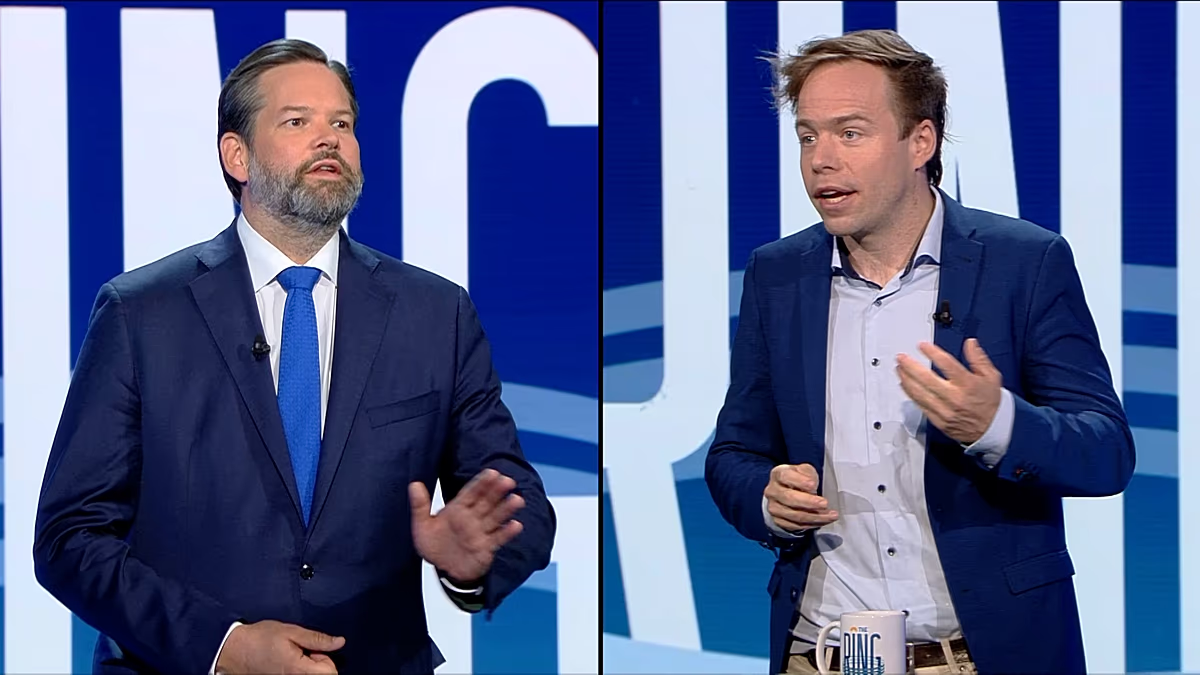




In a world grappling with the dual crises of climate change and geopolitical energy insecurity, a clear and urgent call has been issued from the international stage: humanity must cease the expansion of fossil fuel extraction. This message was powerfully delivered by EU Climate Action Commissioner Wopke Hoekstra at the First International Conference on Transitioning Away from Fossil Fuels in Santa Marta, Colombia. He asserted that true global energy security depends on reducing our collective dependency on oil and gas, framing the shift to clean energy not merely as an environmental imperative, but as a fundamental strategy for national resilience and independence. “We need to reduce our fossil fuel dependence for our energy security. We cannot be at the mercy of regimes holding up our resources,” Hoekstra stated, emphasizing that reliance on fossil fuels leaves nations vulnerable to volatile markets and external political pressure.
This conference, gathering 60 nations including significant oil producers, arrives at a moment of profound contradiction. Recent geopolitical turmoil, including conflict in the Middle East and the blockage of vital trade routes like the Strait of Hormuz, has triggered a surge in global demand for oil and gas and sent energy prices soaring. In response, some nations are instinctively backtracking on long-term climate goals, considering a temporary return to coal or, as in the cases of Greece and Italy, reviving domestic oil and gas exploration after decades of dormancy. Yet, amidst this scramble for short-term security, the European Union and other voices at the conference insist that such reactions are a dangerous distraction. They argue that the only durable solution is to accelerate the clean energy transition, doubling down on investments in homegrown renewable power, energy efficiency, and electrification to permanently sever the link between geopolitical instability and energy affordability.
Hoekstra laid out a tangible roadmap for this acceleration, calling for a doubling of energy efficiency efforts and a tripling of renewable energy capacity by 2030. He also addressed the perceived inadequacy of current global climate diplomacy, noting that the annual United Nations COP meetings are “not always delivering what they should.” While advocating for improvement within that formal process, he praised complementary “plurilateral initiatives” like the conference itself and the proposal tabled by Brazil at COP30. This reflects a growing pragmatic understanding that parallel alliances among willing nations can build momentum and bypass the gridlock often caused by major fossil-fuel producers in broader UN negotiations. The Santa Marta gathering, with strong European representation from countries like Denmark, the UK, and Spain, is designed to forge such alliances and sustain political momentum leading into COP31.
The participation of major oil-producing nations like Canada, Norway, Brazil, and Nigeria was a critical aspect of the conference’s strategy, explicitly aiming to build consensus beyond traditional climate advocates. Conversely, nations deemed to have “openly extractivist” positions, such as the United States and Russia, were not invited. China, the world’s top emitter and consumer of coal and oil, was also excluded, as its current dependence would make credible phase-out commitments particularly challenging. Colombian Environment Minister Irene Vélez Torres described the attendees as a “coalition of the willing,” a group seeking to identify collective actions that would be difficult to achieve individually and to open a new chapter in the global political discussion on ending fossil fuel dependency.
The conference focused on grounding this political discussion in science and practical realities. Researchers presented workshops on the tangible impacts of transition, such as the potential benefits for public health and the evolution of the job market in a post-fossil fuel economy. While no major new financial initiatives or binding treaties were expected to emerge, the goal was to solidify a shared declaration of intent and identify concrete, collaborative steps. Spanish Energy Minister Sara Aagesen hailed the gathering as a “success” for generating the alliances needed to advance this agenda, citing her country’s own “success story” in using renewable energy to become more shielded from international energy price spikes. UK Climate Representative Rachel Kyte added that the recent energy market disruptions have ironically forced a global pivot toward clean energy, and offered the UK’s transition experience as a blueprint for others.
In essence, the Santa Marta conference represents a pivotal moment of sober reckoning. It acknowledges the severe short-term pressures pulling nations back toward fossil fuels, yet it collectively rejects that path as a false solution that perpetuates vulnerability. Instead, it champions a science-driven, accelerated clean energy transition as the only viable route to lasting security, economic competitiveness, and climate stability. As Torres noted, this single conference won’t solve all challenges, but it marks a significant step: a declaration by a diverse coalition of nations that they are willing to act, in concert, to end the fossil fuel era. It is a statement that energy security in the 21st century will not be found in deeper wells or older coal mines, but in the sun, the wind, and the collective political will to harness them.