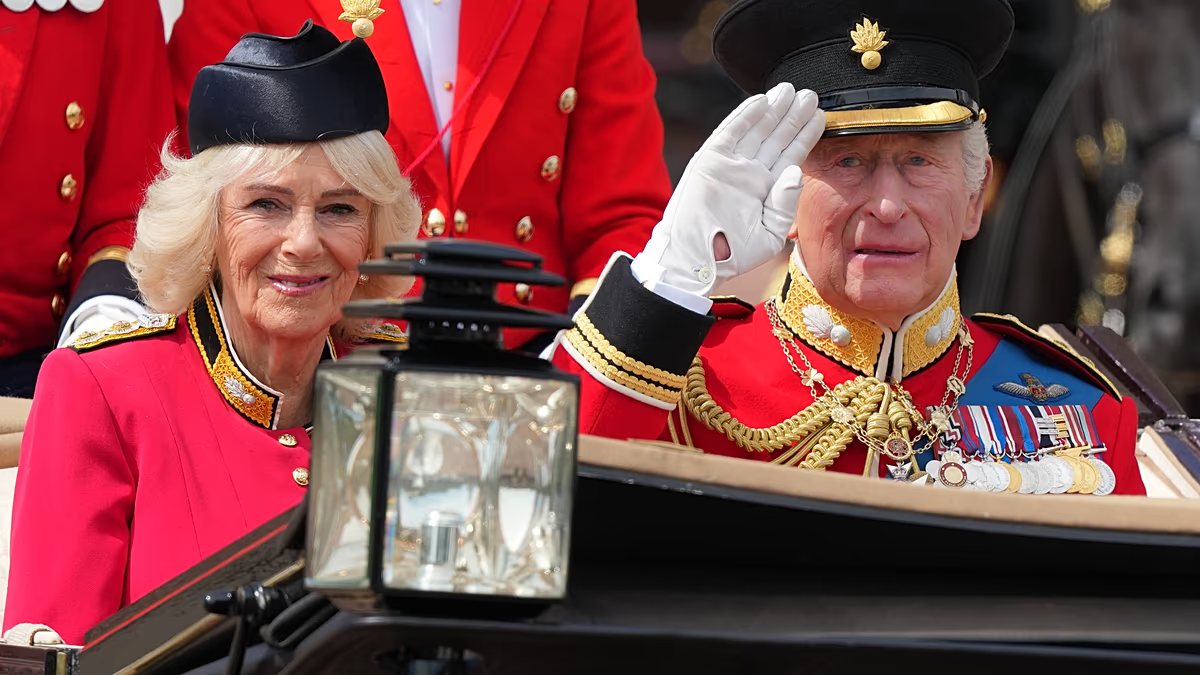




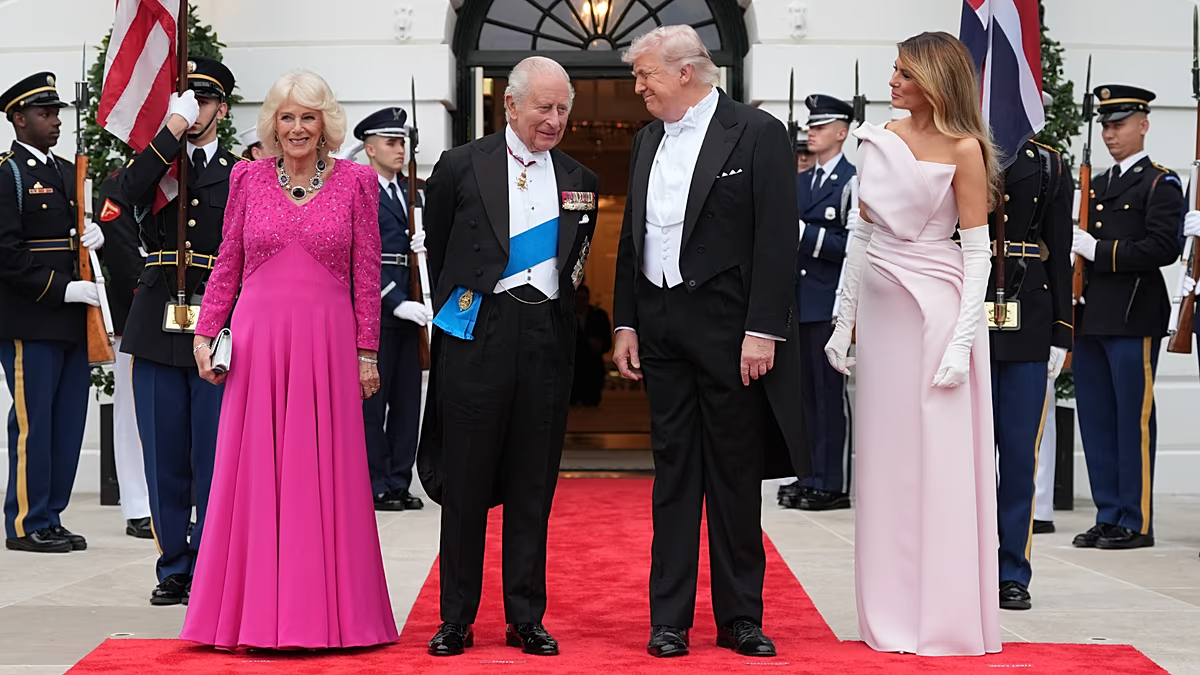
In a visit rich with historical symbolism and delicate political subtext, Britain’s King Charles III presided over a lavish White House state dinner, marking the 250th anniversary of American independence. This occasion, part of a four-day tour, was not merely a ceremonial nod to the past but a powerful, forward-looking reaffirmation of what the monarch termed “one of the most consequential alliances in human history.” Standing in the heart of American political power, Charles eloquently wove together the shared narrative of the two nations—from democratic ideals and legal traditions born from Britain’s Magna Carta to their joint struggles in two world wars. Yet, this celebration of enduring kinship was set against a backdrop of contemporary political unease, requiring the King to navigate his role as both a unifying figurehead and a subtle advocate for international cooperation at a particularly fractured moment in transatlantic relations.
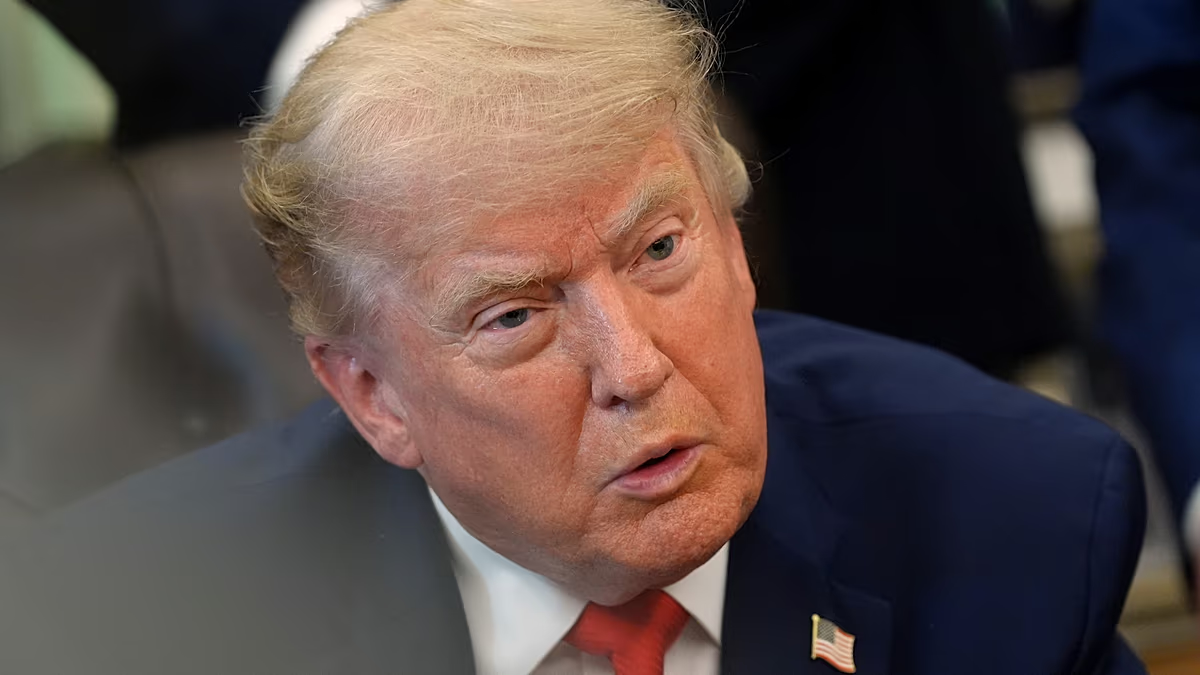
The visit occurred amidst palpable diplomatic strain, with US President Donald Trump publicly critical of the United Kingdom’s stance on global issues, particularly its opposition to the conflict with Iran. In this charged atmosphere, King Charles’s speeches served as a masterclass in diplomatic nuance. While warmly renewing what he called an “indispensable alliance,” his words carried pointed, albeit graceful, counsel. He explicitly warned against the “clarion calls to become ever more inward-looking” and championed the very international institutions, like NATO, which President Trump had frequently questioned. By calling for steadfast support for Ukraine against Russian aggression, Charles gently but firmly articulated a vision of global engagement that stood in quiet contrast to the more isolationist tendencies of his host. His message was clear: the modern test of the “Special Relationship” lies not in surviving past wars, but in navigating present crises together.
This delicate balancing act was achieved with a disarming dose of humor and historical wit. The King deftly employed lighthearted banter to acknowledge political differences without causing overt offense. In a playful riposte to Trump’s previous remarks that European allies would be speaking German without American intervention in World War II, Charles quipped, “Dare I say that, if it wasn’t for us, you’d be speaking French,” a nod to crucial French aid during the American Revolution. He also humorously referenced the White House’s controversial recent renovations and, with self-deprecating charm, apologized for Britain’s own “attempt at real estate redevelopment” when British forces burned the building in 1814. Even the lavish dinner itself became a punchline, described as “a very considerable improvement on the Boston Tea Party.” This humor served as a social lubricant, easing tensions and reminding everyone that a relationship capable of surviving war and rebellion could certainly withstand political disagreements.
The symbolic core of the visit, however, was King Charles’s historic address to the U.S. Congress, only the second ever delivered by a British monarch. Here, he moved beyond politics to anchor the alliance in a deeper, shared constitutional heritage. By highlighting that the Magna Carta, a 13th-century English charter establishing the principle of limited government, has been cited in over 160 U.S. Supreme Court cases, he drew thunderous applause. This moment, particularly resonant with the opposition Democratic lawmakers, underscored a fundamental common value: that executive power must be subject to checks and balances. In doing so, Charles transcended the partisan fray of the moment, appealing to a foundational American ideal that traces its lineage directly to British legal tradition, thereby reinforcing the alliance as one rooted in law and liberty, not merely geopolitical convenience.
For his part, President Trump responded with a jovial and personal tone, seeking to highlight the warmth of the personal rapport. He joked about his Scottish-born mother having “a crush” on the young Prince Charles and teased about Britain’s famously dreary weather. Notably, he praised the King’s congressional speech as “fantastic,” wryly adding, “He got the Democrats to stand, I’ve never been able to do that.” This acknowledgment, while lighthearted, underscored the unique unifying power of the monarchy in that moment. Where partisan divisions often stymie American political leaders, the apolitical stature of the King allowed him to articulate principles of democracy and alliance that could resonate across the aisle, achieving a momentary harmony that has become elusive in Washington’s everyday discourse.
Ultimately, King Charles III’s state visit was a nuanced performance of modern strategic diplomacy wrapped in the pageantry of a 250-year friendship. He successfully celebrated a profound historical bond while carefully advocating for a collaborative internationalist future. Through a blend of solemn principle, subtle political messaging, and disarming wit, he navigated the complexities of the current political landscape without compromising his constitutional role. The visit reaffirmed that the Anglo-American alliance, forged in revolution and tested in global conflict, remains a dynamic and essential partnership. Its strength, as Charles demonstrated, lies in its ability to evolve—to honor a common past while thoughtfully engaging the disagreements of the present, always with the aim of forging a more secure and prosperous future for both nations and the wider world.