



The Call for a United, Assertive Europe
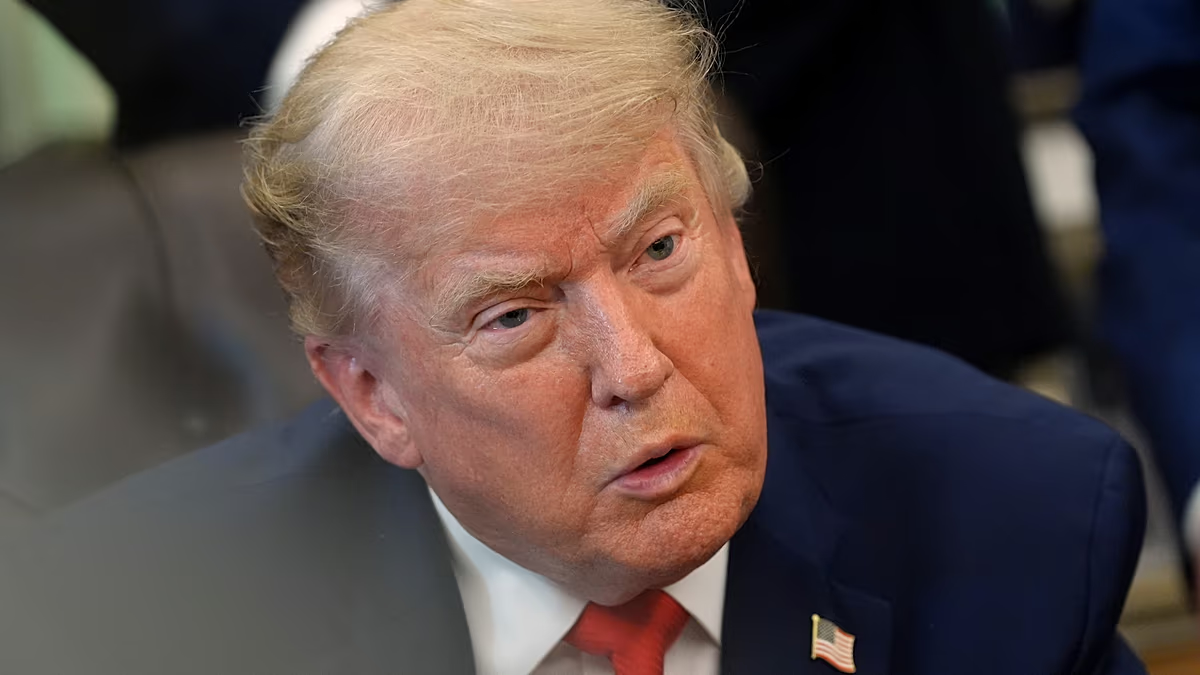
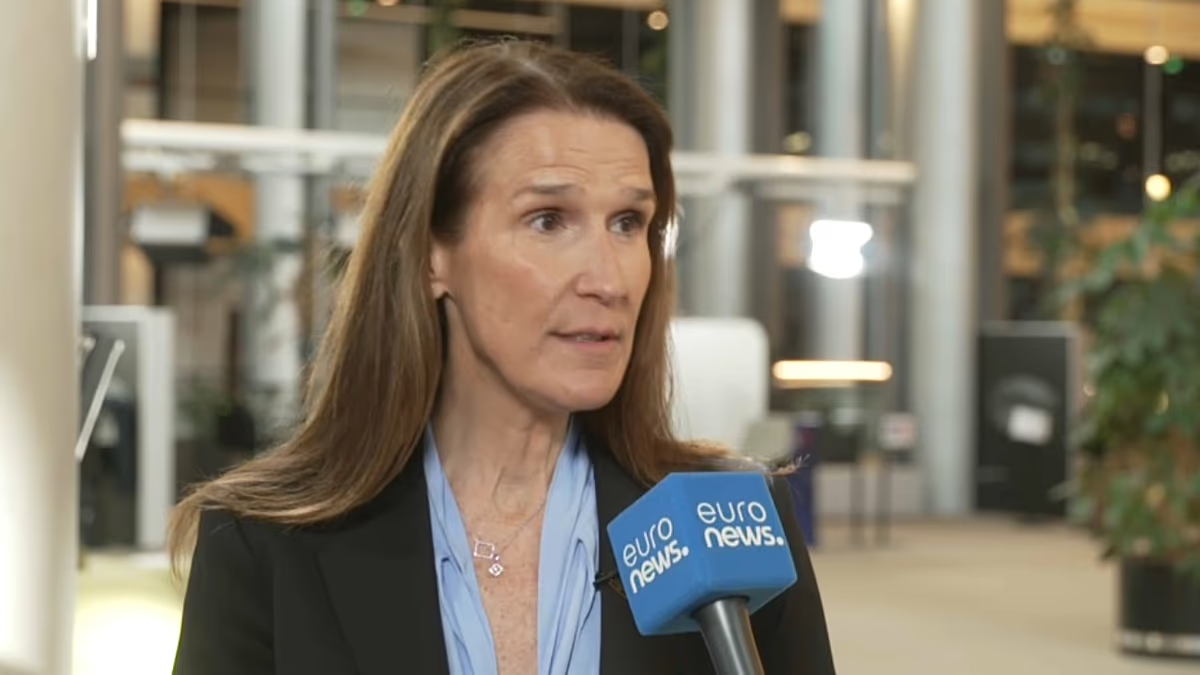
In a candid interview with Euronews, Sophie Wilmès, Vice-President of the European Parliament and former Belgian Prime Minister, articulated a vision for a more self-reliant and assertive European Union in its dealings with the United States. She emphasized that the relationship must evolve into one of genuine equals, moving beyond a dynamic where Europe is perceived as a “little brother or sister” to a dominant American “big brother.” This sentiment comes at a critical juncture, as EU leaders contemplate adopting a firmer stance toward Washington on pressing issues like the Iran conflict and trade disputes. Wilmès’s message is clear: for Europe to effectively navigate global challenges and defend its interests, it must first strengthen its internal unity and strategic autonomy. Her call to action—”Europe should do with Europe”—underscores a growing continental desire to reduce over-dependence on its transatlantic ally and cultivate a distinct, empowered geopolitical identity.
Confronting the Resurgence of Antisemitism
Turning to urgent domestic concerns, Wilmès addressed the alarming rise of antisemitism across Europe, which has intensified following the October 7th attacks in Israel and the subsequent war in Gaza. She acknowledged the direct link between the conflict and the spike in hostility toward Jewish communities, as seen in recent attacks in Belgium and the Netherlands. However, she issued a crucial warning against conflating the actions of the Israeli government with the Jewish diaspora in Europe. “We need to make a very cautious distinction,” Wilmès stated, firmly asserting that political criticism of Israeli policies can never justify antisemitic actions. To combat this toxic trend, she advocated for an urgent update to the European Commission’s strategy on combating antisemitism, arguing that the 2021 framework must be reinforced to meet the gravity of the current crisis and protect fundamental European values of tolerance and safety.
Upholding Democratic Principles: The Rule of Law and Hungary
On the same day, the European Parliament prepared to vote on the European Commission’s annual Rule of Law Report, a document that scrutinizes member states’ adherence to democratic standards. This vote coincided with a symbolic visit to Brussels by Hungary’s Prime Minister-elect, Péter Magyar, marking a potential turning point after years of rule-of-law conflicts with the previous Orbán administration. Wilmès expressed measured optimism about this new chapter, noting the immense difficulty of rebuilding democratic institutions once they have been eroded. “It is much more difficult to put things back on track than to dismantle the rule of law,” she observed. Her hope is that the new Hungarian government will collaborate with EU institutions to restore judicial independence, anti-corruption frameworks, media freedom, and institutional checks and balances—core pillars the report monitors across all member states.
Navigating the EU Budget: Ambition Versus Austerity
Beyond rule-of-law matters, Wilmès shed light on the looming and contentious negotiations over the EU’s long-term budget. The Parliament has staked out an ambitious position, calling for an increase of nearly €200 billion—roughly 10%—to address new continental priorities. Drawing from her unique experience as both a national leader and a parliamentarian, Wilmès framed the inevitable tension between the EU institutions and member state governments as a normal, even healthy, democratic process. “It’s very normal and usual that the member states push for a budget a little bit down, while the Parliament is pushing for more,” she explained. However, she stressed that this budgetary push is not mere institutional posturing but a necessary response to unprecedented challenges in security, defence, and global competitiveness that demand greater collective investment.
A Parliament Prepared to Fight for Its Vision
Insiders suggest a shift in the European Parliament’s usual approach to these budget talks. Historically, the legislature has softened its demands under pressure from national capitals, but early indications now point to a more resolute stance. Wilmès’s comments reinforce this image of a Parliament ready to advocate forcefully for its vision. She argued compellingly that the geopolitical reality—marked by war on the continent, economic pressures, and the green and digital transitions—leaves no room for austerity in the common EU budget. The additional funds are framed not as a luxury but as a strategic imperative to ensure Europe’s sovereignty, security, and future prosperity, signaling a more assertive institution willing to use its leverage to shape the Union’s trajectory.
The Path Forward: Solidarity, Sovereignty, and Strength
In essence, Sophie Wilmès outlined an interconnected agenda for Europe’s future. Externally, it requires forging a relationship with the United States based on mutual respect and partnership, not subordination. Internally, it demands vigilant protection of democratic norms, a robust stand against hatred targeting any community, and the political courage to finance shared ambitions. Her perspective bridges the immediate—addressing antisemitism and supporting democratic renewal in Hungary—with the strategic: securing a budget that empowers the EU on the world stage. The overarching theme is one of mature sovereignty. Wilmès envisions a Europe that confidently addresses its vulnerabilities, invests in its collective capabilities, and finally operates as a cohesive and equal global power, capable of shaping its own destiny in an uncertain world.