



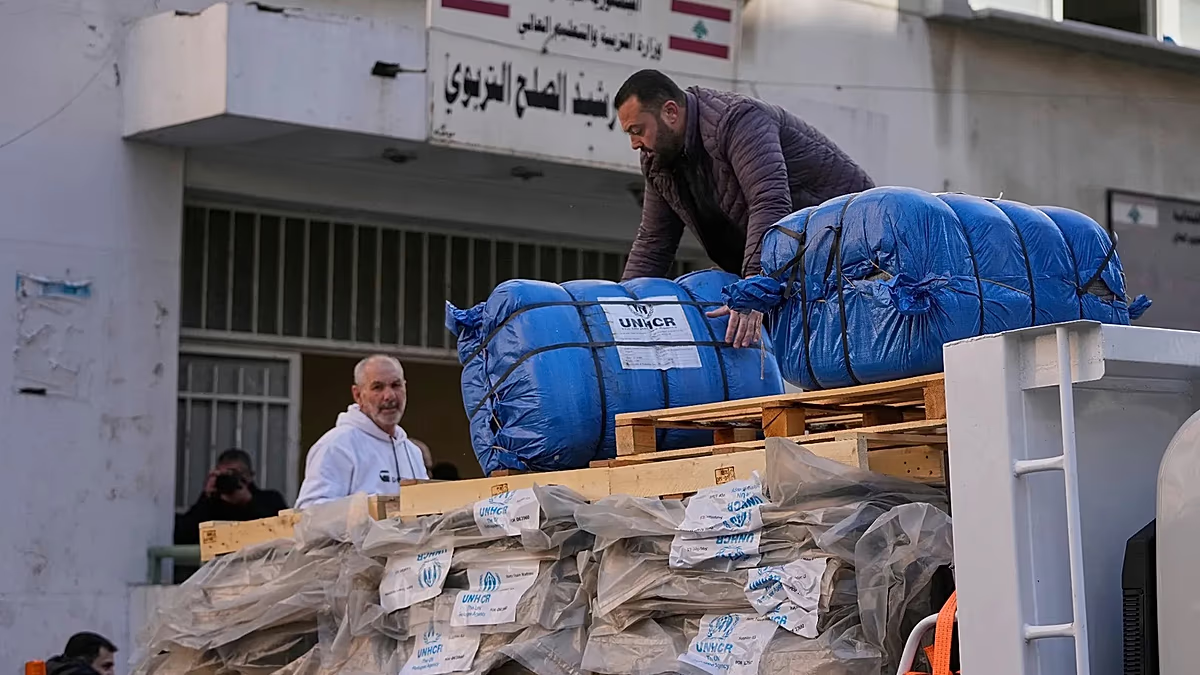
The ongoing conflict in Iran, ignited in late February by a series of U.S. and Israeli strikes and subsequent retaliations from Tehran, has sent shockwaves far beyond its immediate borders. These geopolitical tremors are now severely disrupting the fragile arteries of global humanitarian aid, according to a stark warning issued by the United Nations Refugee Agency (UNHCR). As the agency’s spokeswoman, Carlotta Wolf, explained in Geneva, the crisis has generated “far-reaching ripple effects” that are straining supply chains and threatening the delivery of life-saving assistance to some of the world’s most vulnerable populations. The initial military actions led to Iran imposing a chokehold on the critical Strait of Hormuz, a vital maritime corridor, while also attacking infrastructure across the Gulf. In response, the United States enacted a counterblockade on Iranian ports. This combination has effectively severed a vast flow of oil, gas, and fertilizer from the global economy, but the most immediate human cost is being felt in the realm of humanitarian logistics.
The financial mechanics of this disruption are brutally simple: every extra dollar spent on logistics is a dollar stolen from aid in the field. UNHCR reports that shipping rates from its primary supply hubs in India, Pakistan, and China have skyrocketed by nearly 18%. This surge is driven by soaring fuel costs and dramatically higher war-risk insurance premiums for vessels. Simultaneously, the agency’s usual transport providers are becoming less available, with their capacity to respond dropping from 97% to 77% since the start of the year. Port congestion and delivery delays compound the problem. For the UNHCR, which operates on a painfully tight budget, these are not abstract numbers; they represent concrete reductions in food, medicine, and shelter. In some cases, the cost increases are staggering. Carlotta Wolf provided a sobering example: the expense of transporting relief items from UNHCR’s stockpile in Dubai to operations in Sudan and Chad has more than doubled, leaping from approximately $927,000 to $1.87 million.
In response to the maritime blockade, the agency has embarked on complex and costly rerouting efforts. Sea cargo is now being directed via Jordan’s port of Aqaba on the Red Sea, while land corridors have become essential alternatives. Truck routes from Dubai across the Arabian Peninsula and through Turkey are now carrying the weight of this lifesaving cargo. However, these adaptations are not solutions; they are slower, more expensive, and less efficient stopgaps. The rerouting of shipments around the Cape of Good Hope, for instance, adds up to 25 grueling days to delivery times. This delay is not merely a logistical footnote; for a refugee awaiting emergency shelter or a family in a conflict zone depending on monthly food rations, these extra weeks can mean catastrophe. Wolf emphasized that if the Middle East instability persists, these rising costs, delays, and limited capacity will further constrain operations, directly reducing the scale and speed of assistance.
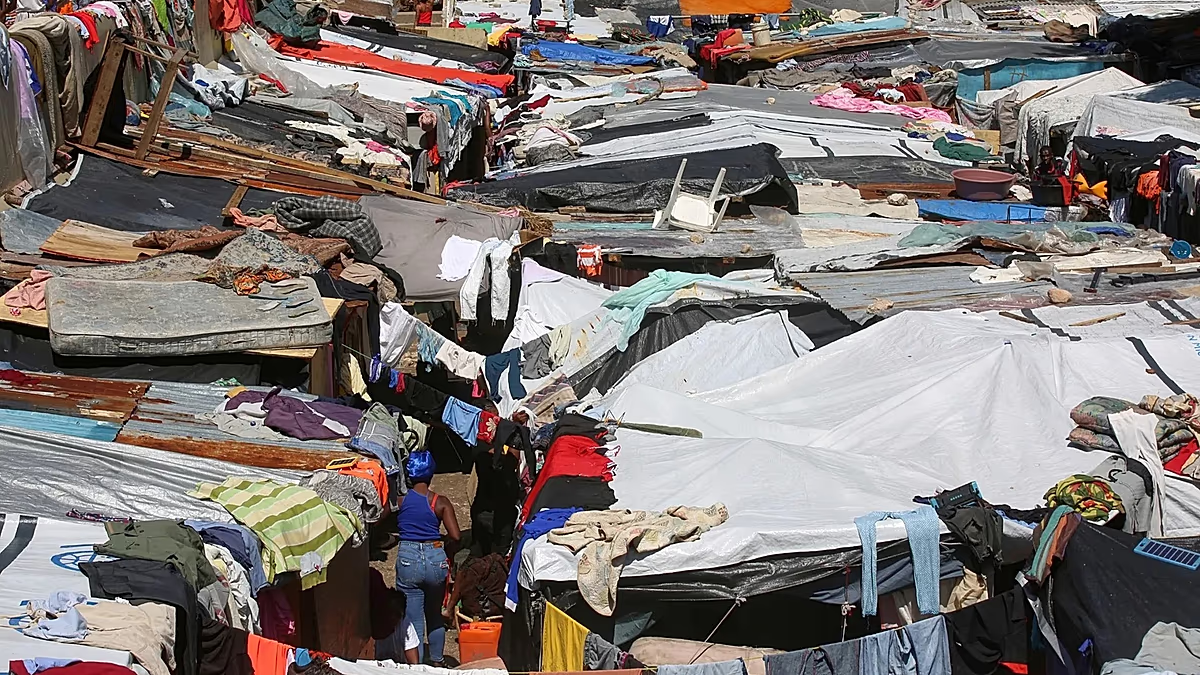
The impact is being felt acutely across Africa, a continent already grappling with multiple conflicts and displacement crises. Wolf described the situation there as “particularly worrisome.” In Kenya, where one of UNHCR’s seven global stockpiles is located, local fuel price increases have triggered delays and reduced the availability of trucks for shipments destined for Ethiopia, the Democratic Republic of Congo, and South Sudan. In Sudan itself, a country torn by civil war, the cost of delivering aid has doubled in recent months. This creates a devastating double-bind: as needs skyrocket within Sudan due to its internal conflict, the cost of meeting those needs from the outside world also skyrockets due to a distant war. This strains an already overwhelmed system to its breaking point, forcing tragic triage decisions about who receives aid and who does not.
Looking ahead, the outlook is grim. Wolf warned that prolonged disruption “risks reducing the scale and speed at which assistance can reach people in need, with serious consequences for millions of refugees and displaced people worldwide.” While the agency’s global stockpiles are currently adequate, the longer-term concern is the prohibitive cost of restocking them. This financial strain hits an organization that is already operating on a shoestring. UNHCR requires $8.5 billion for its operations this year, a sum that reflects the immense global need. However, only 23% of that critical funding has been secured so far. The war in Iran, therefore, acts as a cruel multiplier: it both increases the agency’s operational costs and draws attention and resources away from other crises, potentially worsening the global funding shortfall.
In essence, the conflict in the Middle East has triggered a hidden but devastating secondary crisis. It has weaponized global logistics, turning supply chains into a battlefield. The immediate victims are not soldiers, but refugees and displaced families—people in Sudan, Chad, Ethiopia, and countless other locations—who now wait longer and receive less because a war thousands of miles away has made their aid more expensive to deliver. The UNHCR’s alert is a reminder that in our interconnected world, the fallout from conflict is never confined. It travels along trade routes, inflates insurance premiums, and congests ports, ultimately arriving as an empty bowl or an absent tent in a refugee camp. The agency’s struggle to adapt, through rerouted shipments and land corridors, is a testament to its commitment, but also a warning that humanitarian operations are being pushed to an unsustainable limit by the geopolitical storms of our time.