


The hallowed Crucible Theatre, home to snooker’s most prestigious championship, is accustomed to drama, but during the 2026 World Snooker Championship semi-final, it witnessed a spectacle of a different kind. What began as a tense clash between China’s Wu Yize and Northern Ireland’s Mark Allen devolved into an epic, almost surreal, tactical stalemate that tested the patience of everyone present. With a place in the final on the line, the frame transformed from a contest of potting skill into a grueling mental chess match, where each player seemed more intent on not making a mistake than on seizing victory. The atmosphere, initially electric with anticipation, grew heavy with frustration as the minutes ticked by, setting the stage for one of the most peculiar and record-breaking episodes in the sport’s modern history.
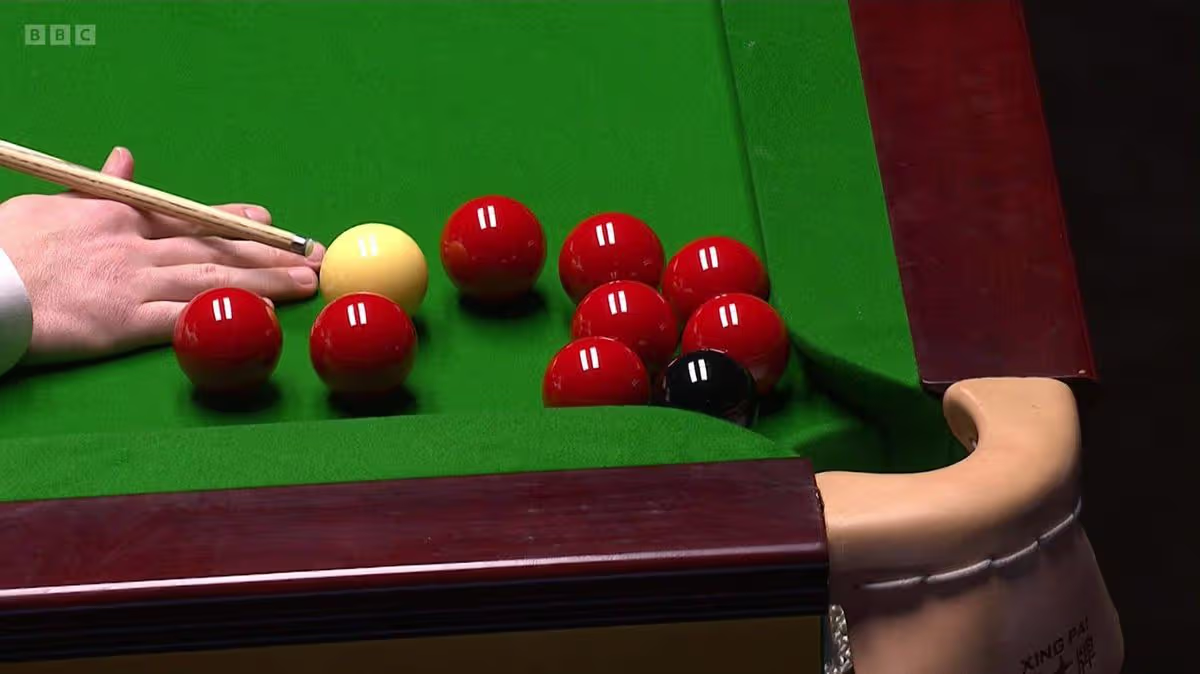
The turning point came after Mark Allen, known for his attacking prowess, compiled a break of 43 points. His progress was abruptly halted when the cue ball nestled itself behind the black ball, which was in turn hemmed in by a cluster of eight reds at the bottom-right pocket. This created a near-impossible table layout, a snooker purgatory from which neither player could find an escape. For over 35 agonizing minutes, the two elite competitors engaged in a series of gentle, safety-oriented “kisses” off the reds, each softly nudging the pack in the vain hope the black would be freed. The crowd’s initial silence gave way to restless murmurs, then sarcastic applause, and eventually outright jeers, with one exasperated spectator shouting a demand for a re-rack, a plea that was politely but firmly dismissed by the match official.
In the commentary box, legends Stephen Hendry and John Parrott watched in disbelief. Hendry, the seven-time champion, expressed growing concern over the situation’s governance, stating the referee should have intervened much sooner to mandate a re-rack and put an end to the farce. The impasse was not just a test of stamina for the players; it was a scheduling nightmare. Parrott pointed out that play was not permitted to continue past 6:15 PM, with the evening session featuring John Higgins and Shaun Murphy slated to begin at 7:00 PM. As the clock ticked past 6:30, it became glaringly obvious that the scheduled eight frames for that afternoon session would not be completed, threatening to push the conclusion of the match into a further session and disrupting the championship’s carefully orchestrated timetable.
Facing mounting pressure, the referee finally took decisive action. After a prolonged period of inaction, he approached the table and informed both competitors that they would each be allowed three more shots to resolve the deadlock. If the situation remained unchanged after those six shots, a re-rack would be enforced. Allen, visibly frustrated, protested the decision, arguing that the tactical battle should be allowed to play out naturally. In a twist of irony, it was Allen himself who brought the excruciating sequence to an end, but not in the way he intended. In an attempt to force the issue, he pocketed the black ball, committing a foul and finally breaking the stalemate. This error proved catastrophic, handing Wu Yize the opportunity he needed.
Capitalizing on his opponent’s misstep, Wu Yize pounced with remarkable composure. With the obstructive black now removed from the cluster, he expertly cleared the remaining reds from the bottom of the table and proceeded to build a winning break. When the dust finally settled, he had secured the frame 88-66, drawing level in the match at 7-7. The frame’s duration shattered records, officially becoming the longest in World Snooker Tour history. Its absurd length even forced the BBC to make an unprecedented broadcasting decision, switching their main channel coverage to the red button service to air the scheduled program, Richard Osman’s House of Games, a surreal coda to the sporting stalemate.
This remarkable frame transcended a mere scoring update; it became a talking point about the spirit and spectacle of snooker. It highlighted the fine line between clever tactics and gamesmanship that tests the boundaries of entertainment. While it showcased the immense tactical discipline and nerve of both Wu Yize and Mark Allen, it also served as a stark reminder that sport, at its heart, is a form of drama for the audience. The Crucible crowd’s vocal frustration and the commentators’ astonishment underscored that even in a game built on patience, there is a limit. The incident left an indelible mark on the championship, a bizarre and unforgettable interlude of tension, tedium, and, ultimately, historic consequence.