

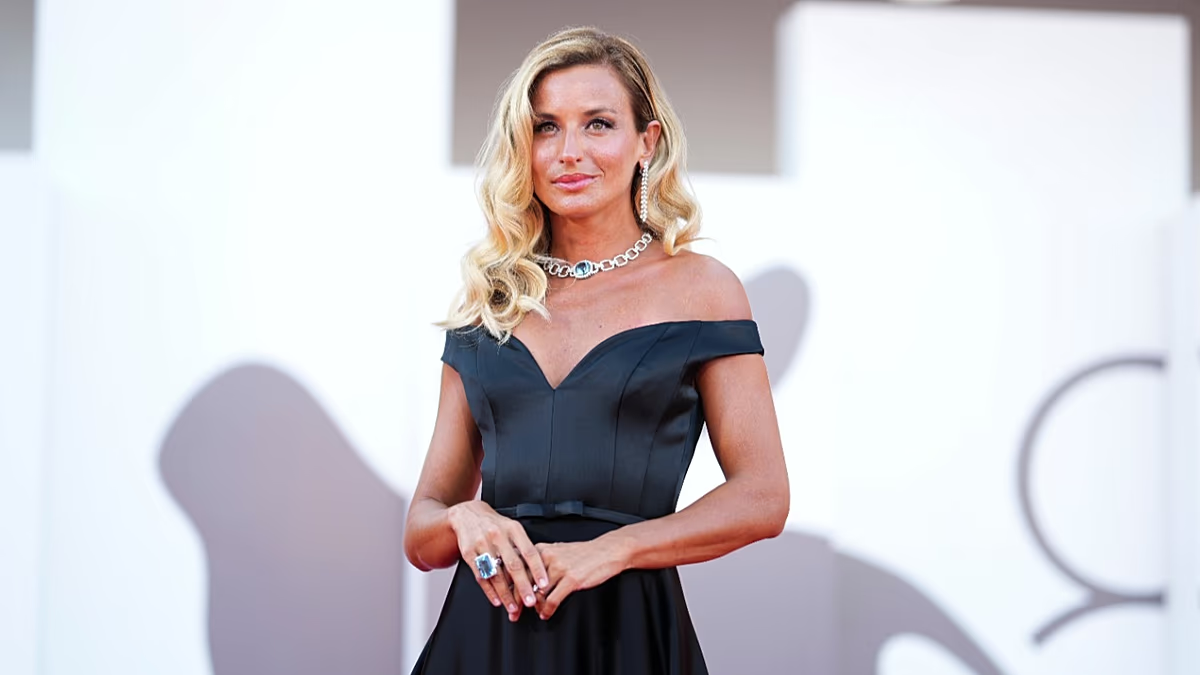
The Teatro La Fenice, Venice’s legendary opera house, has officially severed ties with its newly appointed Musical Director, Beatrice Venezi, following a protracted period of controversy. The foundation’s board terminated her contract, citing public statements “deemed offensive and detrimental to the artistic and professional standing” of the institution. This dramatic move concludes months of fierce opposition from within the theater’s own ranks and marks a stunning reversal for Venezi, who had made history just months before as the first woman to hold the prestigious permanent conductor position.
Venezi’s appointment in September 2025 was almost immediately met with resistance. The theater’s trade unions swiftly demanded her resignation, questioning her professional experience for such a paramount role. compounding the professional critique were significant political concerns. Venezi has open affiliations with Italy’s far-right government under Prime Minister Giorgia Meloni, having served as an adviser to the culture minister. Furthermore, her father’s history as a member of the neofascist party Forza Nuova painted her appointment within a highly charged political context, creating deep unease among the theater’s staff and the broader cultural community.
The final breach occurred following an interview Venezi gave to the Argentinian newspaper La Nación on April 23rd. In her comments, she launched a scathing attack on the orchestra’s culture, accusing it of insularity and nepotism. She claimed positions were “passed down practically from father to son,” described musicians who “never leave the island” of Venice, and asserted they were resistant to change and incapable of appealing to younger audiences. These public criticisms, perceived as a grave insult to the ensemble’s professionalism and legacy, proved indefensible for the theater’s management.
In response, General Manager Nicola Colabianchi announced the termination, specifically pointing to Venezi’s “repeated and serious public statements that were offensive and harmful.” The theater’s unions, which had been her staunchest opponents, welcomed the decision as “a necessary act of respect,” arguing it defended the dignity of the orchestra’s labor against unfounded attacks. The dismissal thus served not only as a personnel change but as an institutional reaffirmation of its values and solidarity with its artistic team.
The political fallout from the decision was immediate and complex. While Culture Minister Alessandro Giuli expressed support, hoping it would end “misunderstandings, tensions and instrumentalization,” Prime Minister Meloni’s office took pains to distance itself. They explicitly denied a newspaper report suggesting Meloni had authorized the sacking due to the “accumulation of controversy,” indicating a desire to avoid the appearance of direct governmental interference in a major cultural institution’s autonomous decision.
This episode at La Fenice transcends a simple staffing dispute, highlighting the intense friction at the intersection of art, politics, and institutional tradition. It underscores the challenges of implementing change in historic organizations, the volatile impact of public criticism from within, and the ever-present tension when political affiliations enter the cultural sphere. The opera house, a symbol of rebirth after repeated fires, now seeks a new path forward, its latest conflagration one of social and professional discord rather than physical flame.