



Paragraph 1
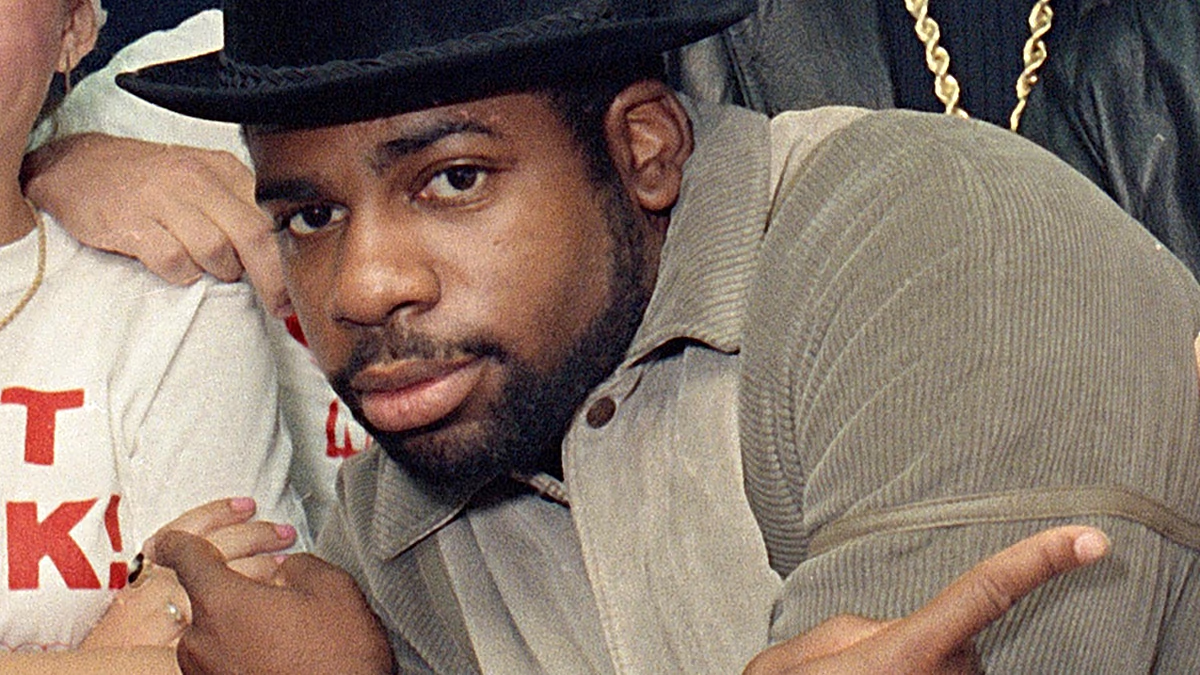
For over two decades, the murder of Jam Master Jay, the revered DJ of the groundbreaking hip-hop group Run-DMC, stood as one of music history’s most painful and unresolved mysteries. On October 30, 2002, Jason Mizell—better known to the world as Jam Master Jay—was shot and killed inside his own recording studio in Queens, New York. The killing was described as a cold-blooded, execution-style attack, and despite his public status as a music pioneer, the case lingered in shadows of rumor and speculation, frustrating fans, the music community, and Mizell’s family. The lack of closure turned the tragedy into a symbol of the complex, often dangerous intersections between artistic fame, personal business, and the streets that many artists emerged from. Now, nearly 24 years later, a significant legal development has finally brought a measure of direct accountability, piercing through the long silence.
Paragraph 2
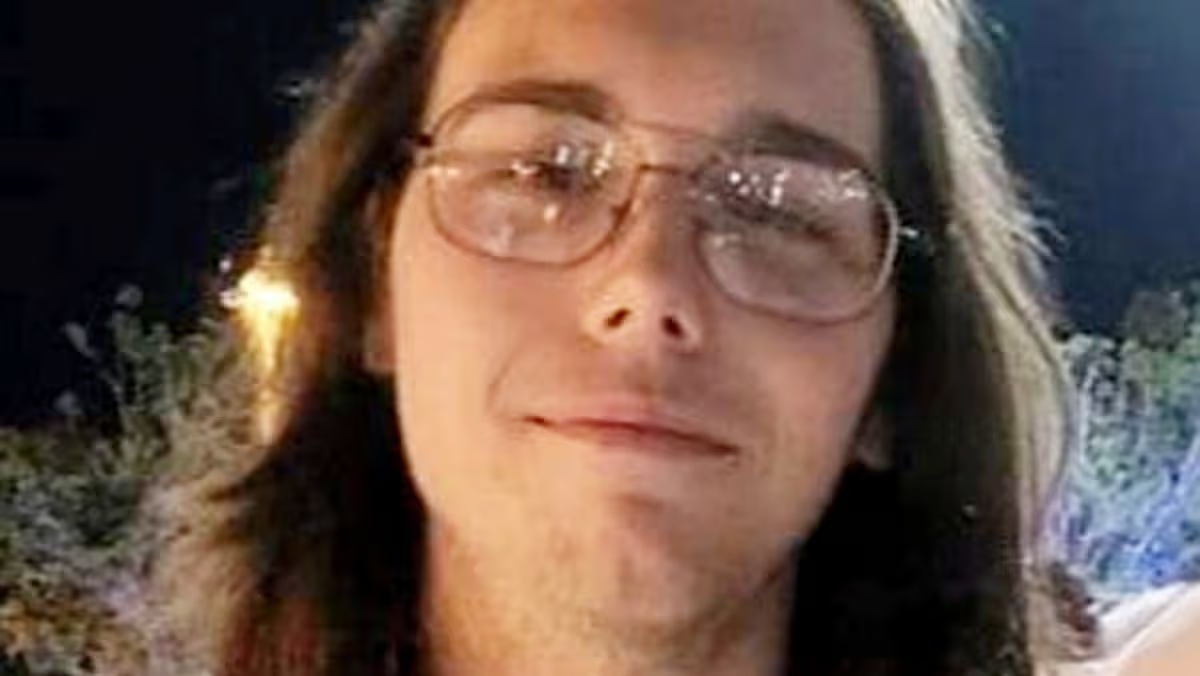
On April 28, 2026, 52-year-old Jay Bryant stood before a federal magistrate and changed the trajectory of the case by pleading guilty to a murder charge for his role in Mizell’s death. Bryant admitted that he facilitated the attack by helping other individuals gain access to the studio with the explicit knowledge that a gun would be used to shoot Mizell. “I knew that what I was doing was wrong and a crime,” he stated in court. His plea came just days before his trial was scheduled to begin on May 4th, marking a stark reversal from his initial not-guilty plea entered after his indictment in May 2023. While Bryant did not name his accomplices in this hearing, his admission confirms the long-held belief that the murder was a coordinated act involving multiple people. This guilty plea represents the first time a participant has directly confessed to involvement in the studio ambush, providing a crucial piece of the puzzle that investigators had been assembling for years.
Paragraph 3
Bryant’s confession adds a new dimension to a legal saga that had already seen other convictions. In 2024, two other men—Karl Jordan Jr. and Ronald Washington—were convicted by a jury for their roles in the murder. However, the path of justice has been winding; a judge later cleared Jordan, and Washington has challenged his conviction. Bryant’s plea therefore exists within a still-evolving judicial landscape. According to the U.S. Attorney, Joseph Nocella, Bryant’s admission was the result of an “exhaustive investigation” that persisted across more than twenty years. Nocella emphasized the unwavering commitment of prosecutors and law enforcement to pursue justice for Mizell and his family, “no matter how long it takes.” For his guilty plea, Bryant now faces a prison sentence of between 15 and 20 years, though a specific sentencing date has yet to be determined.
Paragraph 4
The motive behind the murder, as established by investigators, was rooted in a failed drug deal. Mizell’s tragic death serves as a sobering reminder of the fraught environment that sometimes surrounded the hip-hop industry in that era, where monumental artistic success could coexist with perilous personal enterprises. Jam Master Jay was not merely a celebrity; he was a foundational architect of hip-hop culture. As a member of Run-DMC alongside Joseph “Run” Simmons and Darryl “DMC” McDaniels, he helped propel the genre from a underground New York phenomenon to a global, mainstream force. The group’s hits like “It’s Tricky,” “My Adidas,” and their revolutionary collaboration with Aerosmith on “Walk This Way” broke cultural barriers, championed a distinctive style, and earned them a rightful place in the Rock & Roll Hall of Fame in 2009. His murder, therefore, was not just the loss of an individual, but an attack on a cultural icon who represented creativity, innovation, and unity.
Paragraph 5
The impact of Mizell’s murder extended far beyond a criminal case; it left a permanent scar on the music world and the community that nurtured him. Run-DMC’s music was a soundtrack of empowerment and identity for millions, and Jay’s sudden, violent death shattered the illusion of invincibility that often accompanies fame. For his bandmates, family, and fans, the unresolved nature of the crime compounded the grief, transforming mourning into a protracted struggle for answers. The recent legal developments, culminating in Bryant’s guilty plea, offer a long-awaited form of accountability. While it cannot undo the loss or fully explain the complex web of relationships and decisions that led to that night in Queens, it provides a factual cornerstone. It affirms that the justice system, however slowly, can confront even the most high-profile and emotionally charged cold cases.
Paragraph 6
In human terms, this story is about the collision of legacy and tragedy. Jam Master Jay’s artistic legacy is immortal—his beats and style continue to influence artists worldwide, and his group’s induction into the Hall of Fame cemented their historical importance. Yet the personal tragedy of his death, now partially explained by Jay Bryant’s admission, underscores a darker, more human narrative of flawed choices and devastating consequences. Bryant’s plea closes one chapter of a long quest for truth, offering Mizell’s family and the public a clearer, though still painful, account of how the icon’s life was cut short. As the case moves toward sentencing, the world is reminded that behind the monumental cultural figures are human stories, and that justice, however delayed, remains a vital pursuit for healing and historical clarity. The memory of Jam Master Jay endures in his music, while the legal acknowledgment of guilt for his murder ensures that his death is not forgotten or dismissed.