



In the vibrant days leading up to what was to be a historic celebration of music on Rio de Janeiro’s famed Copacabana beach, a somber tone has fallen over the preparations. A tragic workplace accident has claimed the life of a dedicated technician who was helping assemble the massive stage for Shakira’s upcoming free concert. The incident, which occurred on a Sunday afternoon, involved a lifting system and resulted in the worker suffering severe crushing injuries to his legs. Despite the swift response from first responders and his transport to a hospital by the Fire Department, the professional, whose name has not yet been publicly released, succumbed to his injuries. The event organizers, in a translated statement on Instagram, expressed their profound sorrow, extending their full support and solidarity to the contracting company, its team, and, most importantly, the grieving family of the victim.
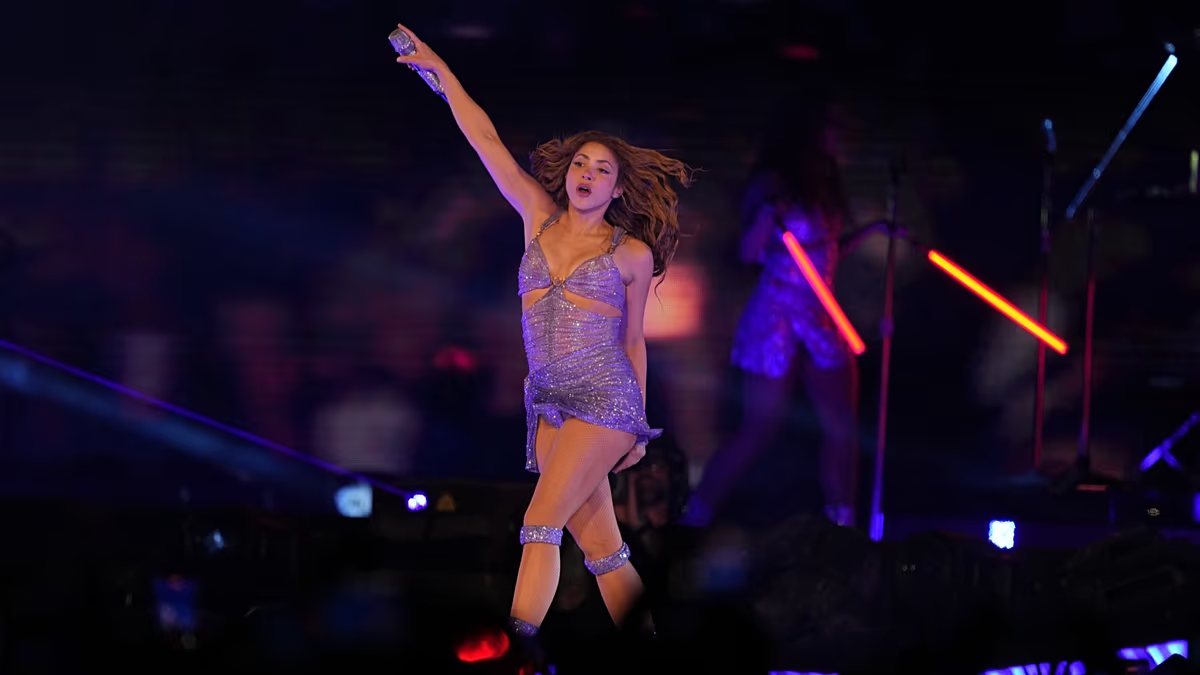
This heartbreaking event casts a shadow over the immense anticipation that had been building for weeks in Rio. Crews had been laboring tirelessly on the sands of Copacabana to construct a stage worthy of a global superstar, part of Shakira’s record-breaking world tour. The concert, titled ‘Todo Mundo No Rio’ and scheduled for the coming Saturday, was poised to be a monumental, free open-air event, drawing comparisons to previous iconic performances on that very beach by artists like Madonna and Lady Gaga. The promise of such a spectacle had already begun attracting millions of tourists, ready to transform the iconic coastline into a pulsing sea of fans, all there to celebrate the Colombian singer’s unique artistry and electrifying stage presence.
The stark juxtaposition between the planned jubilation and the on-site tragedy is a painful reminder of the immense, often unseen, human effort that underpins our largest cultural spectacles. While the world watches the glittering final product—the dazzling lights, the flawless sound, the artist’s commanding performance—it is built upon the skill, sweat, and dedication of countless technicians, riggers, and construction crews. These professionals work in high-pressure environments with complex machinery, all to create moments of collective joy and artistic connection. The loss of one of these essential workers underscores the very real risks involved in bringing such dreams to life, a sobering reality amidst the excitement.
Shakira herself had been riding a powerful wave of professional triumph and cultural impact. Just months before, she had performed another monumental free concert in Mexico City’s Zócalo square, a testament to her unparalleled connection with audiences across Latin America and the world. The Rio concert was set to be a crowning moment of this era, a gift to her fans and a historic event for the city. The news of the accident inevitably intertwines this moment of career zenith with a profound human loss, adding a layer of gravity to an event already charged with immense cultural significance.
In the wake of the tragedy, the focus rightly shifts from the spectacle to the person lost and the community mourning. The language of the organizers’ statement, emphasizing “support, comfort, and solidarity,” highlights the immediate human response required. It initiates a process of care for the worker’s colleagues who witnessed the incident and, of course, for his family who must now navigate an unimaginable loss. This incident also prompts necessary questions about workplace safety protocols on such large-scale, temporary installations, likely sparking internal and external reviews to ensure every possible measure is taken to protect the invisible army that builds our stages.
As Copacabana prepares to receive its crowds, the memory of this technician will linger. The show, as of now, is expected to proceed, potentially becoming a bitter-sweet gathering. It will be a celebration of music and resilience, but also, if acknowledged with the appropriate reverence, a collective moment to honor the individual who lost his life in the act of helping create it. The concert’s electricity will now be tempered with a note of remembrance, a poignant tribute to the fact that behind every note heard and every light seen, there is human endeavor—and sometimes, an unbearable cost. The tragedy ensures that this will be remembered not only as Shakira’s night on the Copa but also as a night that began with a profound and shared loss.