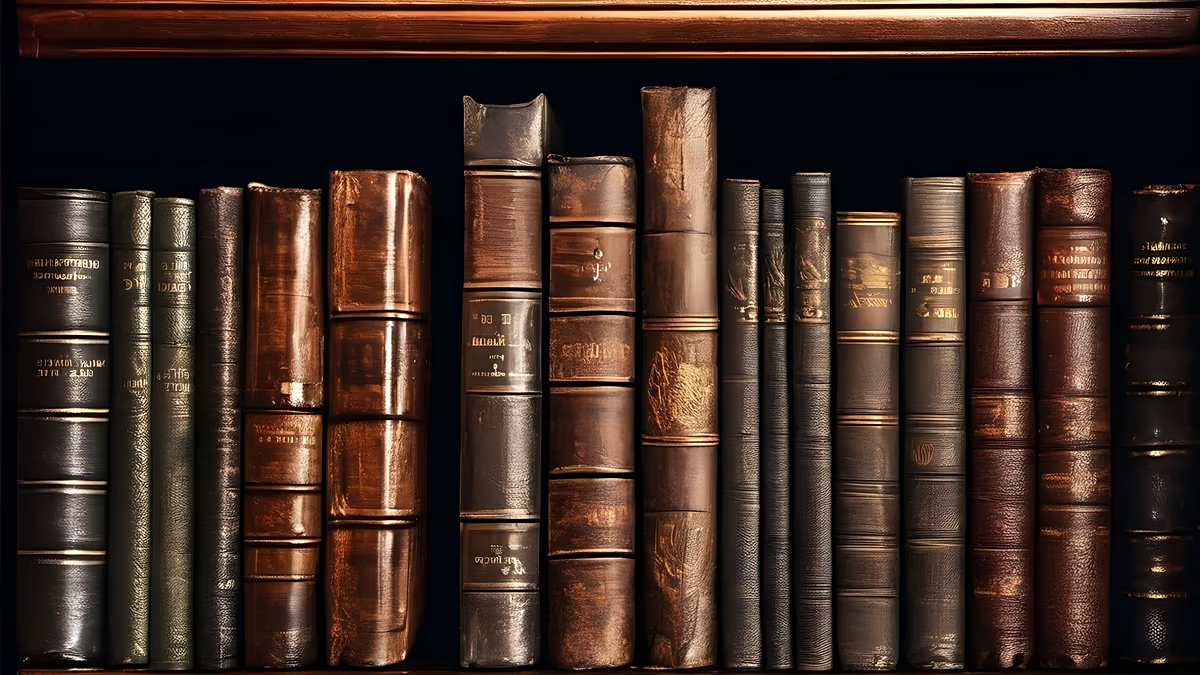


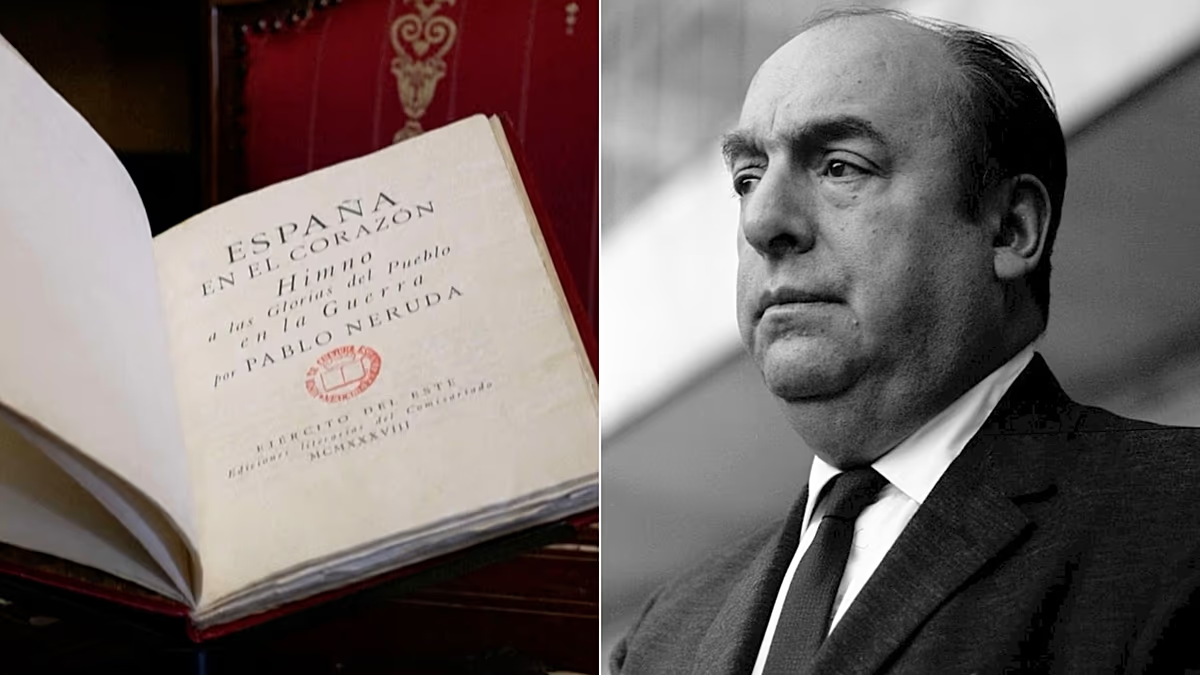
Of all the artifacts born from the crucible of the Spanish Civil War, few are as potent or as hauntingly beautiful as a remarkable book titled España en el Corazón (Spain in the Heart) by Pablo Neruda. This was not merely a collection of poems; it was a defiant act of solidarity, written in blood and ink. Now, nearly ninety years after its creation, an exceptionally rare copy of this work—one whose physical essence is as storied as its verses—is preparing to journey home to Chile for its first public exhibition. This book is more than paper and binding; it is a relic, a testament to how art, in its most urgent form, can be forged from the very fabric of conflict.
The story of this particular copy begins in the direst of circumstances. Published in 1938, the poems within Spain in the Heart were Neruda’s visceral response to the fascist rebellion against Spain’s Republican government, a cause he passionately supported. Facing extreme scarcity, the Republican forces, with the help of printer Manuel Altolaguirre, resorted to a profound act of ingenuity and symbolism. Lacking conventional paper, they reportedly pulped captured uniforms of Moorish soldiers from Franco’s army, along with flags and other military cloth, to create a durable, linen-like paper. Imagine the paradox: the very material worn by the opposition was transformed into a substrate for words of resistance and hope. This tome, therefore, is not just about the war; it is physically of the war, carrying within its fibers the dust of the battlefield and the ghost of a struggle for democracy.
For decades, this rare artifact resided far from Neruda’s native Chile, held in a private collection, its profound history known only to a privileged few scholars and bibliophiles. Its impending display in Chile represents a monumental homecoming. It allows a nation deeply proud of its Nobel laureate to engage with a chapter of his life that was fundamentally shaping, not just as a poet but as a political conscience. Neruda’s experiences in Spain, witnessing the brutal suppression of his friends and ideals, radicalized him and infused his later work with a profound sense of justice. To see this book is to touch a direct link to that transformative period, to understand the tangible origins of the fiery, compassionate voice that would later resonate throughout Latin America and the world.
The decision to bring this copy to light now feels particularly resonant. In an age where conflicts rage globally and the plight of refugees and the defense of democratic ideals remain urgently topical, Neruda’s verses scream across the decades. Poems like “I Explain Some Things,” with its searing opening line, “You will ask why his poetry / doesn’t speak to us of dreams, of leaves…”, confront the brutal interruption of life by war. Displaying the book invites us to reflect on the timeless role of the artist as witness and chronicler. It asks us to consider what materials we use today to document our own times of crisis—be they digital pixels or physical protest signs—and how those materials might be preserved to tell our story to future generations.
Furthermore, the exhibit promises to be a multisensory historical experience. Visitors will not only read the famous words but will also peer into the very texture of the page, contemplating the astonishing journey from a soldier’s uniform to a poet’s parchment. It bridges the gap between the grand narrative of history and the intimate, tactile object. One can almost feel the coarse weave, imagine the scent of old cloth and ink, and ponder the hands that have turned these pages—from the printers in besieged Spain to the collectors who safeguarded it, and now, to the Chilean public. It embodies the idea that history is not an abstract concept but is woven, literally and figuratively, into the things we create and preserve.
In the end, this rare copy of Spain in the Heart is a profound monument to resilience. It symbolizes how human creativity can stubbornly blossom amidst destruction, repurposing the tools of aggression into a vessel for memory, grief, and love. As it goes on public view in Chile, it completes a poignant circle, bringing Neruda’s physical testament of a distant war back to his homeland. It serves as a powerful reminder that poetry is not a luxury but a necessity, a means of preserving heart and conscience against the forces of oblivion. This book, born from uniforms of conflict, stands eternally clothed in the enduring power of the human spirit to speak truth, and to ensure that what was written in the heart is never forgotten.