


Here is a humanized and expanded summary of the provided content, structured into six paragraphs as requested:
The right to participate in democracy is a moment many young adults eagerly anticipate, but for Daniela Onyewuenyi, that rite of passage turned into a painful lesson in exclusion. Freshly 18 and energized by the political discussions buzzing through her Scottish high school in 2024, she arrived at her polling station in Paisley only to be turned away. A line through her name on the register—a consequence of being born in Italy, despite having moved to the UK a decade prior—rendered her voiceless. Handed a leaflet and told by the Electoral Commission that her lack of British citizenship nullified her right, Daniela was left feeling “sad and defeated.” Her story is not an isolated incident but a stark illustration of a systemic barrier facing millions across the United Kingdom.
This barrier is a form of political silence imposed on a vast portion of the resident population. As the nation approaches pivotal local elections, a staggering 4.4 million UK residents are locked out of voting in general elections due to nationality-based restrictions, with over 1.2 million barred from any election at all. This creates a cruel paradox: migrants and refugees are often central, albeit negatively framed, characters in political rhetoric during campaign cycles, yet they are systematically denied the ballot box as a tool to counter that narrative or advocate for their communities. The injustice is compounded by proposals from figures like Nigel Farage and Conservative MP Sir Gavin Williamson to further restrict the franchise, potentially stripping even long-resident Commonwealth citizens of their voting rights, pushing the nation’s democracy toward greater exclusion, not expansion.
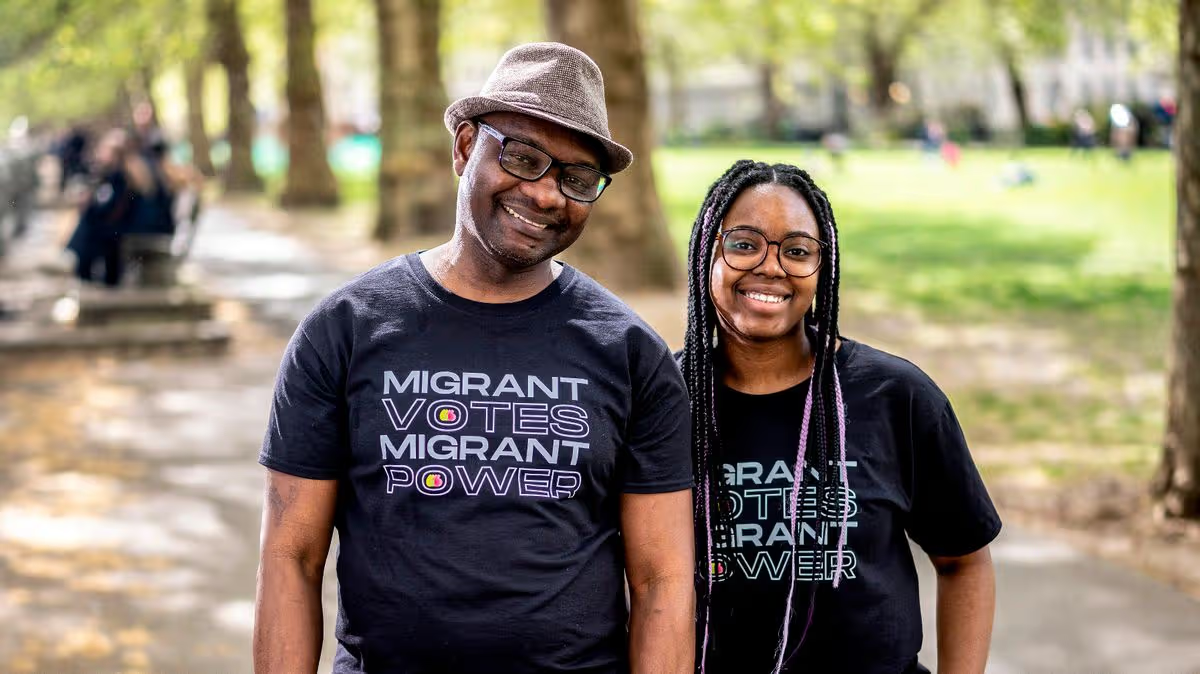
The human cost of this policy is etched in the frustration of people like Shams Moussa, a refugee from Niger who has built a life and career as a community support worker in Wallsend over ten years. He contributes through taxes and rent but has no say in who represents him locally, a right he would possess if he lived just 65 miles north in Scotland. Similarly, Raissa da Cunha Balduino, a Brazilian-born director of a childcare reform campaign in Belfast, actively engages with political institutions but cannot vote for the lawmakers she lobbies. For Riada Kullani, now a British citizen, the memory of being turned away at a polling station lingers as a feeling of profound discrimination and hopelessness. These individuals embody the contradiction of being deemed fit to contribute economically and socially, yet not democratically.
The distortion this causes in British democracy is significant and quantifiable. As Lara Parizotto of the Migrant Democracy Project notes, the concentration of “missing migrant votes” has the potential to alter election outcomes, particularly in marginal constituencies. The 2024 general election saw a historic number of tight races; for instance, Labour held the seat of Hendon by a mere 15 votes in a constituency home to over 25,000 disenfranchised migrant residents. In the upcoming local elections, thousands of disenfranchised voters in boroughs like Havering, Bromley, and Bexley could easily swing results. This isn’t a peripheral issue but one that fundamentally skews representation, leaving large swathes of the population subject to policies—on housing, healthcare, and immigration itself—crafted by politicians they had no power to choose.
Against this backdrop, the campaign for “Votes for All” is fighting an uphill battle, facing not just political inertia but active hostility. A report from the Migrant Democracy Project advocating for residence-based voting rights was met with what the campaign describes as a “racist and xenophobic backlash,” highlighting the charged atmosphere around this issue. The movement found a powerful voice in MP Manuela Perteghella, who shared her own experience of being an Italian student barred from voting in the Brexit referendum—a decision that irrevocably shaped her life in the UK. Her message, that defending democracy means extending its rights to all who call the British Isles home, underscores the campaign’s core principle of inclusive representation.
For Daniela, there is a personal milestone on the horizon that highlights the UK’s contradictory patchwork of voting laws. Now a university student in Dundee, she will finally be able to cast her first vote in the upcoming Scottish Parliamentary elections, thanks to Scotland’s more inclusive, residence-based system. This victory, however, is bittersweet and localized. Her broader goal, and that of the movement she stood with at Parliament, is for a uniform, principled reform. They seek a future where the right to vote is based on one’s home and stake in society, not the passport one holds, ensuring that no one else feels the defeat of being turned away at the door to their own democracy.