

The Eternal Champion: Rocky’s Triumph Beyond the Screen
Half a century has passed since a cinematic underdog first sprinted up the Philadelphia Museum of Art’s 72 stone steps, transforming a simple staircase into a global symbol of perseverance. In 1976, Sylvester Stallone’s Rocky Balboa ascended those steps in a training ritual that became one of film’s most iconic moments, capturing the heart of audiences and cementing Rocky’s place in cultural history. The film’s surprise Oscar win for Best Picture catapulted Stallone to stardom, but more importantly, it gave the world a timeless parable about resilience. Now, fifty years later, Rocky has returned to that summit in a powerful, permanent form: an 8-foot bronze statue of the boxer, arms raised in victory, overlooking the city that embraced him. This installation marks not just a anniversary, but the culmination of a journey—for a character, an actor, and a community—from a fleeting film sequence to an enduring monument.
A Monument to the People: The Steps as Shared Legacy
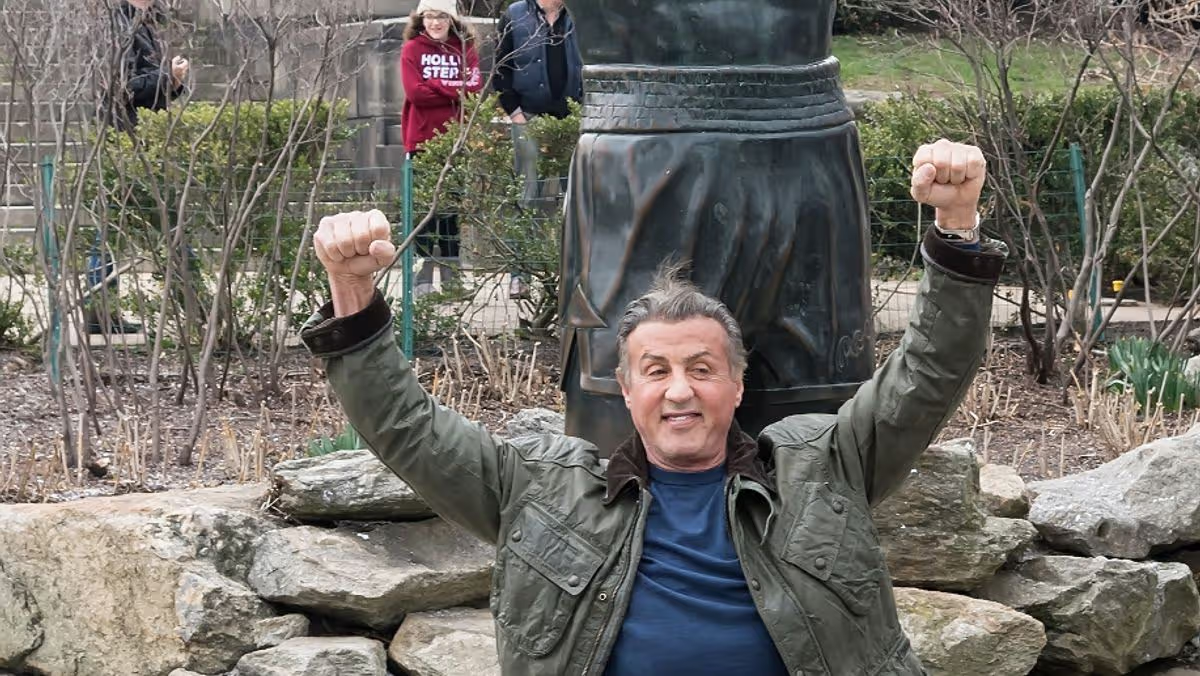
The statue’s placement is profoundly symbolic, as the steps themselves have become a democratic stage for personal triumph. Stallone reflects that while you cannot borrow Superman’s cape, “the steps are there. The steps are accessible.” Every year, four million visitors make the pilgrimage to Philadelphia to run those 72 steps and stand beside the bronze Rocky, sharing in that “piece of the Rocky pie.” It is a ritual of participation, allowing anyone to physically engage with the myth of overcoming adversity. The statue, originally commissioned by Stallone for Rocky III in 1982, has itself weathered a journey of acceptance. After years of being loaned to the city and placed at the base of the steps—following considerable debate about its status as “art”—it has now earned its place inside the museum as the centerpiece of the “Rising Up: Rocky and the Making of Monuments” exhibition. This institutional recognition confirms that Rocky is no mere movie prop, but a bona fide piece of public art that resonates with universal themes of victory and endurance.
The Man Behind the Myth: Stallone’s Unlikely Road to Glory
The story of the statue is inseparable from the unlikely story of its creator, Sylvester Stallone. Born in Hell’s Kitchen and famously expelled from numerous schools, Stallone was once voted “most likely to end up in the electric chair.” His early adulthood was marked by struggle: homelessness, sleeping in a bus depot, and scraping by with odd jobs while his girlfriend waited tables. He found solace in writing, honing his craft in libraries, and stubbornly pursuing acting despite being typecast as a thug. When he penned the script for Rocky, he faced the ultimate test of his conviction: Hollywood producers offered him $360,000 for the script, but only if a established star played the lead. Stallone, betting everything on himself, sold it for a mere $35,000 to secure the role. This gamble, rooted in an unshakable belief in his own vision, mirrored Rocky’s own journey—a story not about how hard you hit, but “how hard you can get hit and keep moving forward.” That mantra, now inscribed on the statue, is the essence of Stallone’s own rise.
Artistry in Bronze: Crafting the Icon
The physical embodiment of this spirit was crafted by sculptor A. Thomas Schomberg, contacted by Stallone in 1980. Stallone’s direction was precise: he did not want a “slugger,” but a “boxer.” Schomberg’s design captured Rocky in a moment of victorious celebration, arms aloft, representing the pinnacle of his struggle. The statue’s journey through the city reflects its evolving status. Initially proposed by Stallone to remain permanently at the top of the steps, it instead faced relocation debates, spurring passionate “Rocky Must Stay” campaigns from fans. Its eventual placement at the foot of the steps in 2006, and now its celebratory return to the summit, underscores its unique role. As exhibition curator Dr. Paul Farber notes, the statue draws millions as a “site of pilgrimage,” outperforming visits to the Liberty Bell. “New York has the Statue of Liberty. Florence has David. Philly has Rocky,” he declares, affirming its status as a civic landmark equal to the world’s great monuments.
Legacy Cemented: From Film Prop to Cultural Touchstone
Today, Stallone, approaching 80, sees the Rocky narrative as complete, humorously noting that if he did another film, he’d “be fighting arthritis.” He has, however, paved the way for the story’s continuation in other forms. A biopic, I Play Rocky, is scheduled for release, chronicling his own early struggle, while his autobiography, The Steps, and Schomberg’s The Making of the Rocky Statue, will further document this cultural phenomenon. The statue’s current exhibition placement, until August, and its promised permanent return to the step’s summit, finalizes its journey from contested film memorabilia to accepted masterpiece. It stands as a tribute not only to a fictional boxer, but to the power of public art to inspire and unite. It represents a shared victory, a symbol that anyone, regardless of origin or struggle, can ascend their own personal steps and claim a moment of triumph.
An Enduring Symbol for Every Underdog
Ultimately, the Rocky statue transcends its origins in a film series. It is a monument to the human spirit, to the idea that greatness is often forged in hardship, and that victory is defined by perseverance. Stallone’s own path—from a troubled youth to an icon—mirrors the narrative he created, and the statue physically anchors that narrative in the heart of Philadelphia. It invites every visitor to not only witness, but to participate, to run the steps and feel, momentarily, like a champion. As it stands now, bronzed and eternal at the top of those 72 steps, it assures that Rocky Balboa’s story—and the universal truth it carries—will keep inspiring for generations to come. The steps remain accessible, the statue stands vigilant, and the myth endures, reminding us all that winning is done by moving forward, no matter how hard we are hit.