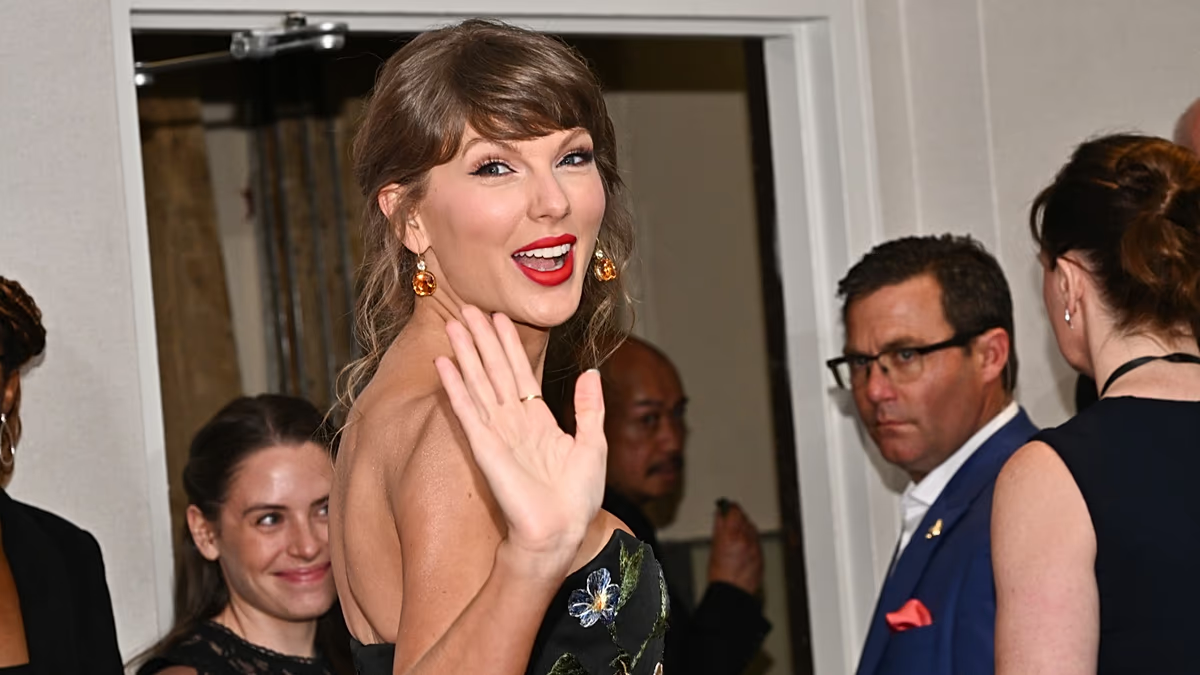




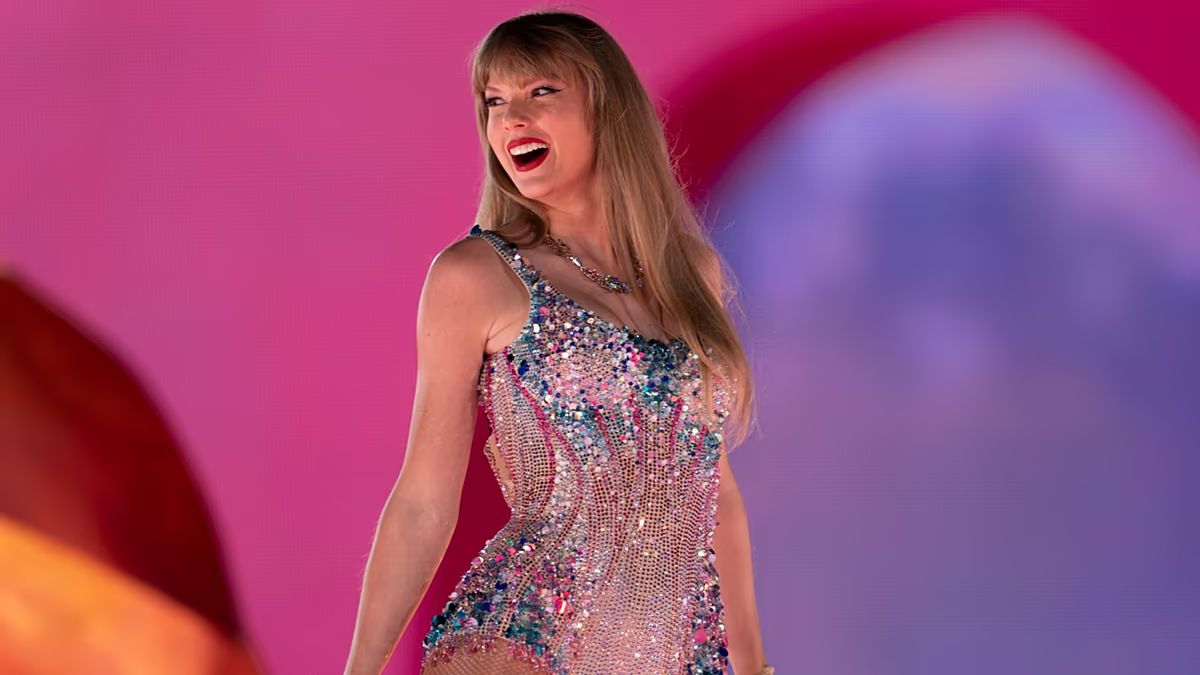
In the ever-evolving landscape of the digital age, where technology often outpaces regulation, a new and deeply personal frontier of protection is emerging. Pop superstar Taylor Swift has taken a significant and precedent-setting step by filing three trademark applications in the United States to legally safeguard her own voice and a specific image of herself. This move, far from a mere bureaucratic formality, represents a proactive and strategic defense against the rampant and often malicious use of artificial intelligence to impersonate celebrities. The applications target very precise elements: an audio clip of her introducing herself while promoting her album ‘The Life Of A Showgirl,’ and a photograph of herself on stage during the blockbuster Eras Tour. By anchoring her claim to these registered, identifiable instances, Swift is building a legal bulwark not just against technology, but against the violation of her personal identity.
The rationale behind this strategy, as explained by trademark lawyer Josh Gerben who first highlighted the filings, is both clever and powerful. Trademark law protects against uses that are “confusingly similar” to a registered mark. Therefore, by registering these specific sonic and visual signatures, Swift could theoretically challenge a wide range of AI-generated content. If an AI voice model produces a simulation that sounds like her registered speaking phrase, she could claim a trademark violation. Similarly, if an AI image generator creates a depiction resembling the protected photo—perhaps a figure in a jumpsuit holding a guitar—that too could fall under a federal trademark claim. This provides an “additional layer of protection” beyond existing copyright or personality rights laws, which are often less clearly applicable to the novel outputs of AI systems. It’s a legal innovation turning her unique persona into a defensible intellectual property asset.
Swift’s decision is not born out of abstract caution but from a series of alarming real-world incidents that illustrate the profound risks of unchecked AI. She has been a frequent and disturbing target of AI manipulation. The internet has been flooded with AI-generated sexually explicit images falsely depicting her, a deeply harmful form of digital violation. More bizarrely, a doctored election advertisement circulated featuring a simulated version of Swift seemingly endorsing former President Donald Trump, showcasing how this technology can be weaponized for political misinformation. These abuses demonstrate that the threat is not merely commercial but profoundly personal, affecting safety, reputation, and autonomy. Her trademarks are a direct response to this hostile environment, an attempt to reclaim control over her digital likeness in a world where it can be stolen and twisted with a few clicks.
This pioneering approach places Swift at the forefront of a growing movement among celebrities to defend themselves in the AI era. She is following a path recently charted by Oscar-winning actor Matthew McConaughey, who earlier this year became the first major Hollywood figure to publicly trademark his voice and likeness against AI “rip-offs,” as he termed it. These actions signal a collective awakening to the vulnerabilities created by generative AI. The entertainment industry, whose value is built on unique persona and performance, finds itself particularly exposed. Trademarking one’s own identity may soon become a standard practice for public figures, a necessary form of digital self-preservation in a world where their most recognizable attributes can be replicated without consent, for any purpose, from parody to pornography.
Ultimately, Swift’s legal maneuver transcends a simple celebrity news story. It highlights a critical and unresolved societal question: who owns the digital shadow of a human being? As AI tools become more accessible and sophisticated, the lines between inspiration, imitation, and identity theft blur. Traditional legal frameworks are scrambling to catch up. Swift’s use of trademark law—a domain typically associated with brand logos and slogans—to protect her biological voice and her own image is a testament to this gap. It is a human response to a technological problem, asserting that a person’s essence—their smile, their speaking tone, the way they stand on a stage under lights—should not become free raw material for algorithmic exploitation.
In conclusion, Taylor Swift’s application to trademark her voice and likeness is a landmark action in the intersection of law, technology, and personal rights. It is a defensive move prompted by specific, harmful AI abuses, crafted with smart legal strategy to create a broader shield, and part of an emerging trend among artists protecting their livelihoods and their very selves. Beyond the specifics of the filings, it serves as a powerful reminder of the human cost in the rapid advance of AI. It asks us to consider the dignity and autonomy of the individual in the digital realm and champions the idea that in a world of copies, the original should retain the right to say, “This is me, and this alone belongs to me.”