


The Unwelcome Neighbor: A Golborne Resident’s Frustration with a Persistent Caravan
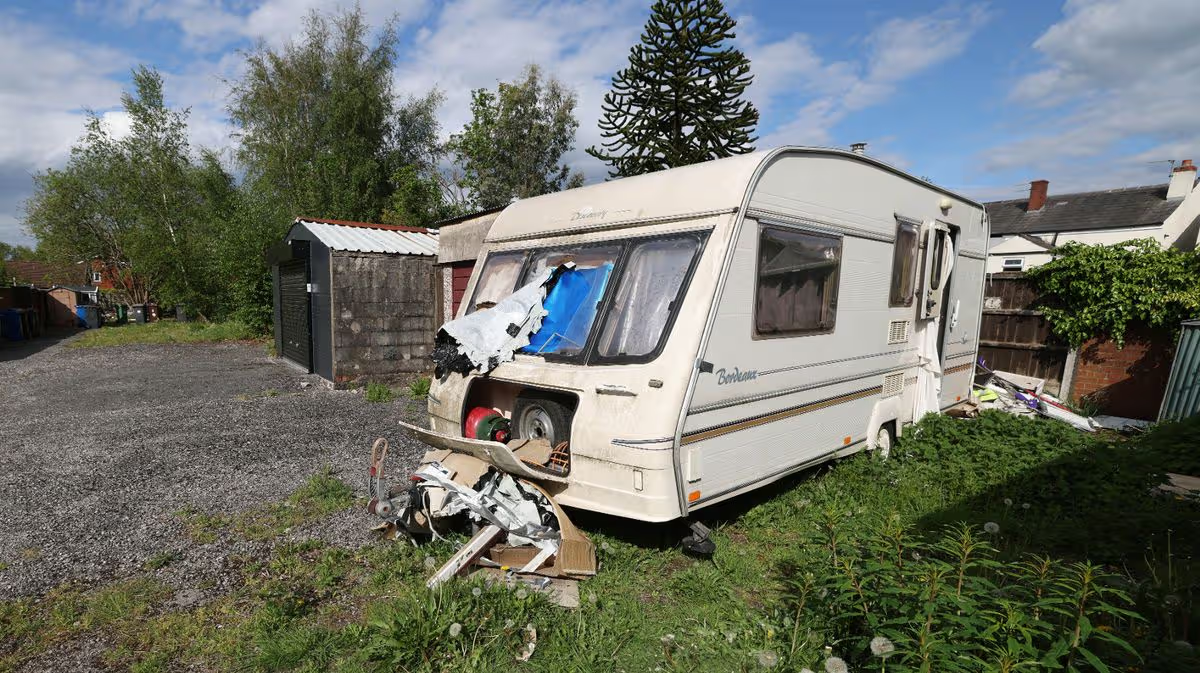
For Colin Taylor, returning home from a holiday should have been a relaxing transition back to normal life. Instead, in September of 2024, he arrived at his home on Brook Street in Golborne, Wigan, to find an unsettling new addition to his neighborhood: a caravan parked at the rear of his property. This unexpected sight marked the beginning of an ongoing saga that has frayed nerves and tested patience for nearly two years. The initial encounter with the occupant offered a glimpse of human hardship—a man who explained he had become homeless after a separation and intended to stay only briefly. However, that temporary promise evaporated, and the caravan became a permanent, troubling fixture. For Colin, a retired police officer with an instinct for community safety, this was not just an eyesore; it was the start of a persistent source of anxiety and disruption in what should have been his peaceful retirement environment.
The caravan’s presence quickly evolved from a solitary individual’s refuge into a magnet for unsettling activity. After the original occupant was reportedly rehoused, Colin notified the local council, hoping the empty structure would be removed. Yet, upon the council’s arrival, another person was found inside, demonstrating the caravan’s cycle of informal occupation. Colin describes a pattern of “proper dodgy-looking people” visiting at all hours, with clandestine movements that raised alarming suspicions. “People would come and go to the side of the caravan,” he noted, questioning if it was being used as a “drug drop or something.” This atmosphere of uncertainty has profoundly impacted his daily life and sense of security. He admits being frightened to enter his own garage, unsure of who might be lurking nearby. The simple joy of allowing his grandchildren to play outside has been stolen, as the space no longer feels safe. The caravan, therefore, transformed from a physical object into a symbol of encroaching disorder, eroding the quiet comfort of his home.
Colin’s attempts to resolve the issue through official channels have been met with a frustrating bureaucratic impasse. He has repeatedly reported the caravan to both Wigan Council and Greater Manchester Police, advocating for its removal as a blight on the area. By May 2026, the structure stood empty, yet the solution remained elusive due to a dispute over responsibility. The council’s position is that the cost of removal must be billed to the owner of the private land upon which the caravan sits. This policy, while perhaps administratively logical, has effectively stranded the unwanted trailer, creating a stalemate where no party is willing or able to take the final, necessary action. Colin’s retirement, once dedicated to public service, is now shadowed by a private battle with a system that seems unable to provide a straightforward remedy for a clear problem.
The landowner, Beryl Crellin—an 81-year-old neighbor affectionately known as Carol—is caught in the middle of this dispute. She owns the patch of land where the caravan was parked without her permission, a fact that she finds particularly galling. “They shouldn’t have put that caravan there without asking. That’s the annoying part about it,” she states. While the council identifies her as the responsible party for removal costs, Beryl firmly rejects this financial burden. “How can they charge me when it’s not my caravan?” she asks logically. Her stance is one of principle and practicality: she did not invite the problem, she is not its cause, and as an elderly resident, she wants no part in the conflict. Her refusal to pay, coupled with the council’s insistence, creates a perfect stalemate, leaving the caravan as a physical manifestation of this unresolved tug-of-war.
This standoff has fostered a sense of communal helplessness and irony. Colin recounts the casual, if desperate, suggestions from friends who joke that he should simply “take it and push it down the street.” Yet, as someone who has formally complained, he knows any such action would likely see him accused of fly-tipping. He is trapped in a paradox: the very act of seeking official help has made him vulnerable to blame if he were to take direct action. “There’s nothing I can do, it’s so annoying,” he concludes, summing up the feeling of being ensnared by a problem with no visible escape route. The caravan, therefore, stands not only as an eyesore but as a reminder of how individual citizens can become entangled in procedural knots, where common sense solutions are thwarted by liability and policy.
The ongoing situation on Brook Street is a microcosm of a broader challenge facing many communities: how to balance enforcement, compassion, and practical resolution in cases of unauthorized encampments and abandoned property. The human element is undeniable—the caravan initially represented a place of refuge for someone in crisis. Yet, its evolution into a source of fear and instability for long-term residents highlights the complex fallout when such situations are not managed clearly and promptly. Colin Taylor’s retirement, Beryl Crellin’s peace of mind, and the neighborhood’s safety continue to be compromised by this stationary trailer. Until the council, the police, and the landowners find a collaborative path forward—one that addresses both the humanitarian origins and the current civic nuisance—the caravan will remain, a silent, stubborn testament to a problem that nobody seems empowered to solve.