



The Human Cost of Drone Warfare in Sudan’s Unending Conflict
In a stark and deeply troubling update, the United Nations revealed on May 11, 2026, that the civil war in Sudan has entered a grim new era defined by remote-controlled slaughter. Between January and April of this year alone, at least 880 civilians were killed in drone strikes, a figure representing more than 80% of all conflict-related civilian deaths in that period. For over three years, since April 2023, the Sudanese Armed Forces and the paramilitary Rapid Support Forces (RSF) have been locked in a brutal power struggle. What was once a conflict fought on the ground has now ominously shifted to the skies, with both sides increasingly relying on armed drones. UN High Commissioner for Human Rights Volker Türk delivered a grave warning: this technological shift is propelling the war into a “new, even deadlier phase,” shattering any seasonal reprieve and raining terror down upon communities with chilling efficiency.
Shattering the Seasonal Lull and Spreading Terror
Historically, the rainy season in Sudan offered civilians a precarious, temporary respite from the worst fighting, as logistical challenges slowed military campaigns. That fragile hope has now been obliterated. Drones, unimpeded by mud and flooded roads, allow the fighting to continue “unabated,” turning what was once a time of cautious recovery into a period of heightened fear. This relentless assault ensures there is no safe moment, no natural pause in the suffering. The violence is not contained; it is metastasizing. Commissioner Türk expressed urgent concern that hostilities risk expanding into central and eastern states, threatening populations across “enormous areas” with the same deadly tactics. The message is clear: without immediate international action and pressure on the warring parties, the conflict will spiral into an even greater humanitarian catastrophe.
A Map of Suffering: From Darfur to Khartoum
The human toll of this aerial campaign is etched across the map of Sudan. The UN report details that the majority of drone-related deaths in early 2026 were concentrated in the regions of Kordofan and Darfur, areas already scarred by decades of violence. However, the threat is rapidly spreading beyond these traditional hotspots. Strikes have been increasingly reported in the Blue Nile, White Nile, and the capital, Khartoum, demonstrating the pervasive and far-reaching nature of this threat. The brutality is ongoing and indiscriminate. As recently as May 8, just days before the UN’s statement, drone attacks on Al Quoz in South Kordofan and near El Obeid in North Kordofan reportedly killed 26 civilians and injured many more. These are not isolated incidents but part of a systematic pattern of aerial bombardment that shows no sign of abating.
Targeting the Foundations of Life: Markets, Clinics, and Food
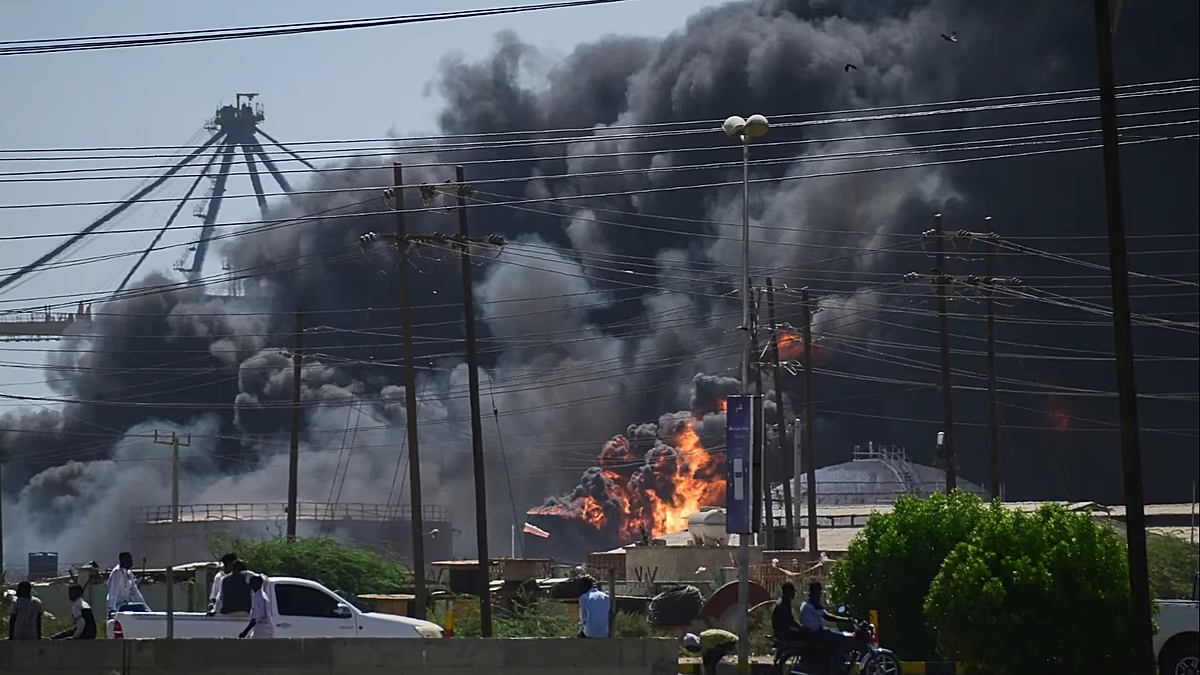
Perhaps most devastating is the way drone warfare systematically dismantles civilian life. The UN condemned belligerents for repeatedly using drones to strike civilian objects and critical infrastructure, a strategy that “diminish[es] access to sufficient food, clean water and health care.” Markets—the vibrant hubs of community commerce and sustenance—have been hit at least 28 times in the first four months of the year, turning spaces of life into scenes of death and deprivation. Health facilities, sanctuaries of healing in the midst of chaos, have been struck no fewer than 12 times. Each attack on a clinic or a marketplace is a multiplier of suffering, crippling the community’s ability to care for its wounded, feed its children, and maintain any semblance of normalcy in the midst of war.
The Looming Specter of Famine and Collapse
This coordinated destruction of infrastructure is catalyzing a secondary disaster: the threat of mass starvation. Türk warned that the intensified violence severely disrupts the delivery of critical humanitarian aid, leaving already vulnerable populations utterly stranded. “Much of the country, including Kordofan, is now facing an increased risk of famine and acute food insecurity,” he stated. This crisis is being compounded by a global shortage of fertilizer linked to the broader Middle East conflict, crippling local agricultural recovery. The war has already killed tens of thousands and displaced over 11 million people, pushing several regions to the brink of famine. The shift to pervasive drone warfare, by destroying the very means of survival, threatens to tip these areas over the edge into full-scale societal collapse.
A Call for Humanity in the Face of Automated War
The UN’s report is more than a statistical summary; it is a profound plea for humanity. The conflict in Sudan, now supercharged by remote-controlled aircraft, is creating a reality where death can descend from a silent sky at any moment, where there is no front line, and where every public space is a potential target. The staggering death toll of 880 civilians in just four months represents not just numbers, but families shattered, communities erased, and a nation being bled dry. Volker Türk’s warning is unequivocal: “Unless action is taken without delay,” this technological escalation will lock Sudan into an ever-deeper cycle of violence and despair. The international community is faced with a moral imperative to demand an immediate ceasefire, ensure humanitarian access, and hold accountable those who turn technology meant for precision into an instrument of widespread terror against the most vulnerable.