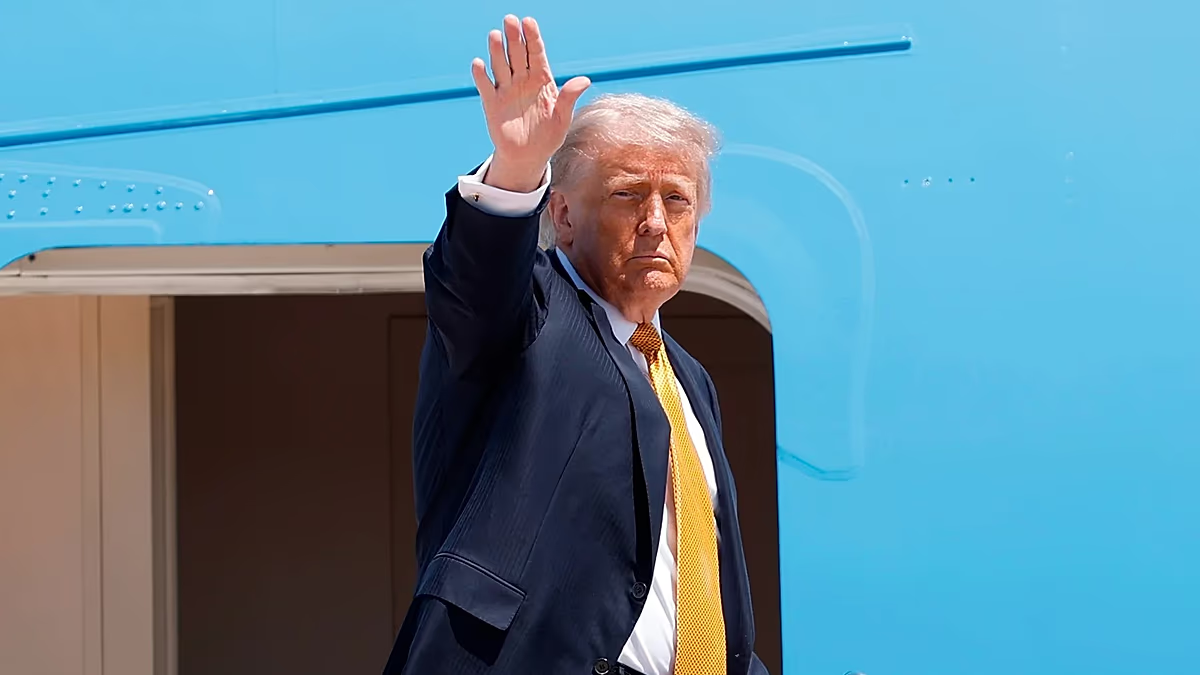
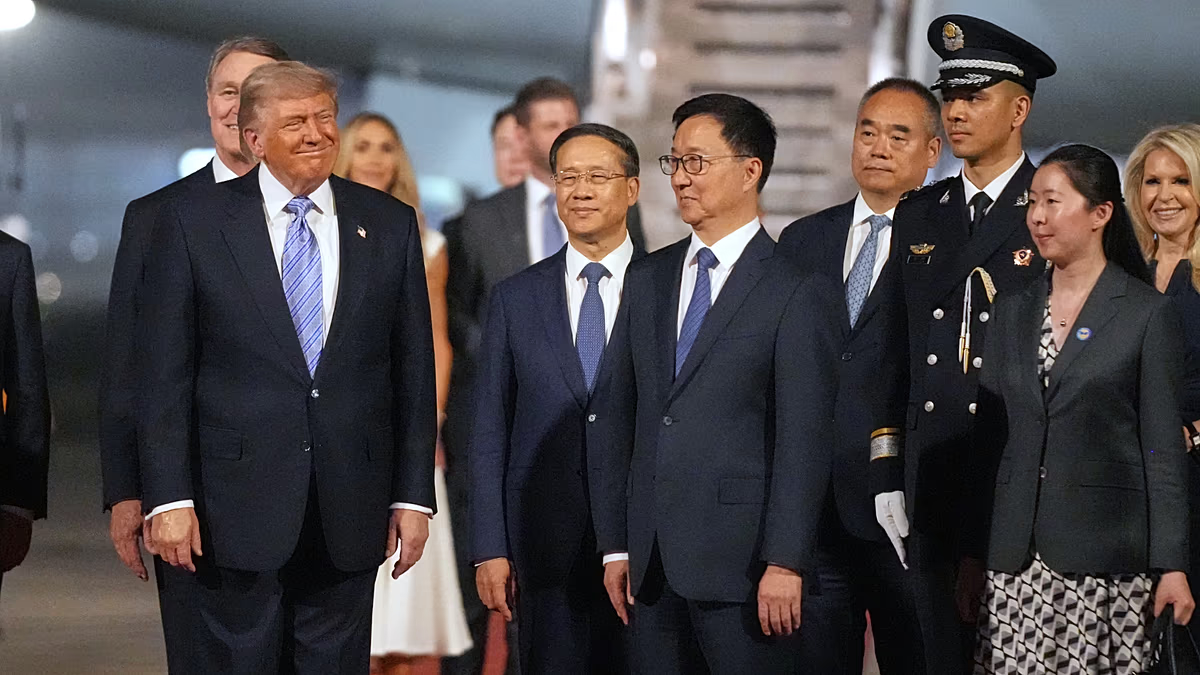


On a cool May evening in 2026, Air Force One touched down in Beijing, marking the start of a high-stakes state visit by U.S. President Donald Trump. The scene at the airport was one of formal diplomacy, with Chinese Vice President Han Zheng presiding over a welcome ceremony for the American leader. This carefully choreographed arrival set the stage for what was poised to be a pivotal series of discussions, aimed not at forging a new relationship, but at mending a deeply fractured one. The visit, scheduled from May 13th to the 15th, carried the immense weight of recent history, as both nations sought a path toward stability after years of economic confrontation.
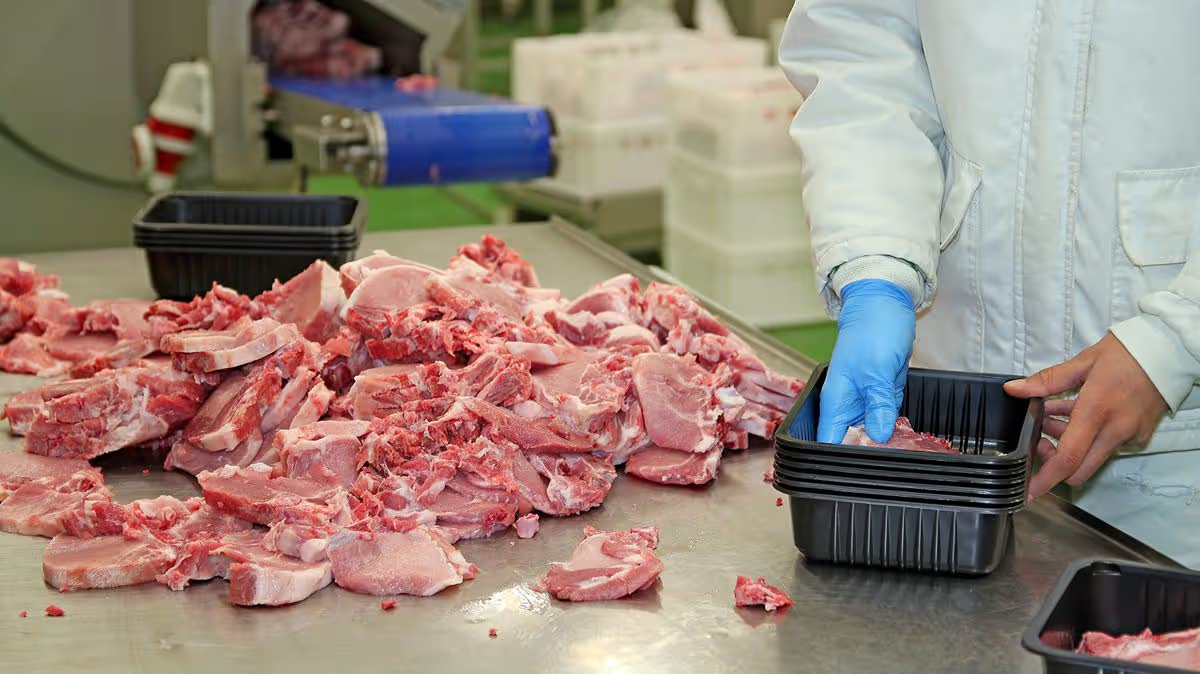
The core agenda was unequivocally centered on trade. President Trump stated plainly that his talks with Chinese President Xi Jinping would focus on commerce “more than anything else.” His stated goals included finalizing deals for China to purchase more American agricultural products, like those from Cargill, and commercial aircraft from giants like Boeing. This focus highlighted a stark reality: the once-robust flow of goods across the Pacific had been sent into a freefall by a protracted trade war. That conflict, characterized by tit-for-tat tariffs and escalating tensions, had forced companies in both countries to painfully regroup, reassess supply chains, and navigate a landscape of uncertainty and added cost.
Recognizing the mutual damage, the meeting in Beijing represented a concerted effort by both leaders to hit the brakes on the downward spiral. It was an attempt to build a floor beneath the relationship and establish a new, if cautious, equilibrium. The context transformed this from a routine diplomatic exchange into a necessary crisis management session. The world watched to see if two of the globe’s most powerful nations could find a way to compartmentalize their competition and foster pragmatic cooperation, at least in the economic realm, for the sake of global market stability.
Adding a unique and powerful dimension to the visit was the extraordinary delegation accompanying President Trump. He was not only flanked by government officials but by a who’s who of American corporate and technological leadership. The group included visionary CEOs like Elon Musk, NVIDIA’s Jensen Huang, and Apple’s Tim Cook, alongside top executives from Meta, Visa, JPMorgan Chase, Boeing, and Cargill. This signaled a clear strategy: to pair political negotiations with direct, high-level business engagement. It was an acknowledgment that the repair of economic ties would ultimately be executed not just in government halls but in boardrooms and R&D labs.
The presence of these tech titans, in particular, underscored the visit’s subtext: the future of strategic competition. While the immediate goal was to stabilize trade in traditional sectors like agriculture and aviation, discussions with figures like Huang of NVIDIA inevitably brushed up against broader issues of technological supremacy, semiconductor supply chains, and innovation. The delegation made it clear that the U.S. aimed to present a unified front, blending economic and technological interests, and to engage China not merely as a trading partner but as a systemic rival in the arena of future-defining technologies.
As President Trump’s visit commenced, the outcome remained carefully balanced on a knife’s edge. The welcoming ceremonies and planned meetings held the potential for headline-grabbing deals on soybeans and jets, offering tangible wins. Yet, the underlying challenges—deep-seated mistrust, clashing geopolitical ambitions, and the unresolved structural issues that sparked the trade war—loomed large. The world witnessed a moment of high diplomacy, where the immediate need for economic calm met the long-term reality of enduring rivalry. The success of the summit would be measured not by the signing of any single contract, but by whether it could create a durable framework to manage the inescapable and complex interdependence between the two superpowers.