


Paragraph 1: The Incident
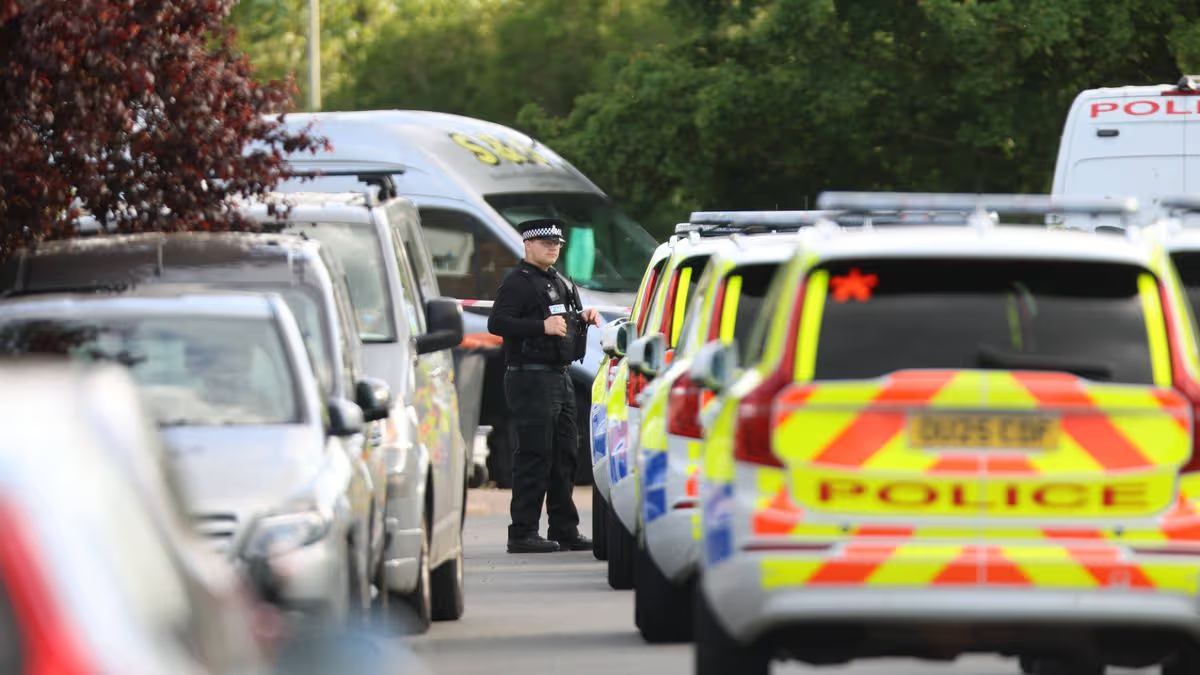
In the quiet residential streets of Bedford, a prolonged and harrowing ordeal culminated in tragedy on Tuesday. After an armed standoff lasting several hours, a 41-year-old man was shot dead by police on Aylesbury Road. The Independent Office for Police Conduct (IOPC), the body responsible for overseeing police conduct in England and Wales, has now formally launched an investigation into the circumstances surrounding the death. This probe represents a critical step in the process of accountability and public transparency, aiming to unravel the sequence of events that led to such a fatal outcome. Investigators from the IOPC were dispatched to the scene immediately following the shooting, underscoring the gravity of the incident and the need for an independent, meticulous examination.
Paragraph 2: The Escalation
The chain of events began the previous evening, shortly after 10:40pm on Monday, when Bedfordshire Police responded to reports of vehicles being damaged on Aylesbury Road. Upon arrival, the situation swiftly escalated beyond a simple case of criminal damage. Officers encountered a man who had barricaded himself inside a property and was, according to the police statement, “making threats.” This initial call for service transformed into a volatile crisis, requiring a significant police response. The nature of the threats prompted the deployment of armed officers, setting the stage for a tense and extended confrontation that would span into the following day, holding the neighborhood in a state of anxious suspense.
Paragraph 3: The Standoff
For hours, a standoff ensued. Such situations represent one of the most complex and perilous challenges for law enforcement, requiring a delicate balance between preserving public safety, attempting peaceful resolution, and confronting potential immediate danger. The prolonged duration suggests efforts were likely made to de-escalate the situation through negotiation and containment. Communities witnessing such events experience a profound disruption—the presence of armed police, cordoned streets, and the unsettling uncertainty of a unfolding crisis. Every minute stretched the tension for both the individual inside the property and the officers tasked with managing the volatile scenario outside.
Paragraph 4: The Tragic Conclusion
Ultimately, the standoff ended with the most severe of outcomes: the police use of lethal force. The precise moment and rationale that led to the decision to fire will form the core of the IOPC’s investigation. Police use of firearms is governed by stringent protocols and is legally permissible only when absolutely necessary to protect life. The death of any individual at the hands of state authority is a profound event, marking a moment of deep sorrow for the family of the deceased, trauma for the officers involved, and a societal moment of reckoning. It leaves behind a community grappling with the shock of violence on their doorstep and a nation questioning the protocols that govern life-and-death decisions.
Paragraph 5: The Path to Accountability
The immediate launch of an IOPC investigation is a standard and vital procedure in such cases, designed to ensure impartial scrutiny detached from the involved police force. This watchdog will examine all aspects: the initial police response, the tactics and communications during the standoff, the precise circumstances that precipitated the use of firearms, and whether all policies and training were correctly adhered to. Their findings will be crucial for providing answers to the family, the public, and for informing potential changes to police practices. It is a process that must be thorough, transparent, and fair, serving both justice and the imperative of learning from tragedy to prevent future occurrences.
Paragraph 6: The Wider Impact
Beyond the official investigation, this event reverberates on multiple levels. For the officers involved, it carries a significant personal and professional weight; such decisions leave lasting impacts. For the community of Bedford, it is a disturbing breach of normalcy, a violent episode that will necessitate both healing and dialogue. For society at large, it reignites ongoing debates about police training, mental health crises, resource allocation for crisis intervention, and the balance between public safety and the sanctity of life. As the IOPC conducts its painstaking work, the human stories behind the headlines—the life of the 41-year-old man, the experiences of his family, and the duty-bound actions of the officers—must remain central to our collective reflection on this somber event.